
Land manager’s diary
Woods, meadows and challenge walling
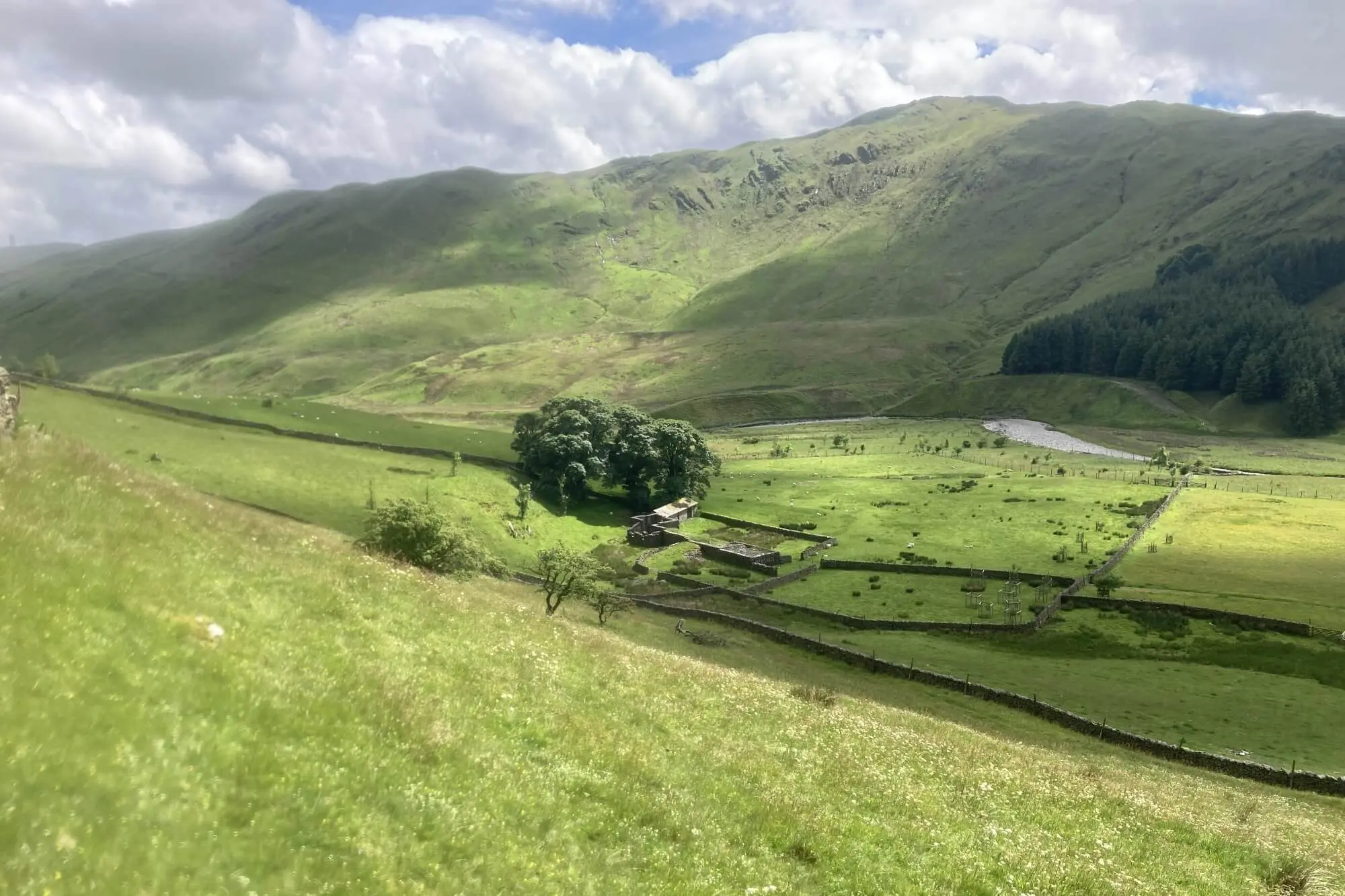
Incredible views, checking out the trees, and a challenging wall gap. All this and some amazing footage of barn owls! It’s been a busy week on our land…
Woods, meadows and challenge walling
The weather is not the only thing that is up and down right now. Sitting in the evenings as the midges and bats are out, the swallows have been giving truly amazing shows of their grace and acrobatics. It is mesmerising to watch how they swoop and swoon, diving so close to buildings and each other it’s a wonder there are no collisions. It is just the most fabulous time to watch our wildlife and a reminder of the value of changing seasons, the joy of long summer nights compared to the doom of dark winter nights.
Talking of wildlife, photographer George Carr has been showing us some footage of the barn owls on some of our land which is stunning!
At Sweden Wood
This week we had our summer workparty at Sweden Wood, above Ambleside. It is a chance to clear the paths to make the big drops off the terraces really obvious so people stay safe, check the walls are up and all ok is there. It’s a very tranquil place, and the views from the top over to the Grasmere/Rydal valley are stunning.
We started in mist with no views but by the afternoon tantalising views over to Rydal and the Langdales opened up. Just when we thought we had finished we set about on a bit of a trim of all the willows that had grown up in or around the pond at the top of the site. By the time we had finished we had done a pretty much full scale clearance so the pond has light and is obvious once again. There were some near misses falling into the water whilst cutting back willow, but only one foot (mentioning no names….) got a dipping which wasn’t bad!
Rusland Plans
Sticking with woods, last week we were down in our Rusland woods planning the winter work. The woods are not as resilient as they could be due to lack of diversity in both tree species and the age of the trees, and also because we have some trees which have a tendency to be thugs and out shade other trees and plants. The chief culprit is beech which is not native to Cumbria but which has a tendency to spread very quickly and dominate. It casts so much shade there is never any ground flora underneath. Sycamore has similar tendencies but is a good habitat for lots of invertebrates and other species and is the nearest tree in characteristics to ash so is more favourable.
In order for us to make the woods more resilient we need to remove some of the beech to give more established trees more light and provide space to do some understorey planting. With the help of our tree volunteer Pete and rainforest volunteer Marion we headed out with a spray can to mark up trees needing work by professional contractors in the autumn. We had a lot to consider: Were there any species on the tree that we needed to keep, such as lichens? How much shade did the tree cast? Would it be possible to fell a tree without causing damage to adjacent trees we want to keep? Would removal of a tree shock the trees we want to keep too or cause a tree to be more susceptible to storms and wind blow? Could we ring bark a tree so it becomes standing deadwood?
There was a lot of looking upwards and a lot of pondering. It never feels good to be killing something but after six hours of wandering through four woods we had only marked up 41 trees which must be a miniscule percentage of what we have. And if we want the woods as a whole to have a longer and healthier life and be more resilient then they need management.
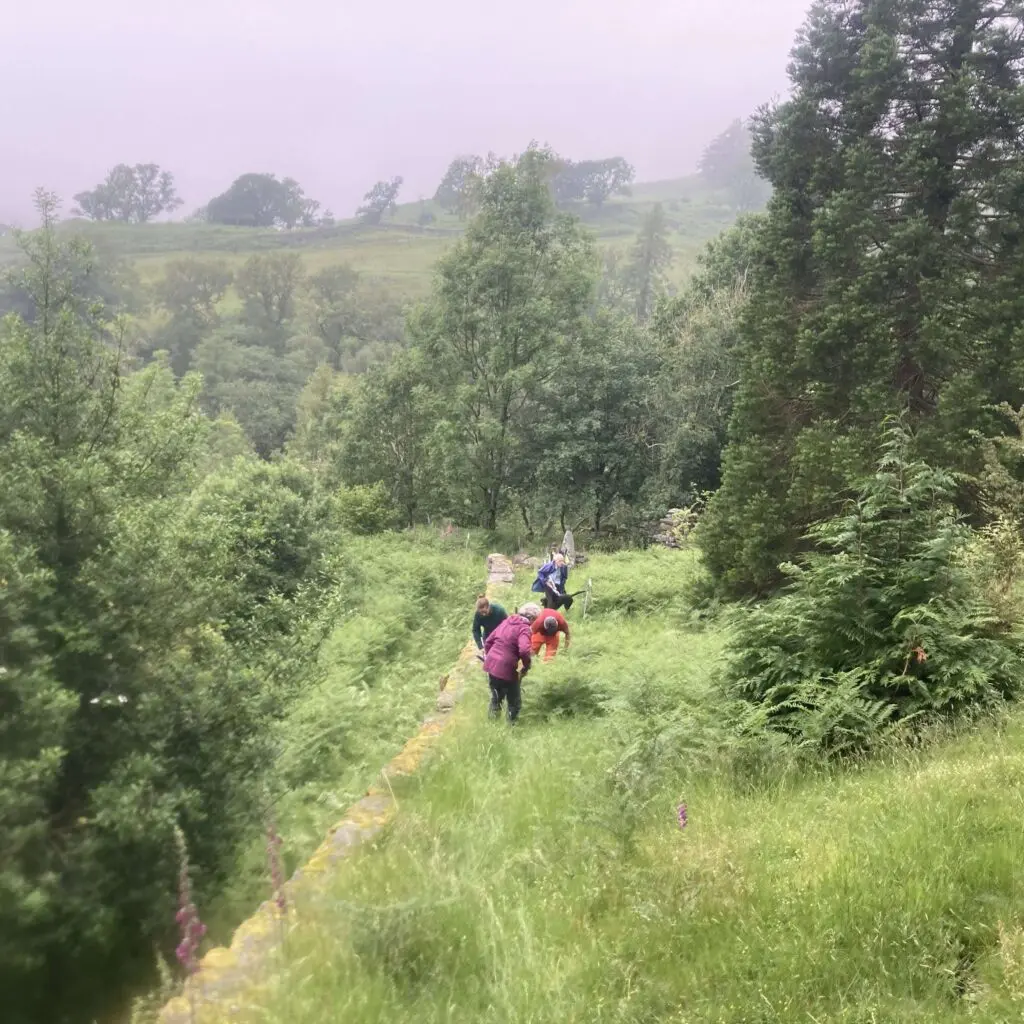
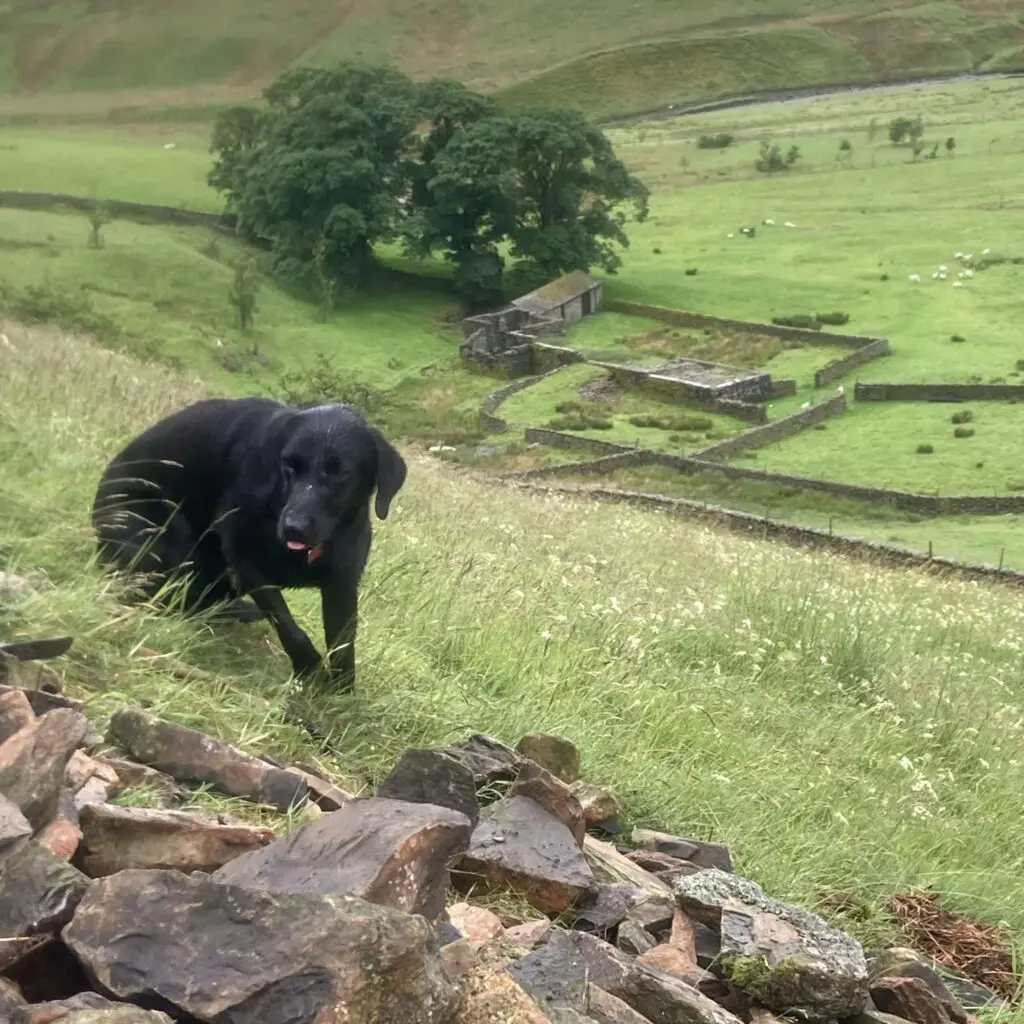
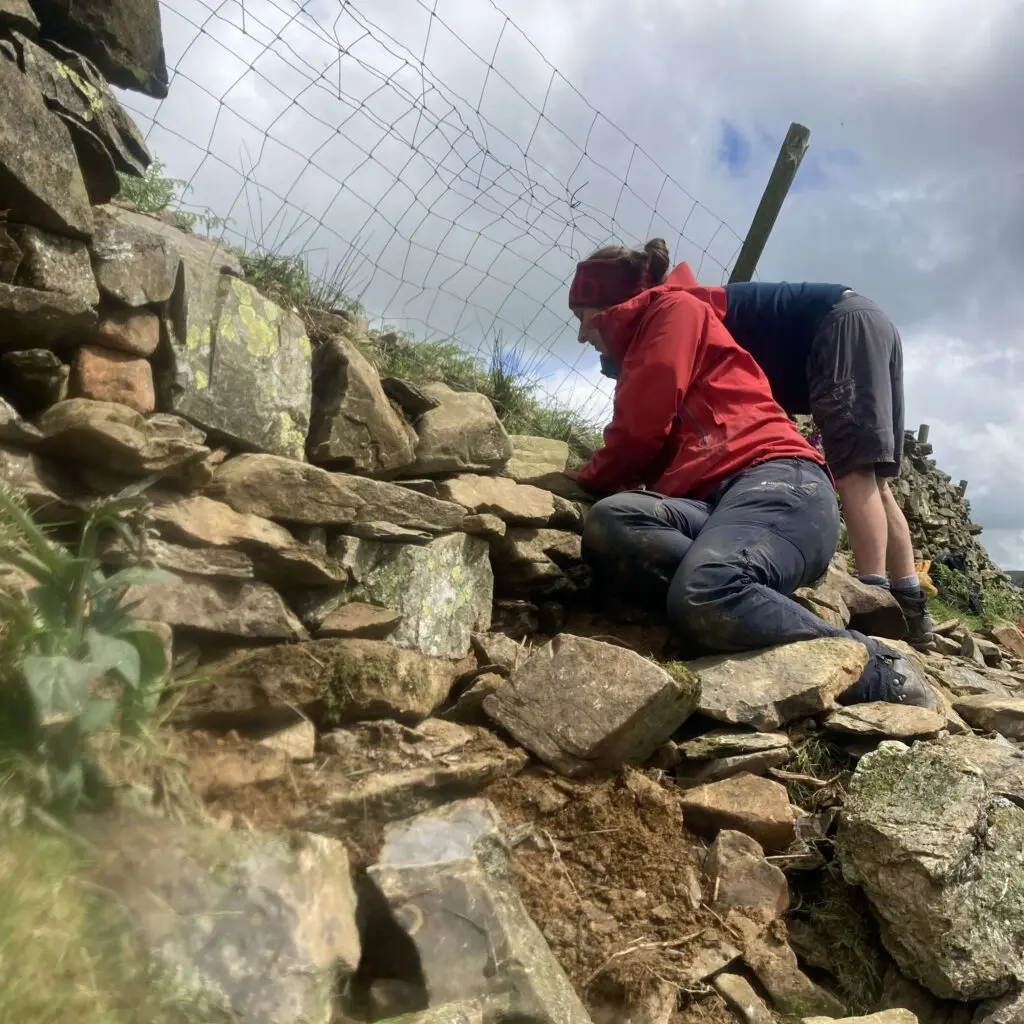
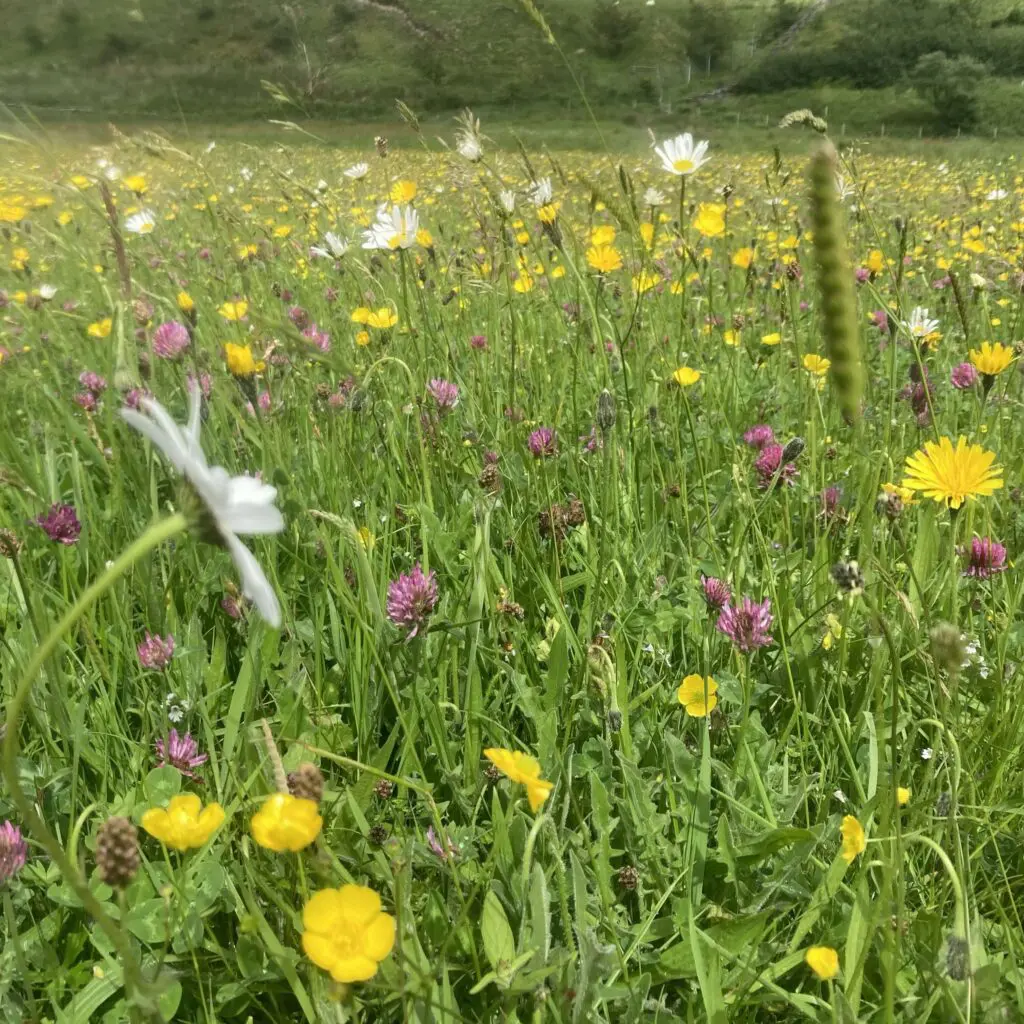
Volunteers in Sweden Wood, Tiggy the dog on the hill in High Borrowdale, wallers at work, and the hay meadow.
Wall Gap in High Borrowdale
Wednesday had us on a Hole in the Wall gang (our on-call wall gap volunteers) emergency visit to High Borrowdale. Our grazier Harold alerted us to a big 15 foot wall gap on the top wall so that sheep and ponies from the common could sneak into our land. This gave them access to a field with interesting wet flushes in that has no grazing in summer.
It was what you could call “challenge walling” and must be one of the most difficult gaps we have done. It was way up the fell, the top intake wall that adjoins the fell. Half the stone had fallen down the hill so had to be brought back, but the real issue was that the land slopes so much we couldn’t get a proper foothold to stand on to build. The wall was tall but there seemed to be no proper footings on the top side, just mud and stones. All the pressure therefore was on the downward facing side of the wall. This was not for the faint hearted, but if you dared look down there were great views to the farm house and up the valley as the mist cleared
The visit was a good chance to check on the hay meadows, especially as we have a walk and talk event on 2 July (click here for more details). The flowers look absolutely stunning, a real mix of white (ox eye daisy), red (red clover) and yellow (hay rattle, hawkbit, buttercup) and I was chuffed to bits we also saw some cranesbill which has been really difficult to get established there. What really struck me though was that the height of the vegetation and grass was low. It doesn’t look like a huge amount of grass ready for cutting, but it does look an absolute picture. Cutting won’t happen until around 20 July so you have a month or so to have a look if you want to (click here to find out how to visit High Borrowdale).
Moss and Fungus
We have been learning a lot more about lichens and bryophytes in the last couple of years, largely due to our work on the temperate rainforests. There was an interesting article on the BBC News about an invasive moss which is decimating native habitats. Apparently the heath-star moss is taking over and turfing out other species but not a lot is known about it. Scientists think it arrived on British soil in the 1940s from somewhere in the southern hemisphere. By 1990 it was everywhere and is impacting on the 1000+ types of moss in the UK. It sends out spores far and wide and reproduces quickly, making it a successful invader.
But scientist Dr George Grieff started to notice the moss was dying back in rings. When he explored further and took some tests he found that the killer is a fungus which clings onto the moss stem, ballooning like candy floss around a stick. It’s even penetrated some of the moss cells. He’s now worked out that it is a close relative of the ash die-back fungus that has killed up to 80 million ash trees in Britain. His analysis so far suggests it only affects the heath-star moss, and to a limited extent one other type of moss, although more work is needed to confirm the findings. Nature is fighting back.
Best Butterfly
And finally, Britain’s favourite Butterfly has just been announced: the colourful Peacock has beaten off fierce competition from a colourful cast of species to take the top spot in the first ever vote. It beat 59 other butterflies. The top five were a rainbow of colour, with the Orange-tip coming a close second, Red Admiral third, Holly Blue in fourth, and the bright yellow Brimstone coming in fifth. So get spotting before this summer’s Big Butterfly Count run by Butterfly Conservation between 17 July – 9 August.
Share this post
Related posts
Updates from our campaigns, our land, and the people taking action for the Lakes.
New recruits and celebrations
This week, Jan and our volunteers return to Mazonwath to plant and take care of some dry stone…

Local plans: help shape future development in Cumbria
Our planning officer explains what local plans are and how you can have your say
Research and conservation news
Our land manager rounds up some more news from across the conservation world – the real cost of…