
Blog
Pop-up campsites
Planning officer, Leanne Parr, looks at the benefits and impacts of temporary campsites, and what can be done to reduce some of the problems they can cause.
Pop-up campsites
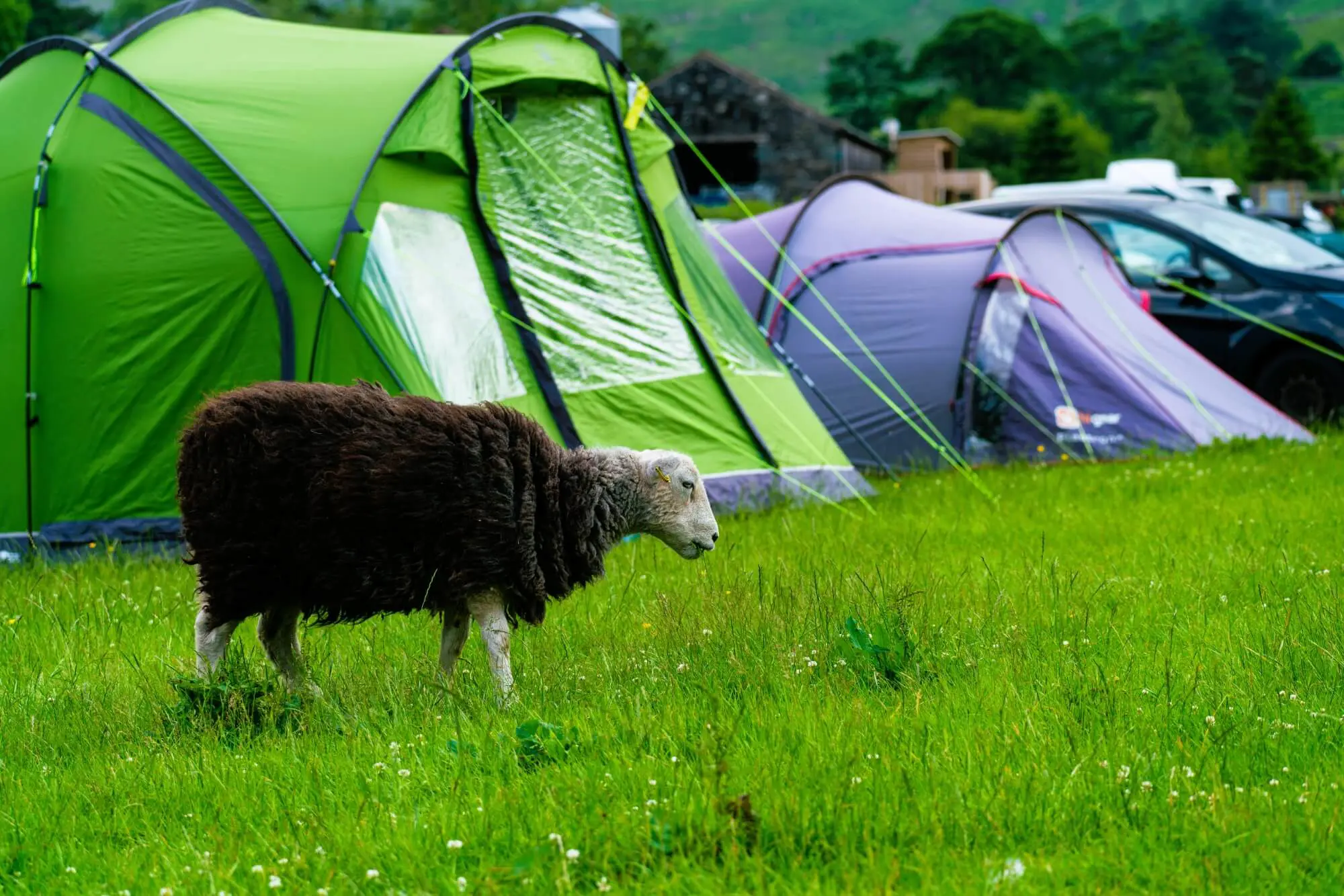
Some of my fondest memories are of staying at campsites in the Lake District with friends when I was younger. It was always a struggle putting the tent up (especially in the rain!) but it was worth the effort for a night under the stars and an opportunity to share stories and recharge our mental batteries.
Temporary, pop-up campsites, when in the right location and operated responsibly, can be great.
- They offer a relatively cheap way for people to stay in the National Park.
- They offer a sense of freedom, adventure and tranquillity that more formal sites cannot provide.
- They create opportunities for people to connect with nature and the environment for generally little cost.
- They can help reduce the problem of unauthorised fly camping.
- They provide additional revenue for farmers at a time when the agricultural sector is facing increasing challenges.
Problems can arise however where sites are in inappropriate locations or not managed responsibly. We have had many reports of noise and anti-social behaviour and disturbances to habitats and species. There is also the significant risk of landscape harm, particularly where several sites are located in close to each other.
A quick look at the Pitchup.com website, where people can review the pop-up campsites that they’ve stayed in, demonstrates some of the problems. Numerous concerned residents have highlighted some of these issues.
- “There was litter and broken plastic and glass everywhere”
- “It was more like a festival, with music and noise until the small hours”
- “Not quiet until past midnight. One group was not too bad, however the other consisted of swearing, smoking cannabis, loud shouting, playing loud music until after midnight, shouting at other groups”
- “Unable to locate any bins for rubbish, other campers had left litter”
- “I did not see the owner or any other member of staff for the duration of my two day stay”
- “The bins were constantly overflowing and scattering trash around the campsite”
So what is permitted when it comes to pop-up campsites?
In 2020 national permitted development rights were extended in response to the increase in staycations post Covid outbreak. Temporary campsites for up to 50 tents (regardless of size) or campervans can now operate for up to 60 days a year and usually start to appear during peak holiday season.
There is no limit to how many people can stay on the site during that period and only a small number of sites are excluded (Sites of Special Scientific Interest). The only thing operators need to do is notify the local planning authority and provide details of toilets and wastewater disposal facilities.
Whilst setting up a commercial pop-up campsite in a domestic garden is not permitted, there is otherwise no requirement for the tents/campers/toilets to be a certain distance from people’s homes. It doesn’t matter if the access to the site is dangerous and there is no limit to the number of campsites in any one area at any one time.
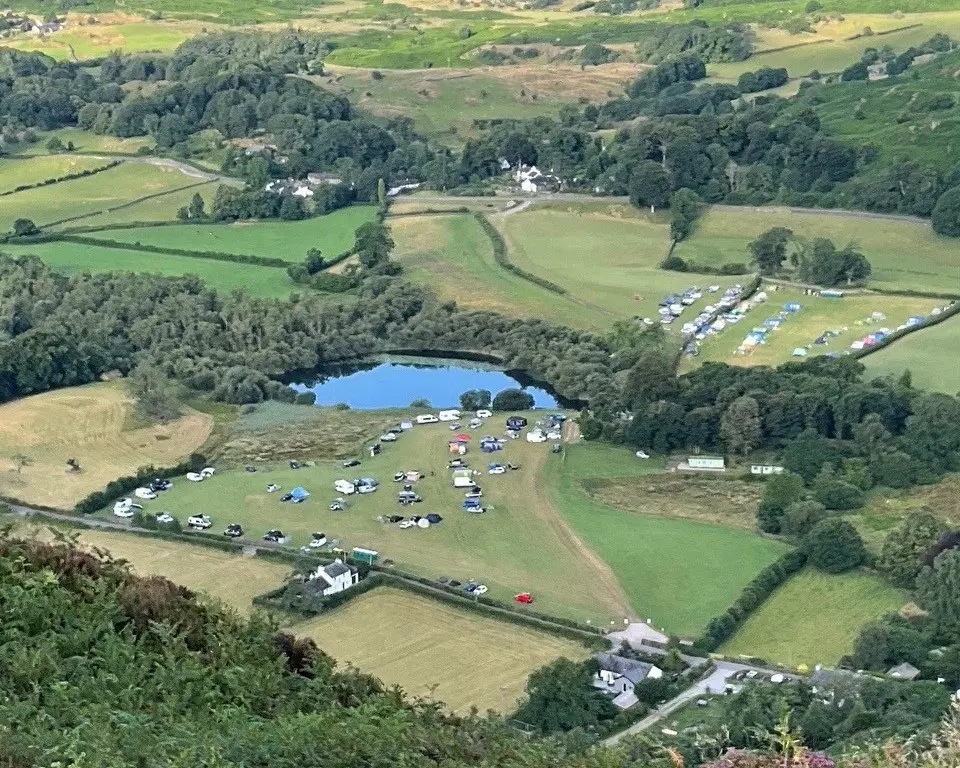
What would the valley landscape in the photo above look like if even more pop-ups popped up? What would be the impact be on tranquillity? How would the tarn and woodland species cope with an increase in noise and disturbance? Sadly, the local planning authority can’t take these things into account when the development is automatically permitted by national legislation.
Preventing pop-up problems
There are several things site operators can do to reduce negative impacts:
- Check whether the site is in proximity to habitats or species (see Defra’s Magic map – magic.defra.gov.uk) and think about what measures can be put in place to reduce disturbance. For example, limiting access to watercourses, providing information on your website or through signage about how to protect habitats and species (e.g. guidance on reducing water pollution etc).
- Speak to your neighbours. Identify any nearby residential properties and let residents know how they can report any concerns during the site’s operation.
- Think about providing site managers or having on site staff – identifying someone who concerns about noise, disturbance and anti-social behaviour can be reported to. Set out how any complaints will be dealt with.
- Provide an adequate number of bins on site and dispose of rubbish responsibly.
- Provide running water so campers can wash and clean utensils on site rather than in neighbouring watercourses.
- Keep toilets and communal areas away from boundaries with residential dwellings.
- Ban campfires and disposable BBQs – these can damage the ground and pose a wild-fire risk.
- Minimise external lighting, everyone has a torch on their mobile phones nowadays and people want to experience the night sky.
- Use existing hard surfaced areas for parking etc to prevent soil degradation and to minimise landscape impacts (remember hard surfacing is likely to require planning permission).
- Advise campers to apply caution when letting their dogs use watercourses – general advice is not to let them go into the water for at least 4 days after applying spot on flea treatments.
We would also like LDNPA to consider introducing an ‘Article 4 Direction’. This would remove permitted development rights for pop up campsites either across the Park or in the most sensitive areas. These are in place in other sensitive areas, such as the New Forest National Park and parts of Cornwall. This means that planning permission would be required for temporary campsites with the local authority having the discretion to waive planning application fees to minimise impacts on farmers and landowners. All impacts could then be considered and necessary conditions could be attached to any planning permission to reduce harm and help protect the environment which people come to the Park to enjoy.
Alternatively, you can contact us at planning@fld.org.uk. We will collate this evidence which will help us make a case for exploring an Article 4 Direction in the National Park.
Share this post
Related posts
Updates from our campaigns, our land, and the people taking action for the Lakes.
Bugs, bats and bees
Building bug hotels, bat watching and seed collecting at Dam Mire Open Day. Government funding for Sustainable farming…

Woods and squirrels
It’s been another busy week on and off the land as work continues to help our woods in…
All about seats, plugs, walls and bats…
In a packed blog this week: the Dam Mire wood Eye Seat, bracken rolling at Rusland woods, signpost…