
Land manager’s diary
Wildlife bonanza – slow worms, toads and bats
This week, Jan has been meeting up with theLittle Asby commoners, exploring the hay meadows of High Borrowdale and pondering the issues around tree planting and water.
Wildlife bonanza – slow worms, toads and bats
Recently, it was the time for us to hold the AGM of our Little Asby Commoners Association, where we all get together and talk about how the management of the common is going. We currently have Bowland Ecology doing a feasibility study for us which is a pre-requisite to a potential Countryside Stewardship Higher Tier scheme for the common. This is a Defra scheme which pays farmers and land managers for farming in a more environmentally friendly way and will follow on from over a decade of Higher Level Stewardship Scheme.
The study is mapping the current state of play for the various habitats and will come up with two or three options as to how management of the common could change to better enhance the habitats. This will likely mean some changes to the stocking – both the levels and also the type – sheep or cows, and will mean that the stock will have to come off the common for some months in the winter. Basically the more the commoners are prepared to change, the more they will be paid.
There will be difficult business and practical decisions for the commoners as to who wants to change to cows or put more cows out, what type of stock, does more money justify the changes they need to make, what are the impacts on the farming business etc. Until the feasibility report is done it is too early to predict what will happen but there is a lot to think about. Currently the scheme is not open to common land applications as the computer system cannot handle such complex applications. Defra made a recent announcement that they are trying to rectify this and will trial a new system for common land applications on ten commons this year, hoping to roll it out to more next year. Given Cumbria has a third of England’s common land, that is a lot of upland farmers left in limbo waiting until they can apply for funding. Meanwhile, Defra opened the most basic funding scheme, the Sustainable Farming Incentive to applicants on 30 June. By the end of 6 July 50% of the budget had already been allocated. This just shows how high the demand is for public funding for farmers and how few the options are.
High Borrowdale hay meadows
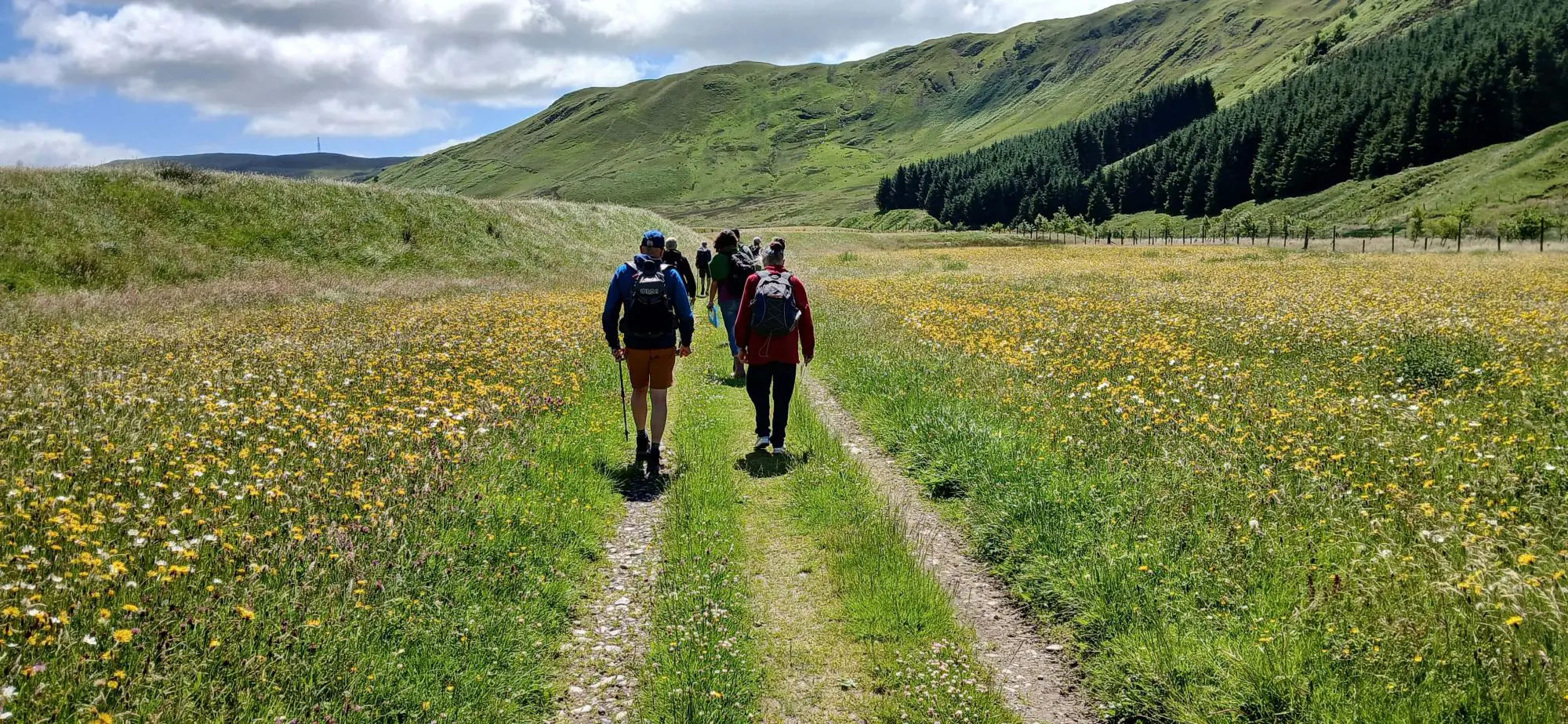
Last Thursday, we did a walk and talk down to High Borrowdale to talk about our stunning hay meadows. It was National Hay Meadow day on 4 July so we got in early. The meadows are just stunning this year, one of the best shows in recent years. So if you fancy a look you had better be quick, they can be cut after 20th July. On the way out we met bee expert and friend Julia Piggot going to have a look. She found some bees: Bombus pratorum and Bombus lapidaries and some peacock butterfly caterpillars. On Friday the Hole in the Wall gang were down for day two of the big challenge on the rebuild of a big section of top wall. The sheep off the fell had found a way in and were obviously considering their options for getting back in to eat our wet flushes!
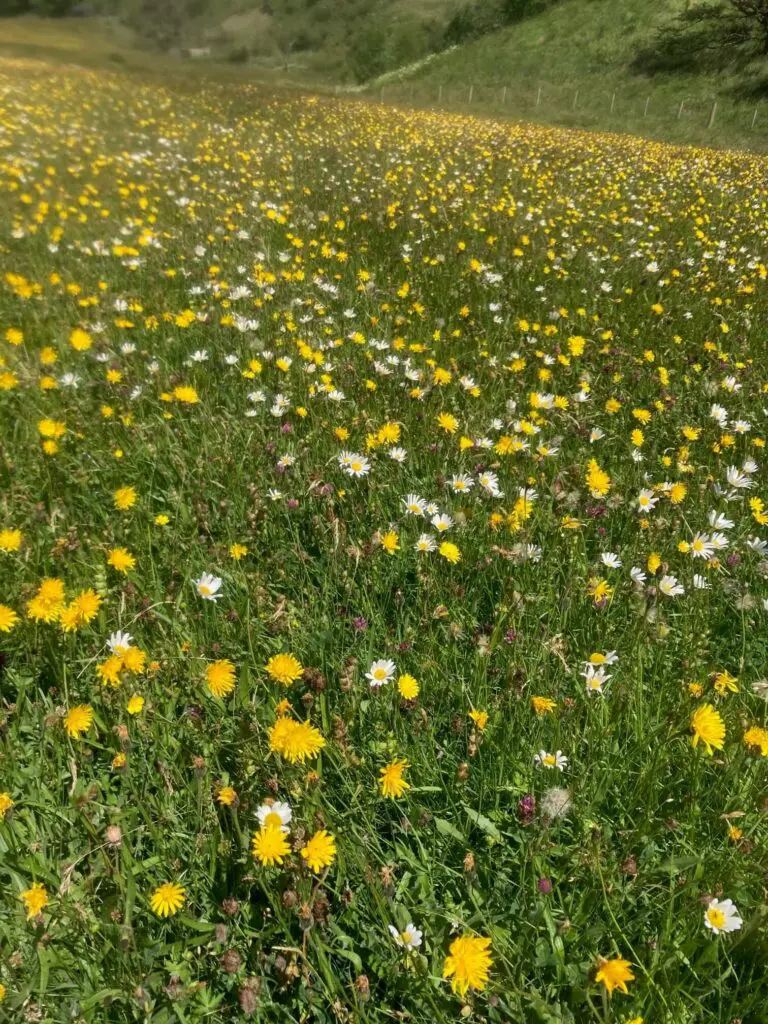
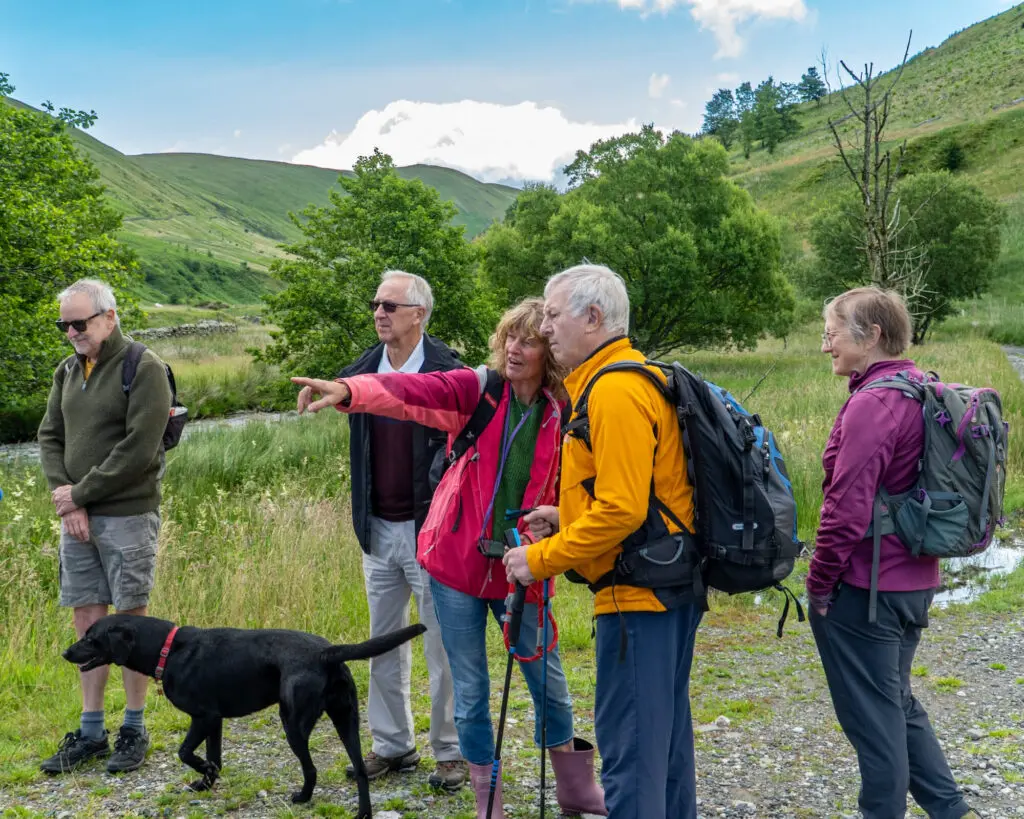
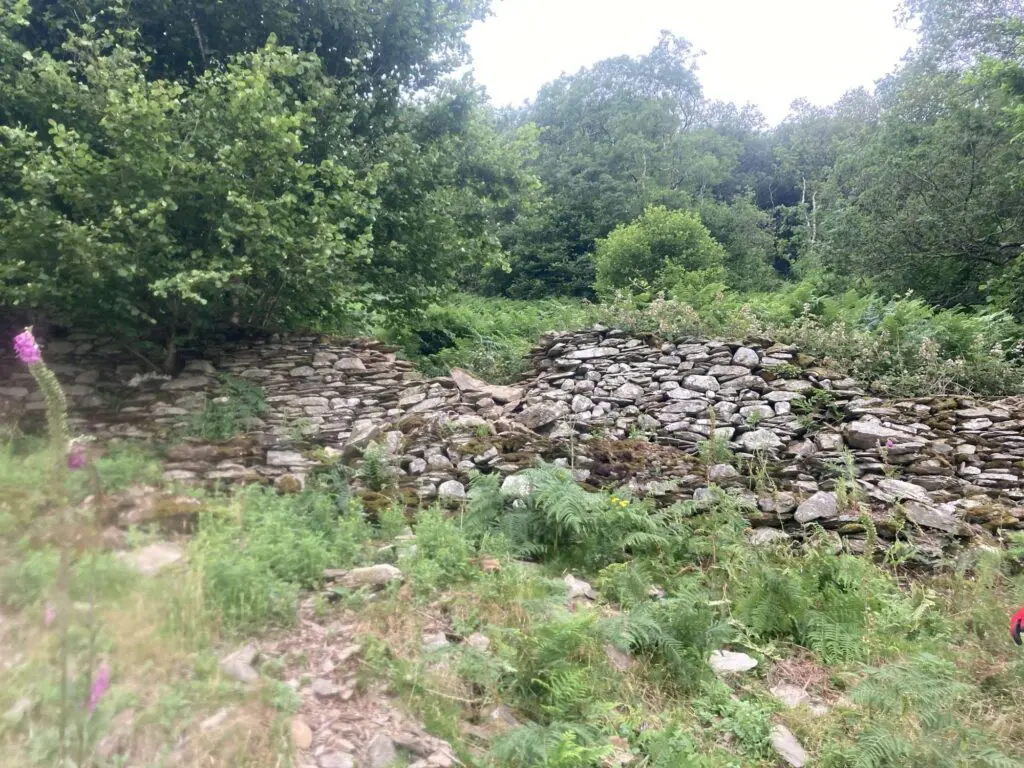
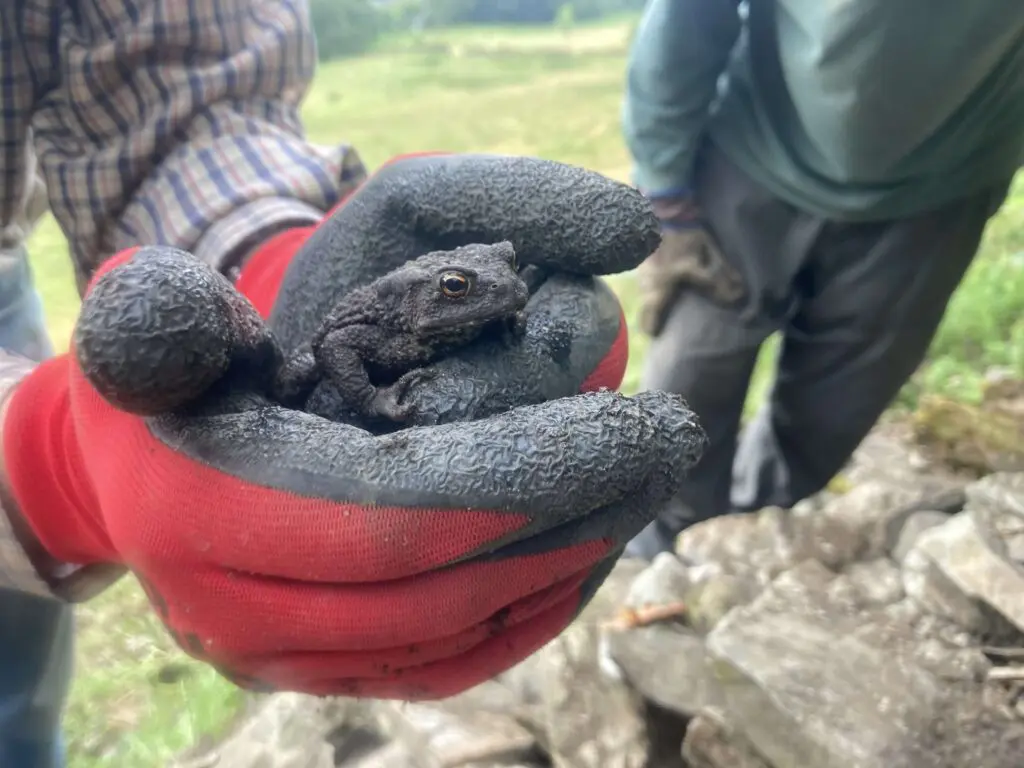
High Borrowdale splendour, the guided walk (thanks to Joseph Beckett), a broken down wall at Middle Bleansley and Mr Toad.
Over at Middle Bleansley
For this week’s volunteer workparty, we have been down to the lovely Lickle Valley in the lower Duddon to our land at Middle Bleansley. The first issue is always getting there without getting lost, but six of us managed that challenge, including Miguel who was on holiday from America and staying in Ravenglass. Three big tasks for the day: a fencing issue to resolve to stop the grazier’s Herdwicks escaping, a wall gap nearly as challenging as that at High Borrowdale, and a path to clear that was impossible to find due to overgrowth bracken and bramble.
We set to with gusto and managed to do most of it, but the path work needs days more work if it is ever to be clear. The wall was on a slope, but the people that had put it up had built a wall in front to act as a platform to stand on. In some ways it made it much easier to do as we could stand on something solid, in other ways much harder – we always train people to stand back and look at the wall regularly. It’s a great way of spotting things like running joints or gaps. This time we had to make a conscious effort not to stand back because then we would have fallen off the platform and had a mighty big drop down the slope. The local wildlife was extremely welcoming with a slow worm and a toad coming out of the wall to say hello!
Thursday was a day of prep with volunteer Richard. We are hosting a day learning to dry stone wall for corporate partner the Co-op at our new land at Scales near Threlkeld. It makes sense to find a suitable piece of wall and take it down ready to go for our visitors. That way they can start building from the start rather than waste time taking things down. It was the first time we have been on the land to do jobs, so was a good chance to observe the sheep coming in from neighbouring land and have a closer look at the plants and species we have there.
The complex link between water and trees
With two heatwaves in as many months for some parts of the UK, attention turns again to what to do in future to make our landscapes more resilient and mitigate some of the impacts of climate change, be it hotter weather, drought, storms etc. One way is to plant more trees – they can help stabilise soils, sequester carbon, slow the flow of water, enhance the landscape and wildlife habitat if they are the right species and so on. There have been calls for a lot more green infrastructure in our cities to provide shade and help cool people off. But what if planting trees at a large scale causes changes to water availability that make things worse?
The immediate local effect of tree restoration is straightforward: trees evaporate significantly more water than grassland or cropland, drawing on deeper soil reserves, intercepting more rainfall on their canopy, and exchanging moisture more freely with the atmosphere. This increases evaporation — and reduces the water left over for rivers, groundwater, and human use. However, the key question asked by researchers at Wageningen University in the Netherlands is whether that evaporated water returns as rainfall, either locally or downwind, offsetting the loss. The answer apparently depends heavily on where you are. Tree restoration can increase water availability by up to 6% in some regions — particularly in tropical areas where evaporated water quickly recycles back as rain. In other regions, water availability could fall by up to 38%. If the water evaporated by trees is carried by prevailing winds back over land, it can fall as precipitation, but if it is carried out over the ocean, it is effectively lost to the local water system.
The researchers highlighted the UK as a case where tree restoration could be particularly counterproductive from a water perspective. The UK has substantial tree-restoration potential, meaning planting at scale would significantly increase evaporation. But dominant westerly winds carry that moisture eastward towards continental Europe rather than recycling it locally, and there is no equivalent tree-restoration reservoir upwind over the Atlantic to compensate. The result is that streamflow — the water available in rivers and catchments — would decrease more substantially in the UK than in most other regions.
For a country that has made large-scale tree planting a centrepiece of its nature recovery and net-zero strategies, this is a finding that needs further thought. So what does that mean for those of us who are trying to do our best for nature and resilience, should we plant trees or not? The answer seems to be smarter tree restoration that accounts for hydrological consequences rather than treating all planting as uniformly beneficial. Woodland planting and restoration that reduces water availability in regions already facing water scarcity risks trading one environmental problem for another. Context, scale, species choice, and location all matter in ways that blanket planting targets cannot capture. You may think for Lakeland with high rainfall this does not matter, but as we experience longer and more frequent periods of drought, it may be another factor that needs to move up in our thoughts when planning future projects.
Join us for a bat walk!
On a lighter note, I read an interesting article about bats this week from the Nature Friendly Farming Network – What bats tell us about the land | Nature Friendly Farming Network. If you fancy a bat walk, pencil in 18 September at Dam Mire Wood. Event details and booking details will be on our website soon.
Share this post
Related posts
Updates from our campaigns, our land, and the people taking action for the Lakes.
New recruits and celebrations
This week, Jan and our volunteers return to Mazonwath to plant and take care of some dry stone…
Local plans: help shape future development in Cumbria
Our planning officer explains what local plans are and how you can have your say
Research and conservation news
Our land manager rounds up some more news from across the conservation world – the real cost of…