
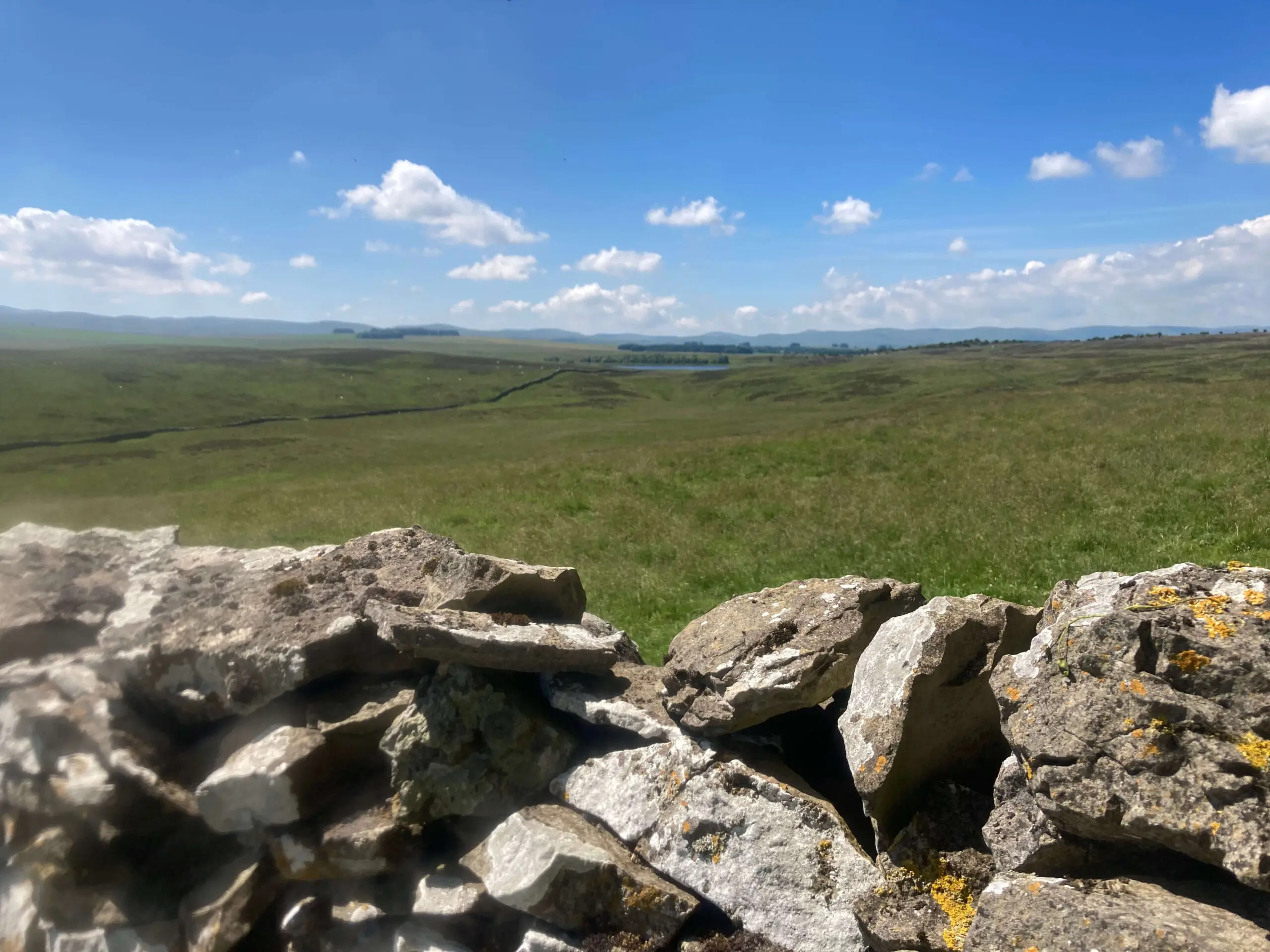
Land Manager’s diary
Fossils, flowers, forests and fly-campers
This week, Jan pays a visit to Gowbarrow to look at some ancient woodland before returning to Mazonwath with her volunteers to work on more dry stone walling and check in on the hay meadow restoration work.
Fossils, flowers, forests and fly-campers
It was a rare treat on Monday — a trip out somewhere new for a discussion with the Rainforest Alliance and a nosey about someone else’s land. We were over at Gowbarrow in Ullswater looking at some ancient woodland being restored and progress using various different sized tree cages in wood pasture and grazing land.
As with all landscape work, there are often no quick, easy or right fixes. Interventions can be trial and error and happen over a long timescale. So we discussed things such as how best to remove non native species (in one go or over a longer period?), what impact it would have on wind blow and stability of the existing trees, and which species need the light or shade. Apparently removing more than 20% of a woodland in one go will make it unstable.
We also discussed the merits of small tree planters and enclosures compared to big ones and even bigger ones. At Rusland we thought we had densely planted our enclosures with up to 25 trees per enclosure. We saw the same size enclosures with 75 trees planted. More dense planting will keep the deer out but will also lead to more losses. There was quite a discussion about cows in woodlands too, with varying degrees of caution expressed. We are hoping to trial them for a few days at a time to see if they help reduce bracken. So lots to think about especially for our work restoring our Rusland rainforests.
Walls and wildflowers at Mazonwath
On Wednesday we were back for our monthly dry stone walling at Mazonwath. Since we were last there contractor Dan has been over and fettled all our 30 or so tree planters for us. They are prone to damage from the wind and the wet but also from cows using them as rubbing posts, so it was good to find the time and money to get them into a better shape for a few more years before hopefully we can remove them and the trees survive on their own.
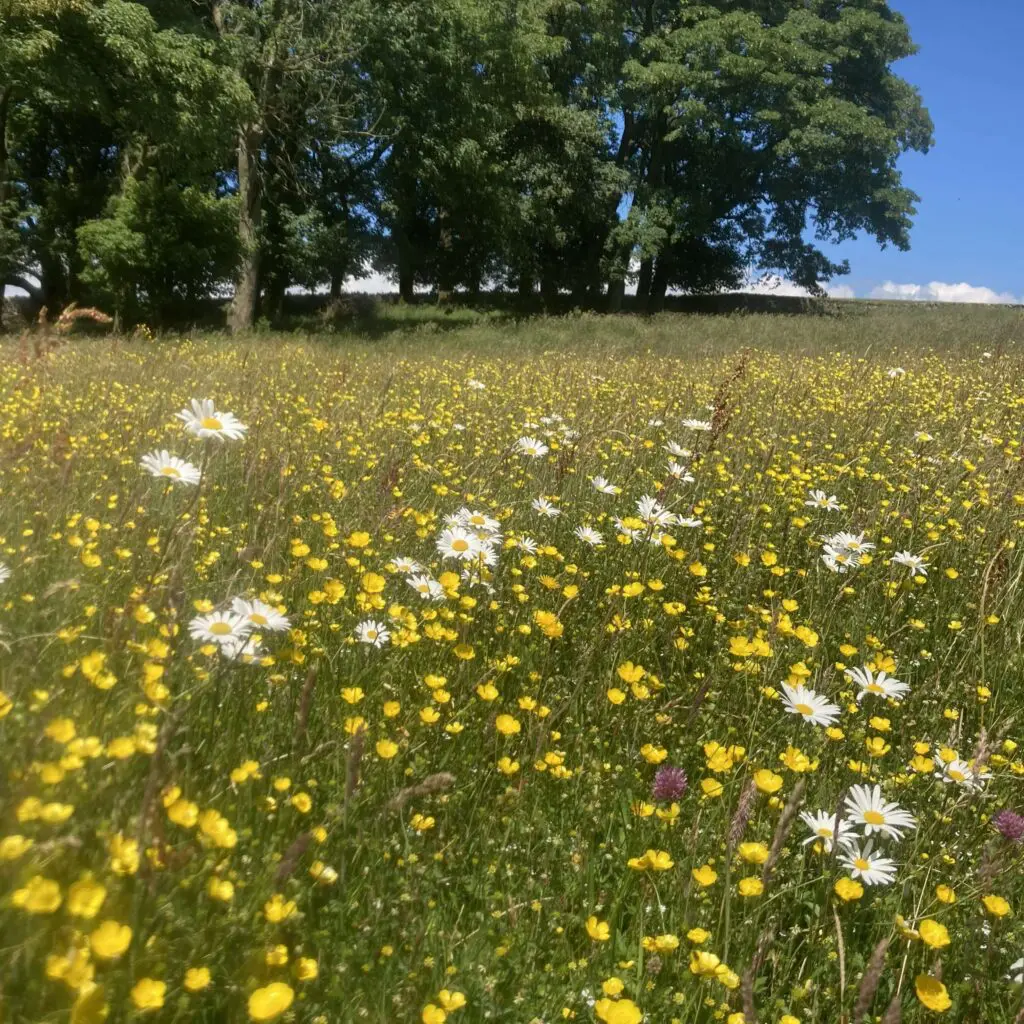
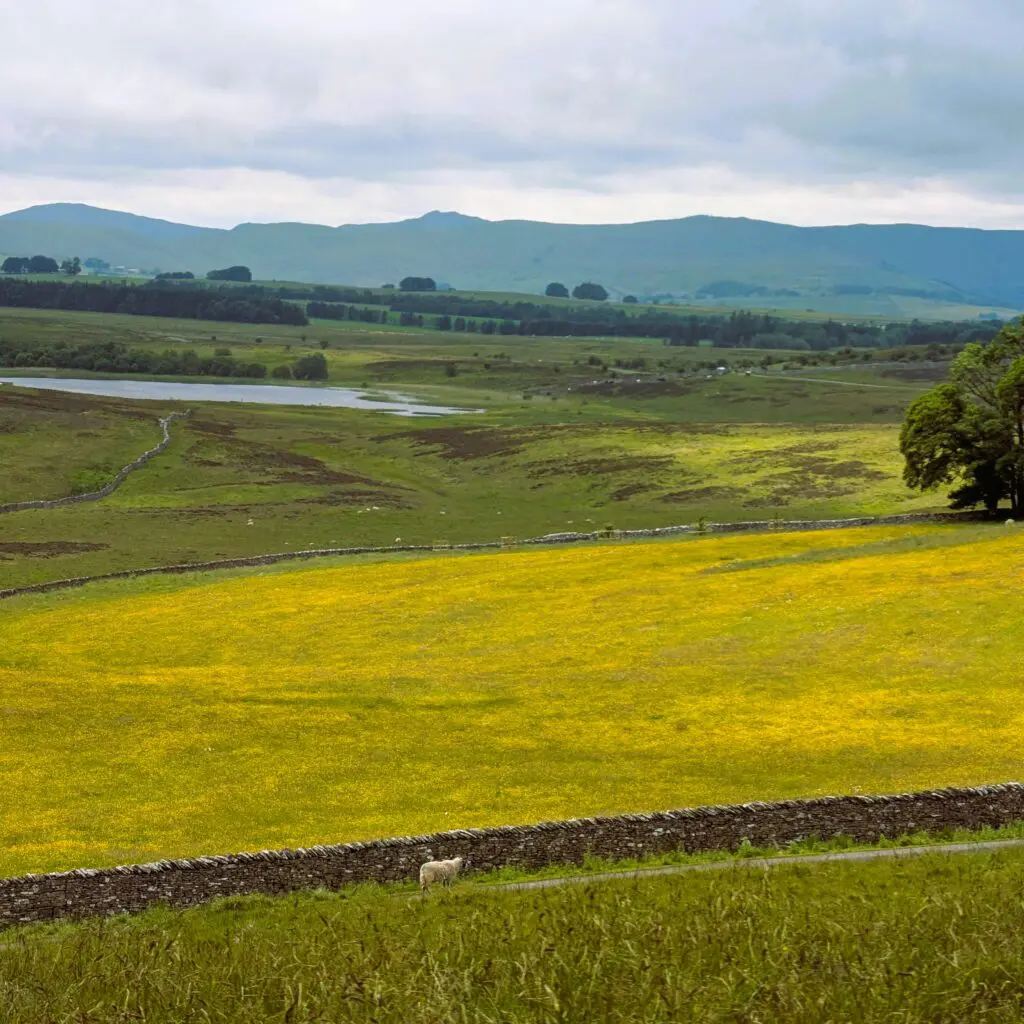
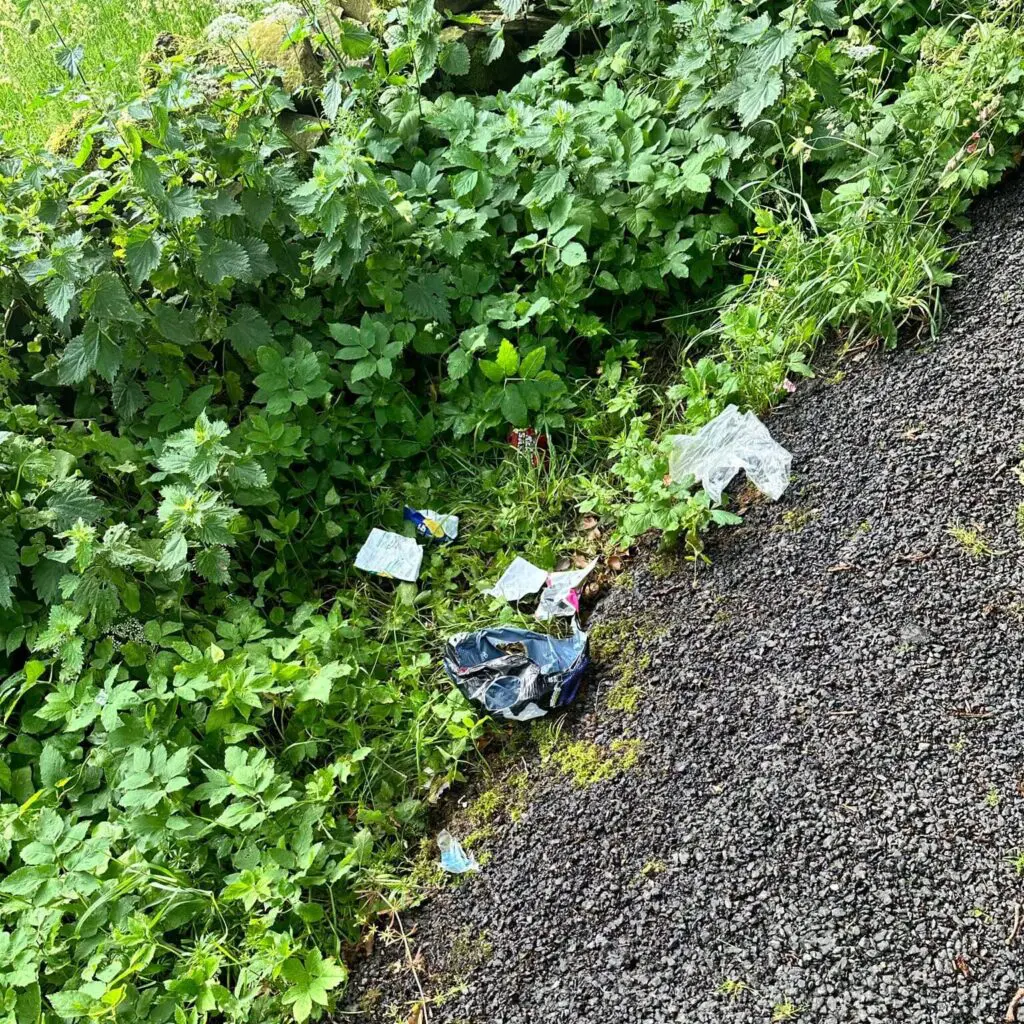
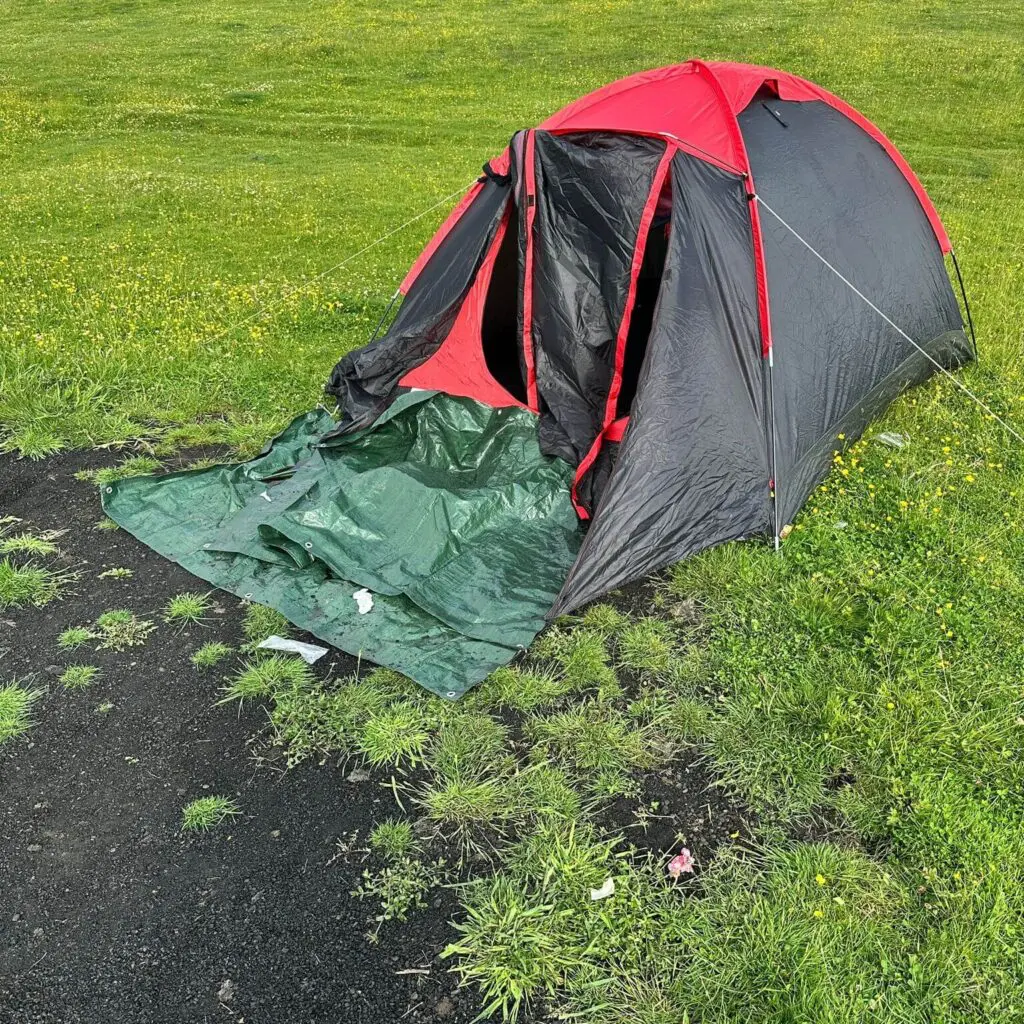
The beautiful and the ugly: Mazonwath hay meadow and the aftermath of camping on the Helm.
We had two gangs of wallers, one finishing off around the wood, and the other starting a new piece of external wall. They were within a few metres of each other but it was really noticeable how one area had hardly any fossils, and the other was absolutely packed with them. We avoided the worst of the heat being under the trees and there was a welcome breeze all day.
This was a good chance to check up on our hay meadow restoration. The grass is almost double that at High Borrowdale but it is nowhere near as rich. There were more flowers than last year and it is packed with yellow rattle which is good.
Fly-camping strikes the Helm
We had our own experience of fly camping on the Helm at the weekend. Pony grazier Nicola found a tent, rubbish and the works abandoned on the site and unfortunately had to clear it all up to avoid any danger to the ponies. We don’t mind the odd bit of camping on our land as long as people tidy up and leave no trace, but going to all the effort to haul the tent up there and then just walking off and leaving it just seems so pointless and mindless. As we know this is something going on around the whole of Lakeland and it’s why we felt we needed to have a litter campaign. Our litter survey is still open so if you have experienced litter or fly camping and want to report it, you can do so here.
It chimes with an article I read in the Guardian about a charity Ocean Cleanup. They are operating in 10 of the most polluted cities to basically collect all the plastic and rubbish out of the ocean. Just 1,000 of the world’s rivers are responsible for nearly 80% of plastic emissions into the ocean, and 90% of all pollution in the ocean comes from rivers.
All this depresses me and just makes me shout “Don’t do it in the first place!” It is easy to be despondent when talking about issues at a global scale, but our individual actions really do make a difference. We can do our bit here at Friends of the Lake District, which is what we are trying to do on our 640ha of land.
Next up for us is the High Borrowdale meadow walk on Thursday 2 July and if you fancy exploring a really quiet part of Lakeland, we are down the Duddon at Middle Bleansley on 7 July with our workparty.
Share this post
Related posts
Updates from our campaigns, our land, and the people taking action for the Lakes.
Bugs, bats and bees
Building bug hotels, bat watching and seed collecting at Dam Mire Open Day. Government funding for Sustainable farming…
Woods and squirrels
It’s been another busy week on and off the land as work continues to help our woods in…
All about seats, plugs, walls and bats…
In a packed blog this week: the Dam Mire wood Eye Seat, bracken rolling at Rusland woods, signpost…