
Land Manager’s Diary
So who is eating the fence?
National Volunteers Week: adventures at the Helm with bracken, grass clearance, ponies and fence repairs. An award nominated volunteer, and research proves the healing effects of greenery.
So who is eating the fence?
There are a vast array of national and international awareness days and weeks celebrating things. This week it’s National Volunteer Week, celebrating all the fantastic things people do to help organisations such as ourselves. It’s also Great Big Green Week, encouraging people to get involved in things to make a difference to nature and climate.
Andy nominated
Our land work fits really well with both these as we continue to try and make a difference on our land for landscape, people, nature and climate. But we cannot do this without our fantastic volunteers. We represent CPRE, the Campaign to Protect Rural England in Cumbria and we thought it fitting to nominate our dedicated volunteer Andy Ladell for one of their volunteer awards. You can read more about this and all the work Andy does for us which totally justifies an award here.
Lakeland continues to be stunning with all the new and bright fresh colours. It seemed it was a great year for bluebells and hawthorn blooms, but it also seems to be a great year for buttercup and pignut, with big swathes of fields full of yellow and white. The Helm is no exception and our workparty on Tuesday gave us a chance to admire the colours on site, especially up at the top.
It was great to be joined by two students from the University of Cumbria who quickly got stuck in to all the tasks for the day. The first two were to clear the paths through the southern woods so that people can walk to the top of the Helm and along the bottom of the wood more easily without fighting through bracken or brambles.
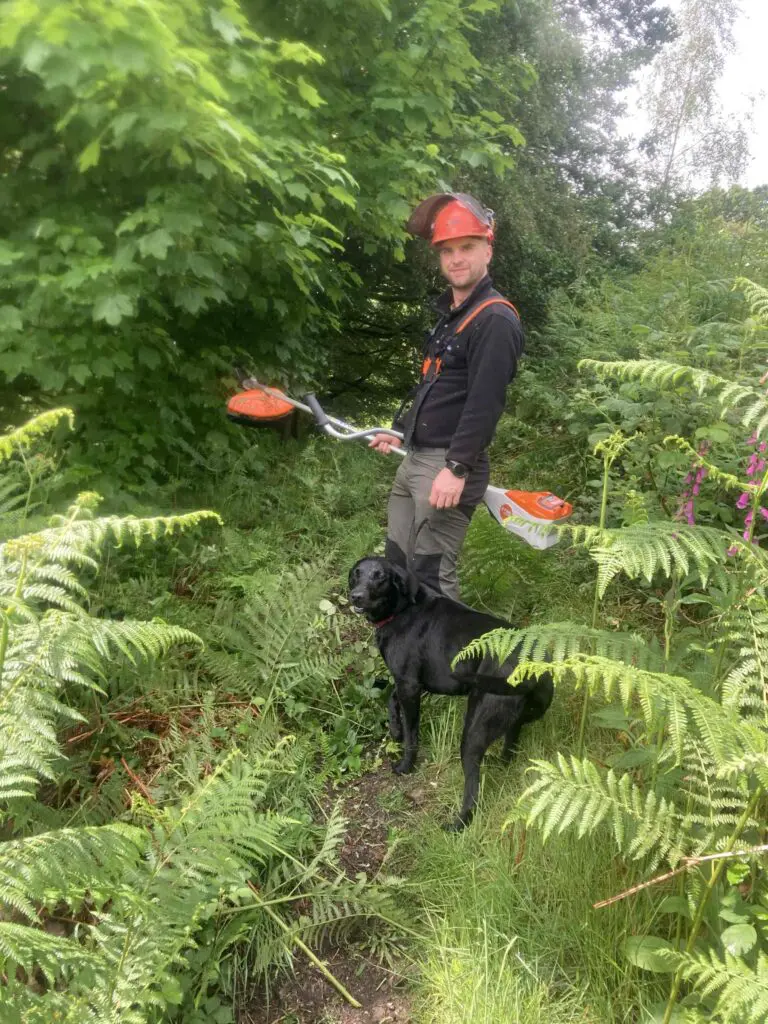
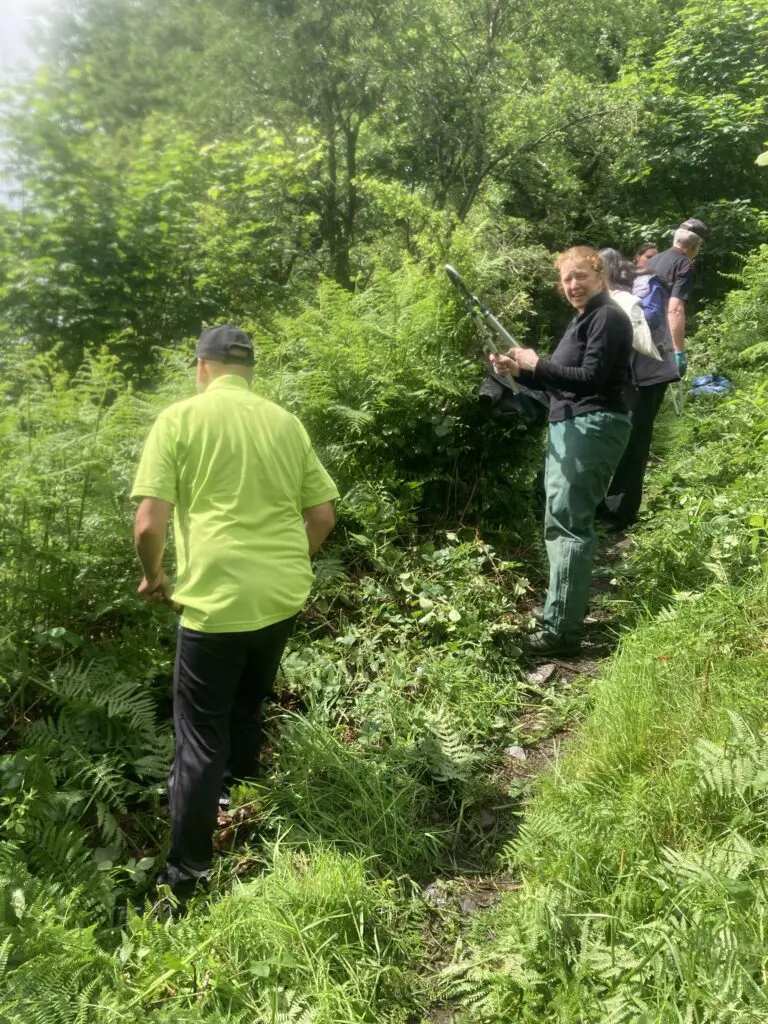
Cutting back bracken and brambles at the Helm
We then moved on to the main part of the Helm to check on our newly planted trees, ensure they were staked correctly and removed the grass growing in the tubes. Tree growth rates are pretty good with only a few losses, but strangely the holly was not doing too well (given how well it’s doing at some of our other woods in Rusland for example).
Innocent until proven guilty
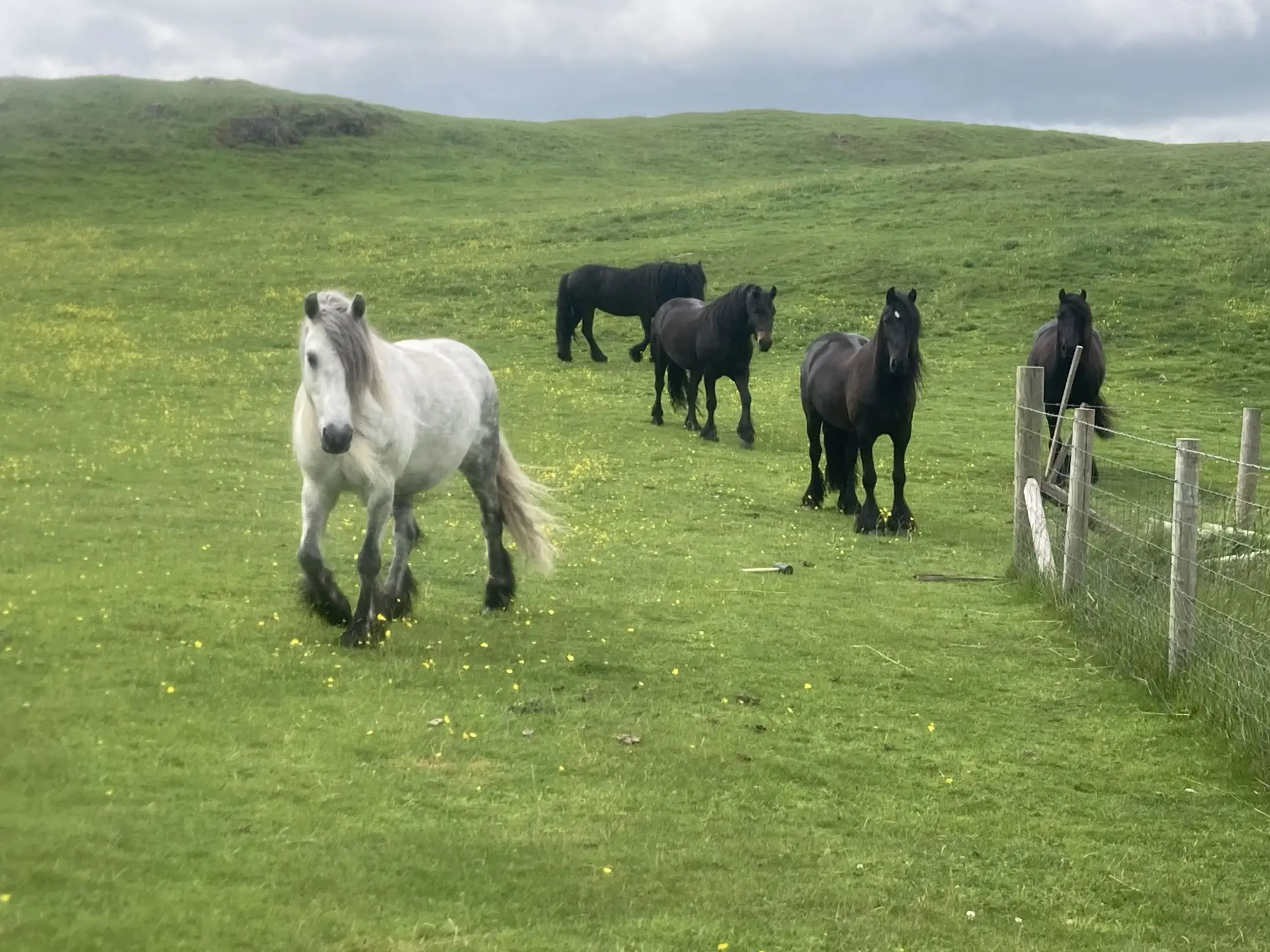
We then repeated the job for the ten tree enclosures covering the Helm. We met up with John the cow grazier and Nicola the pony grazier who were rounding up the cows for TB testing. The ponies then came to ‘help’ us check the wire on the enclosures and remove some tree tubes. They denied pulling the chicken wire off as they pulled grass out of the enclosures despite being caught in the act on video!
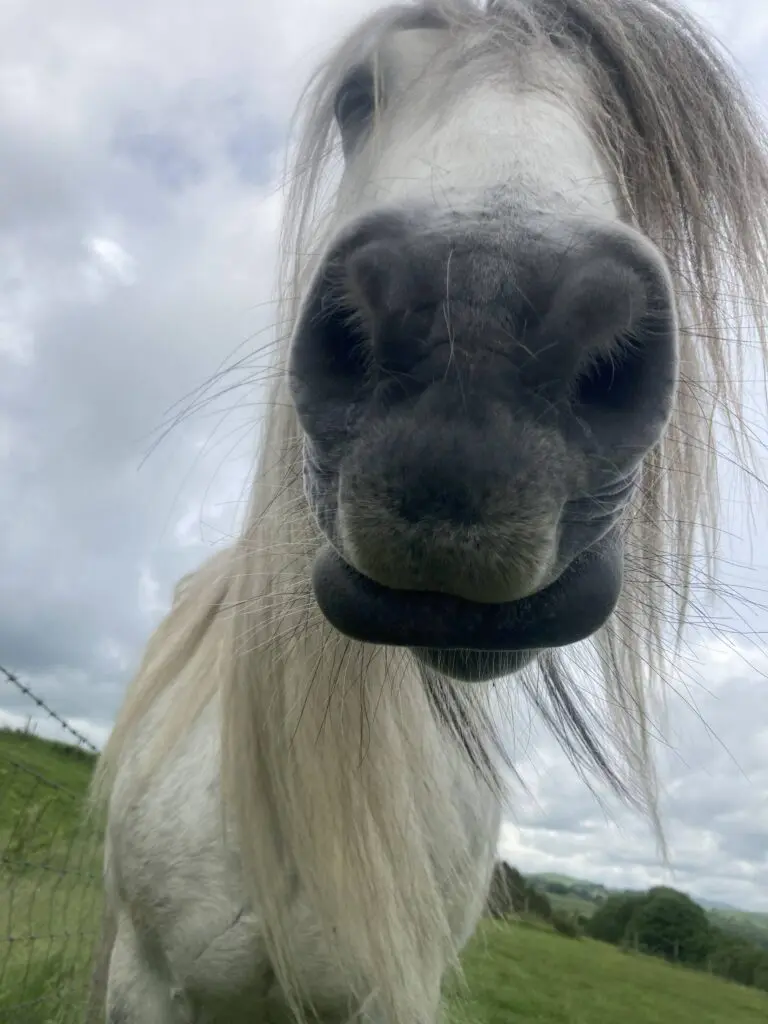
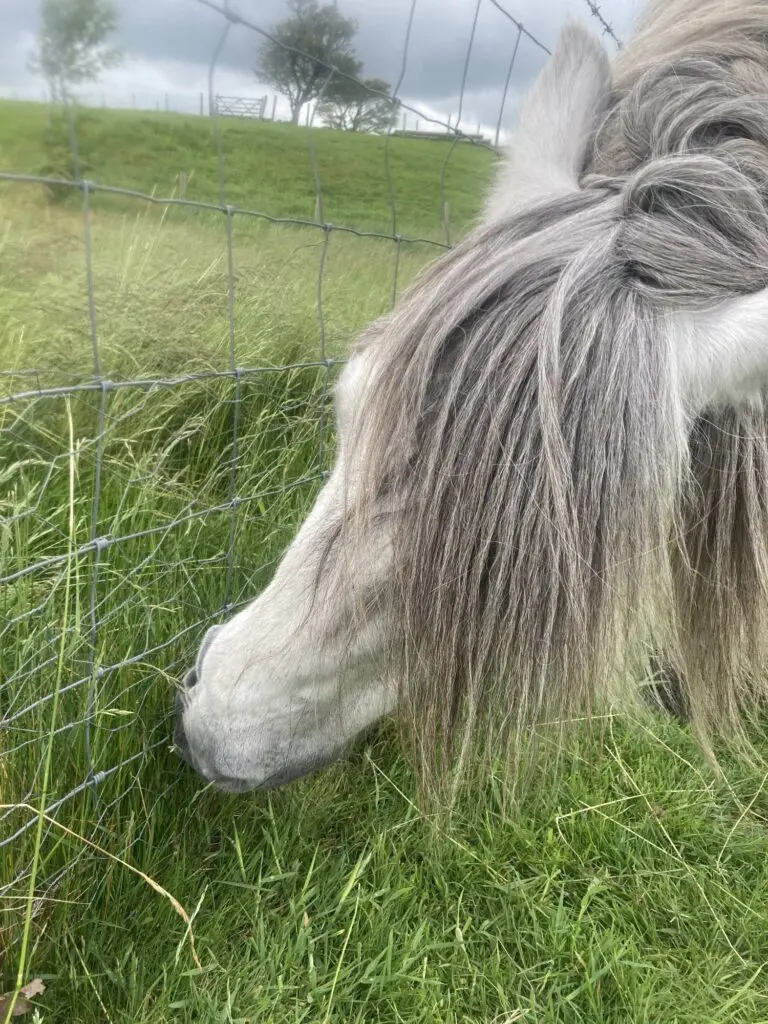
I am not eating the fence honestly
Elsewhere we found the barbwire on the top of the enclosures had been cut and removed, why we have no idea, by whom we have no idea but this time the ponies are innocent… The spec of the fences was checked with the graziers before we put them in and they advised to put barb to stop the animals reaching in and flattening the fences.
Benefits of greenery –
We are continually being told the benefits for our mental and physical health of being outdoors and many of us are big believers in this. I read a very moving article recently by Merlin Hanbury – Tenison about how moving back to his native Cornwall and getting involved with rainforest restoration amongst other things had changed his life. If you fancy a read it is at ‘It’s a place of healing’: the man on a mission to restore Britain’s ancient rainforest | Environment | The Guardian
But what about the value of looking at a green wall, perhaps one that does not even have any living plants? As our urban spaces worldwide continue to grow and green space is reduced, urban temperatures can rise up to 12°C higher than in rural areas, significantly increasing heat exposure which in turn can cause thermal stress, psychological distress and physical illness.
Green spaces can help resolve some of these issues, but if there is no space left for green, would rooftop or vertical greenspaces do the trick? Researchers wired people up to look at or sit near a green roof, a live plant green wall, and an artificial plant green wall and for 11 days researchers collected mood and thermal perception surveys alongside heart rate and EEG readings. Results showed that every green infrastructure setting significantly reduced heat stress, not surprisingly the largest reduction being from a live green wall but secondly by the false green wall. Heart rates dropped, there was more brain activity such as wakefulness, relaxation and attention, and reductions in emotional stress.
– both real and virtual
The cooling effect of greenery is both physically real and psychologically noticeable. Being near green things really does help then, and even if you cannot see live plants, looking at artificial ones or something like our Virtual Tour of all our land where you can feel like you are really there can have really positive effects. Our new website now has all our virtual tours on it and you can look anytime. We do update them from time to time, so do have a look or drop us a line if there is something missing you would like to see.
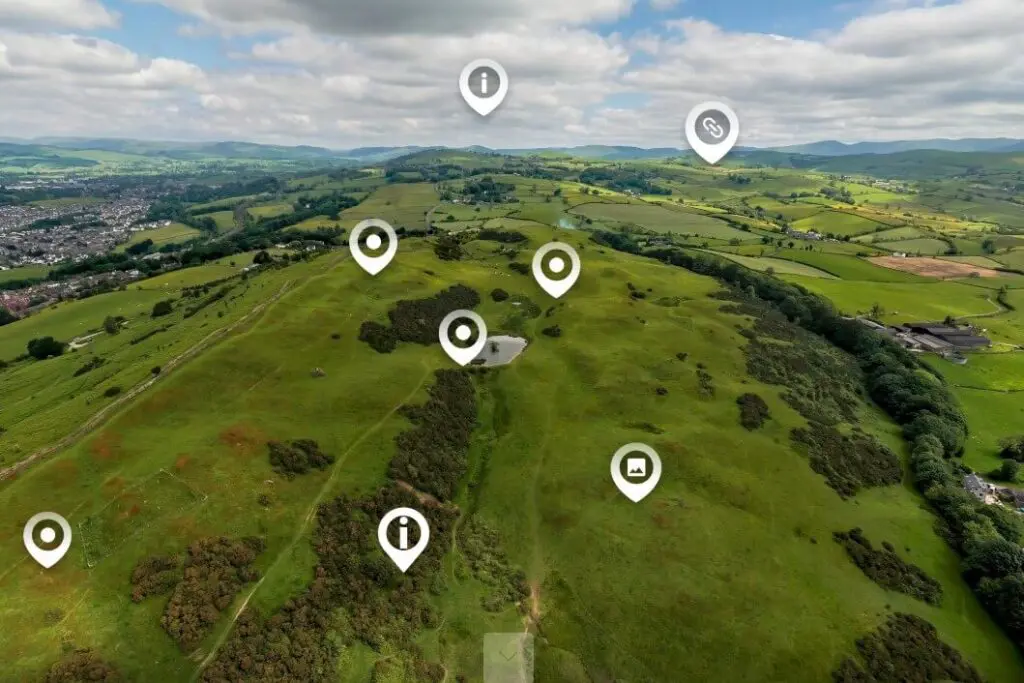
Photo: The Helm virtual Tour
Next week we’re back at Dam Mire Wood at Threlkeld, and our first chance to explore the new land now it has its new access bridge. Join us if you fancy maintaining the paths and doing a bit of clearance work : https://www.friendsofthelakedistrict.org.uk/event/dam-mire-wood-workparty/
Share this post
Related posts
Updates from our campaigns, our land, and the people taking action for the Lakes.
Drought in Cumbria
Policy Officer Amanda McCleery looks at what should be done to mitigate the risk of drought in Cumbria.
Scotmid Co-op volunteers lend a hand at new site
The Scotmid Co-op team helped rebuild boundary wall on new Friends of the Lake District land
Nature Recovery Fund helps restore Lake District rainforest
Friends of the Lake District has been awarded £14,900 from Westmorland and Furness Council’s Nature Recovery Fund to…