
Land Manager’s diary
Bugs, bats and bees
Building bug hotels, bat watching and seed collecting at Dam Mire Open Day, opening the new bridge and Eye Seat. Government funding for Sustainable farming runs out in 6 hours, and genetic diversity of bumblebees.
Bugs, bats and bees
Well if there is one day you don’t want relentless pouring down rain it’s when there is a public open day on our land scheduled and especially an evening bat walk… Yep you guessed, relentless rain for our Dam Mire open day last Friday. Did it dampen our spirits…. no, we had a fun and an amazing time with the brave people who turned up, despite the soaking!
Dam Mire Open Day: Building bug hotels and seed collecting
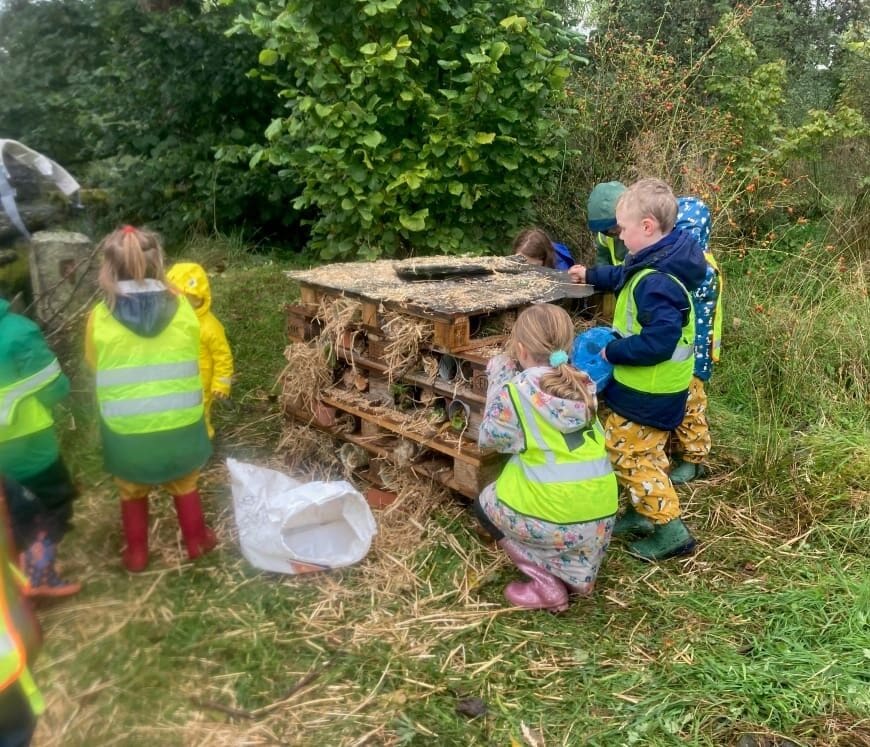
We kicked off with Threlkeld School children who joined us on site to build two huge bug hotels, and also went seed collecting from the trees. The seeds they collected will go back to school and be planted up, and if they turn into small trees, can come back to be planted at Dam Mire in future. It is a bit of an ambition of ours that every child at the school will have planted a tree there so in future they can go back and see their tree growing and perhaps remember planting it.
After a quick drink and cake stop we welcomed the public onto site. We had the gazebo with craft activities on the go, including making your own bat.
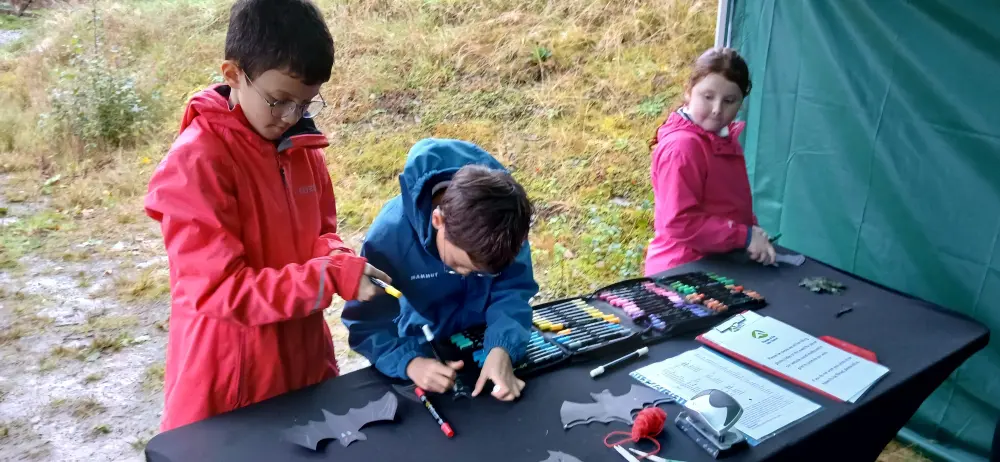
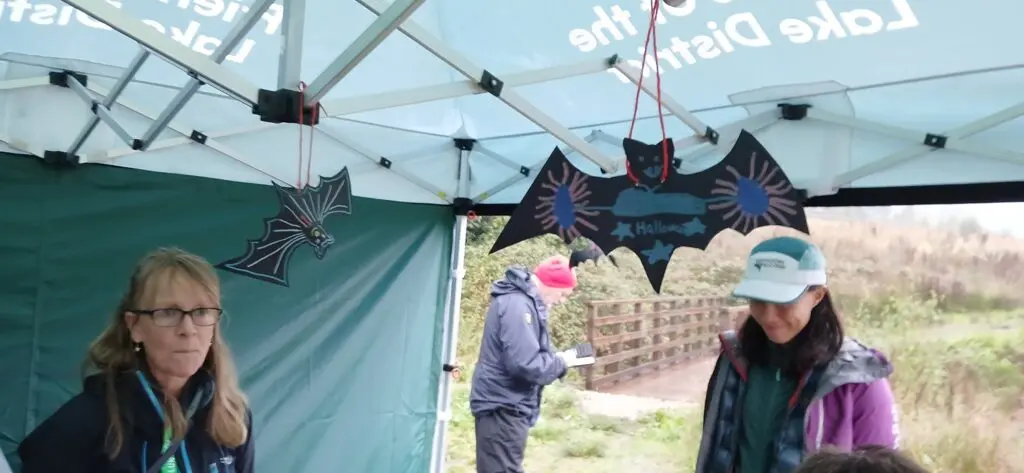
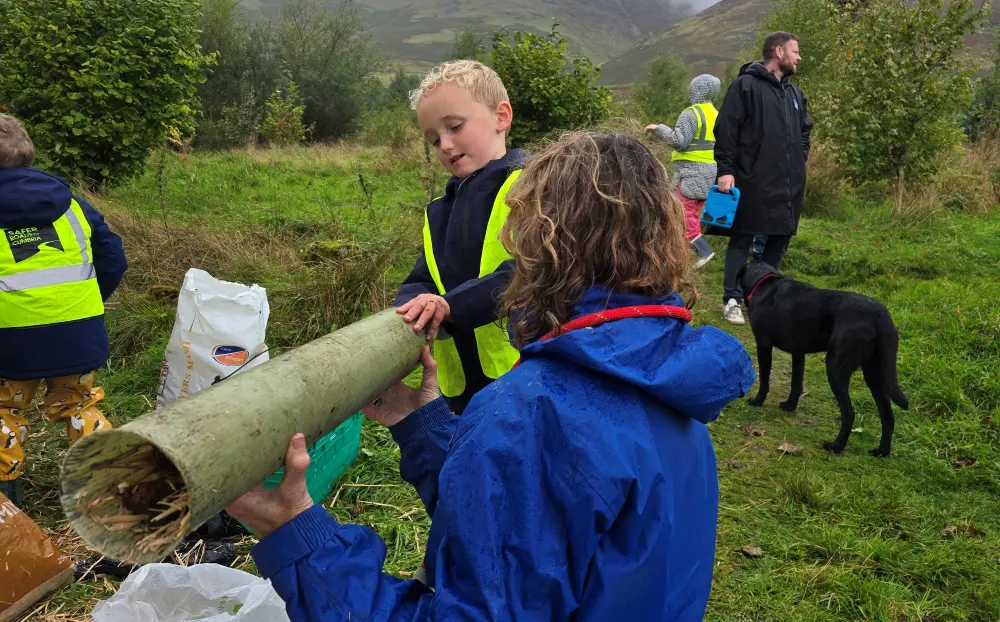
Bat crafts and making the bug hotel, Dam Mire Open Day
Opening the new bridge and the Eye Seat
Our boss Colin cut the ribbon to officially open the new bridge, and then the new eye seat. Rachel who donated the seat and had the inspiration for it following her cornea transplants. She gave a talk explaining why she had chosen to do this, and then expert waller Richard Staley explained how we arrived at the design and what the different elements of the seat were. Despite the rain everyone loved the seat and commented how it fits in very naturally.
The first of the walks and talks then took place with a walk around the new and old site learning how we got the two pieces of land, what we’ve done so far and our future plans for the site.
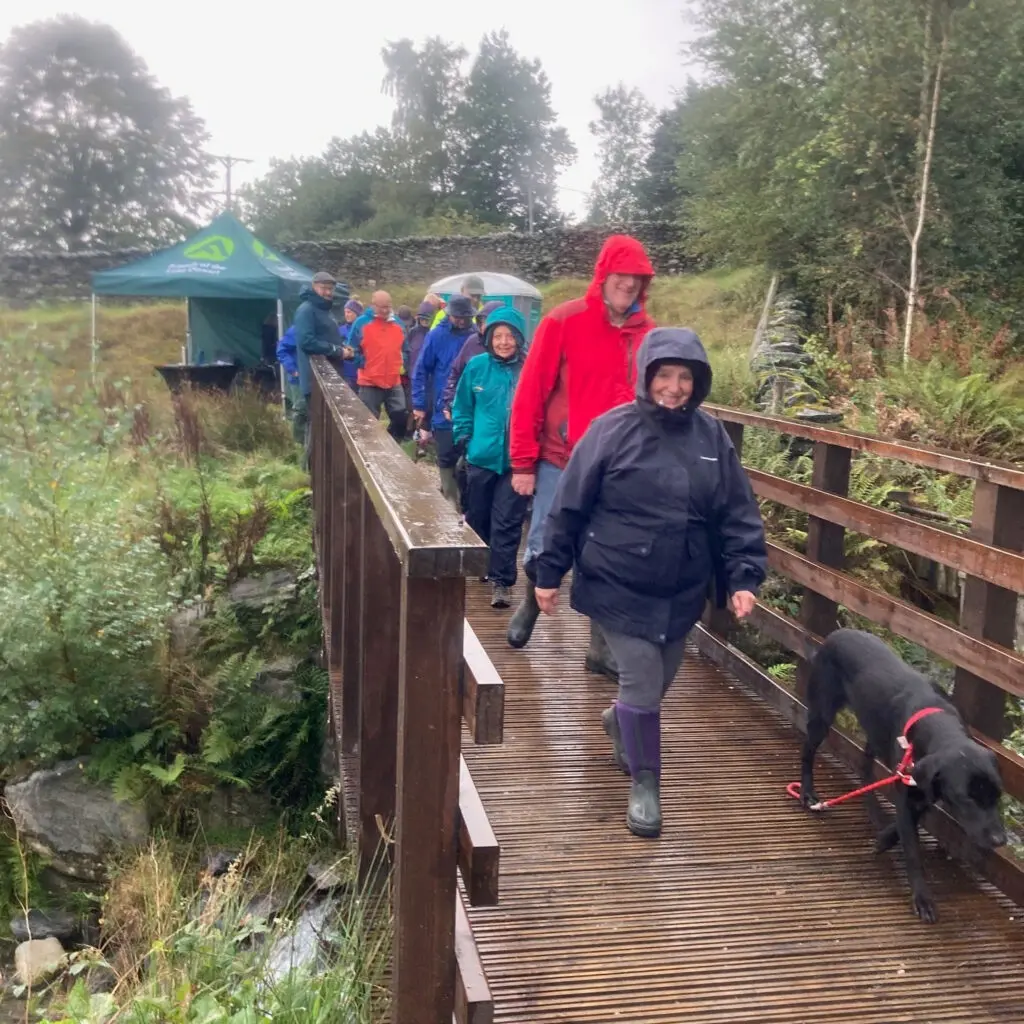
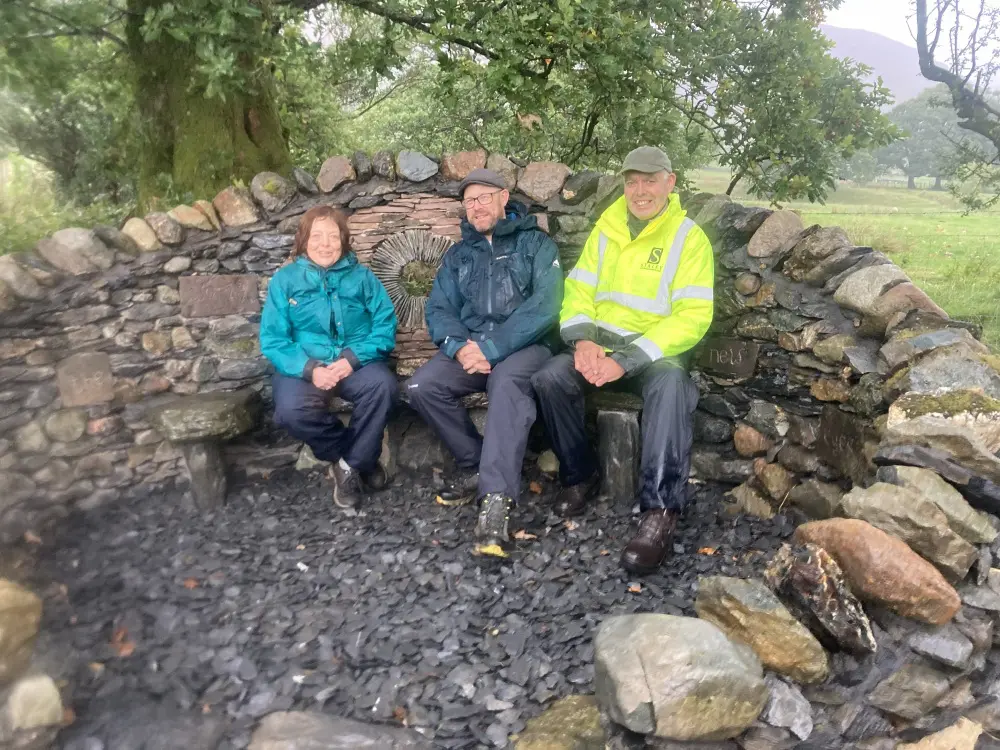
Testing out the new bridge, and Rachel Pugh, Colin Walker and Richard Staley on the new eye seat
This was followed by neighbour Mike Hambrey, a Professor of Glaciology, who led people around the site on a geology talk. The shuttle bus we provided gave a welcome break from the rain and a bit of warmth and took us down to the Cricket Club where we could have much needed fish and chips from the chippy van.
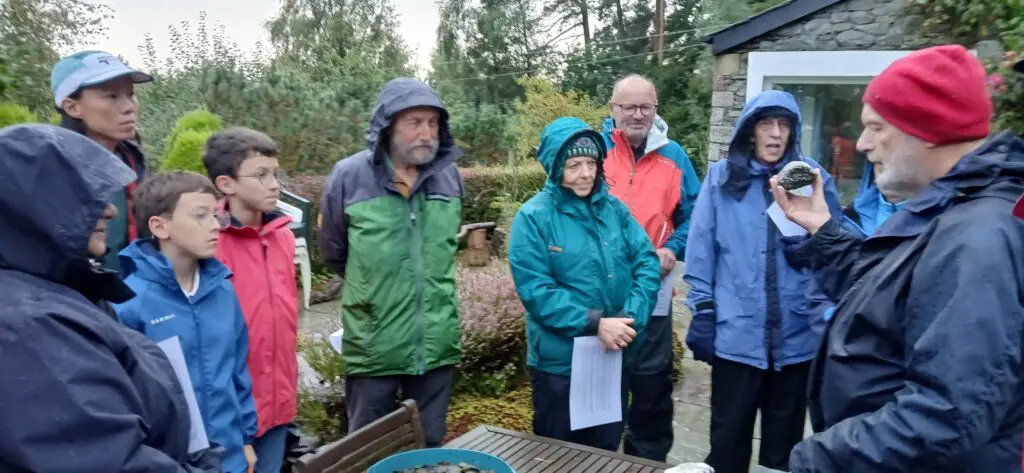
All about bats
Then for our bat walk. Local bat expert Cath Johnson told us all about the 9 species of bats that live in Cumbria (17 in the UK), the most common being of the pipistrelle family (common and soprano), the daubentons, and the noctule. The common pipistrelle is the smallest bat, weighing just 5 grams (the weight of a 20p coin) and flies quickly like a swallow with twists and turns.
Turning the bat detectors on at 45kHz we picked up various fly pasts of these bats. The soprano has a slightly higher sound frequency of 55kHz and likes water and streams. It is the daubenton bat though that is often called the “water bat.” It skims low and fast over lakes, canals, and rivers and uses its large feet to scoop insects directly off the water’s surface. Each bat eats around 3000 midges a night, showing how many millions of midges there must be!
We learnt all about bat maternity roosts – a bat’s pregnancy lasts between six and nine weeks, the length depending on the species and can be influenced by weather, climate and availability of food. Bats usually give birth to a single baby (called a pup) each year.
When the weather gets warmer, usually in early summer, pregnant female bats gather together in warm, safe places to have their babies – maternity roosts. Some groups of bats return to the same site every year. The young bats are suckled by their mothers for four to five weeks until they are old enough to fly.
So while we didn’t see or hear as many bats as we may have liked, we did see and hear some and got a taste for more bat watching on a drier night!
First woodland workparty of the season at Greenbank wood
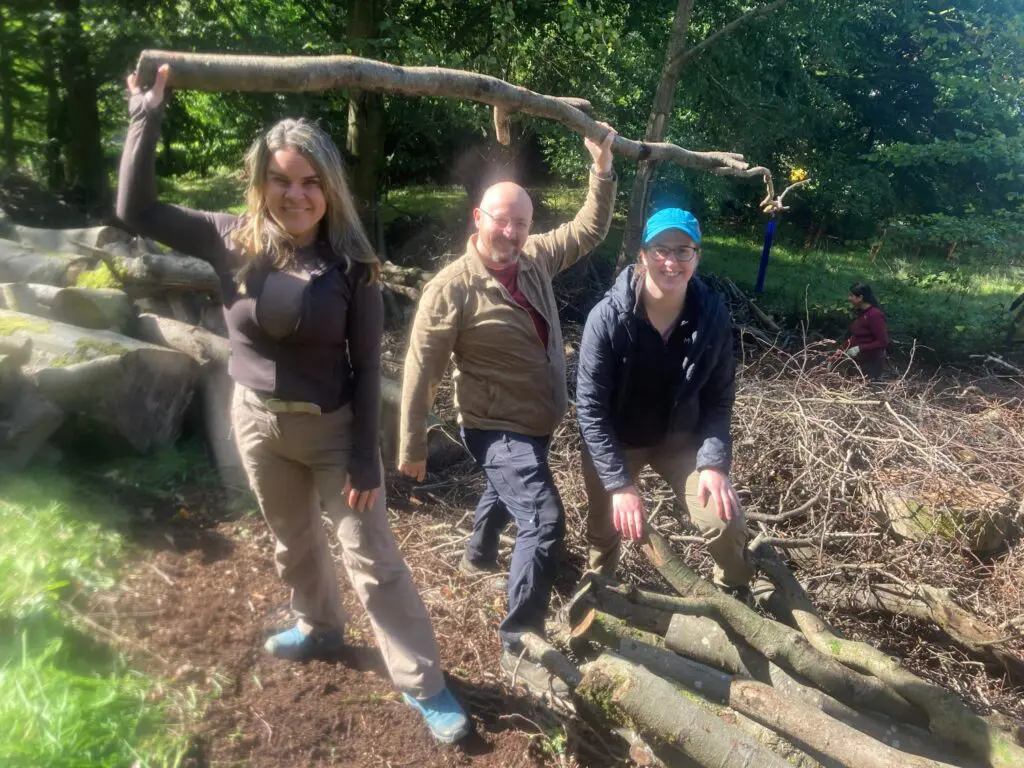
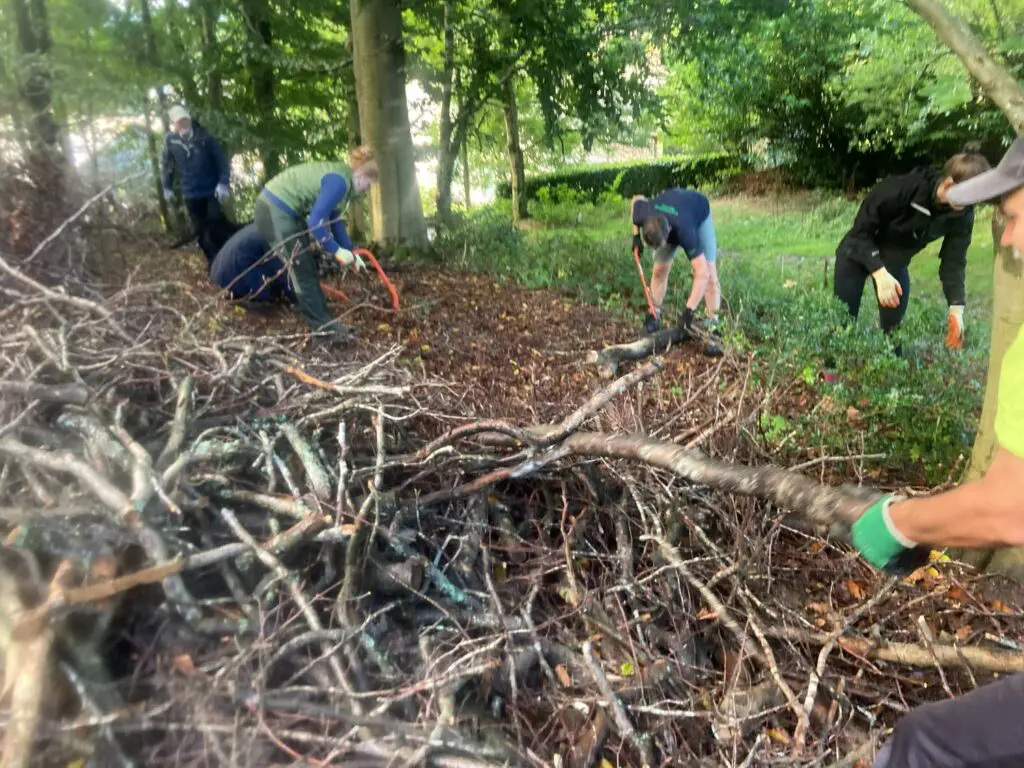
McClure team work party volunteers clearing brash at Greenbank Wood
Wednesday saw us and the volunteers back in Greenbank Wood in Ambleside for the first of our woodland workparties over the cooler months. What a fantastic day we had – we were joined by staff from local wholesale distributors McClures and two from the Environment Agency – not from our local Penrith office as we thought but all the way from the south west. They were on holiday and decided to do one of their allowed charity/environment days with us, how awesome is that!
The day started off wet but soon the sun came out and as the area we were working in was where two huge beech trees were pollarded for safety reasons earlier in the year we actually got some sun. The ground which had previously been bare due to the shadow of the beech was sparkling green as new plants shot up everywhere.
Our tasks for the day included tidying up some of the huge piles of wood from the pollarded trees and we ended up with big piles of brash, small pieces of wood that can be used for woodburners – and monster sized logs that are too big to move. We fancy a bit of sculpture so if you are or know a budding wood sculptor tell them to get in touch…
The second task was to pull out the carpet of sycamore seedlings which had invaded the northern part of the wood. Our new friends helped out and worked hard, aided by the welcome gifts of cake and fruit from McClures. Great job done, thanks everyone!
Hardknott Forest and Upper Duddon Landscape Recovery visit
On Thursday the Policy Team have a rare day out. We are going over the Duddon valley to meet up with the team at Hardknott Forest and also the Upper Duddon Landscape Recovery Scheme. We have helped fund part of the brilliant work at Hardknott, turning conifer woods which have been a blot on the landscape for decades back into native woodland.
The Upper Duddon Landscape Recovery Scheme is only one of two such schemes up and running in the country. The scheme is part of the Defra funding suite and aims to get landowners to work together at a landscape scale. We are currently waiting to hear if applications for the Glenderamackin and Penrith to Kendal area are successful so it will be fantastic to get out on the ground and see what has been achieved so far out west.
Sustainable Farming Initiative funding runs out in just 6 hours
Talking of government funding for farmers and landowners – on Tuesday, the Government’s funded scheme for agri environment works opened, encouraging farmers to farm in a more environmentally friendly way – the Sustainable Farming Incentive. Every few hours new emails came in from the Government, 50% of the funding spent by lunchtime, 75% early aft and so on until by the end of the afternoon the whole budget had been used up and the scheme closed. All in just 6 hours!
That just shows how few funding options are open to farmers and how huge the demand for support. With an increasing number of our upland farmers on Universal Credit, schemes like SFI really are an essential lifeline, but if you are one of the ones who didn’t get an application in first thing, a year until it opens again is a long time. Is this really the way to run support for farmers and help them plan their businesses? We think not.
Decline in genetic diversity of moss carder bumblebees
Sometimes science is just so fascinating – I read an article about the decline in the genetic diversity of our moss carder bumblebees, something we should and would have found in habitats like our own restored hay meadows at High Borrowdale and Mazonwath.
This bee is threatened with extinction in the UK, declines in genetic diversity being driven by habitat loss of flower rich meadows, marshes and healthland, driving the bees to strongholds along the coasts and islands. As numbers decline, populations become disconnected from each other and then lose genetic diversity as they become more imbred.
To understand the impact of these changes, scientists have found a baseline – they have taken DNA samples from bees in 5 museums to look at the DNA of more than 100 moss carder bumblebees. Looking to the future, all is not lost as habitat restoration and translocation could offer possibilities for recovery. Hopefully the work we have done to restore our hay meadows and heathland will help.
Join our next volunteer day at Rusland woods
Our next volunteer workparty front is Rusland on 6 October. Join us if you can for a bit of rainforest restoration, book here: https://www.friendsofthelakedistrict.org.uk/event/rusland-woods-workparty/
Share this post
Related posts
Updates from our campaigns, our land, and the people taking action for the Lakes.
Woods and squirrels
It’s been another busy week on and off the land as work continues to help our woods in…
All about seats, plugs, walls and bats…
In a packed blog this week: the Dam Mire wood Eye Seat, bracken rolling at Rusland woods, signpost…
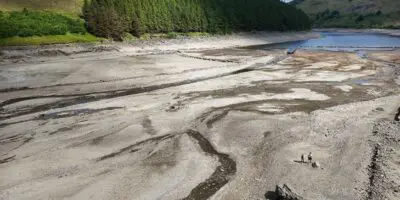
Drought in Cumbria
Policy Officer Amanda McCleery looks at what should be done to mitigate the risk of drought in Cumbria.