
Land manager’s diary
Best Herdwicks on show and Trico results
This week, Jan and her son visit a sheep-meet and then it’s over to High Borrowdale to tackle some damage after the recent storms. Meanwhile, in Rusland, we check out how the trees have got on with Trico.
Best Herdwicks on show and Trico results
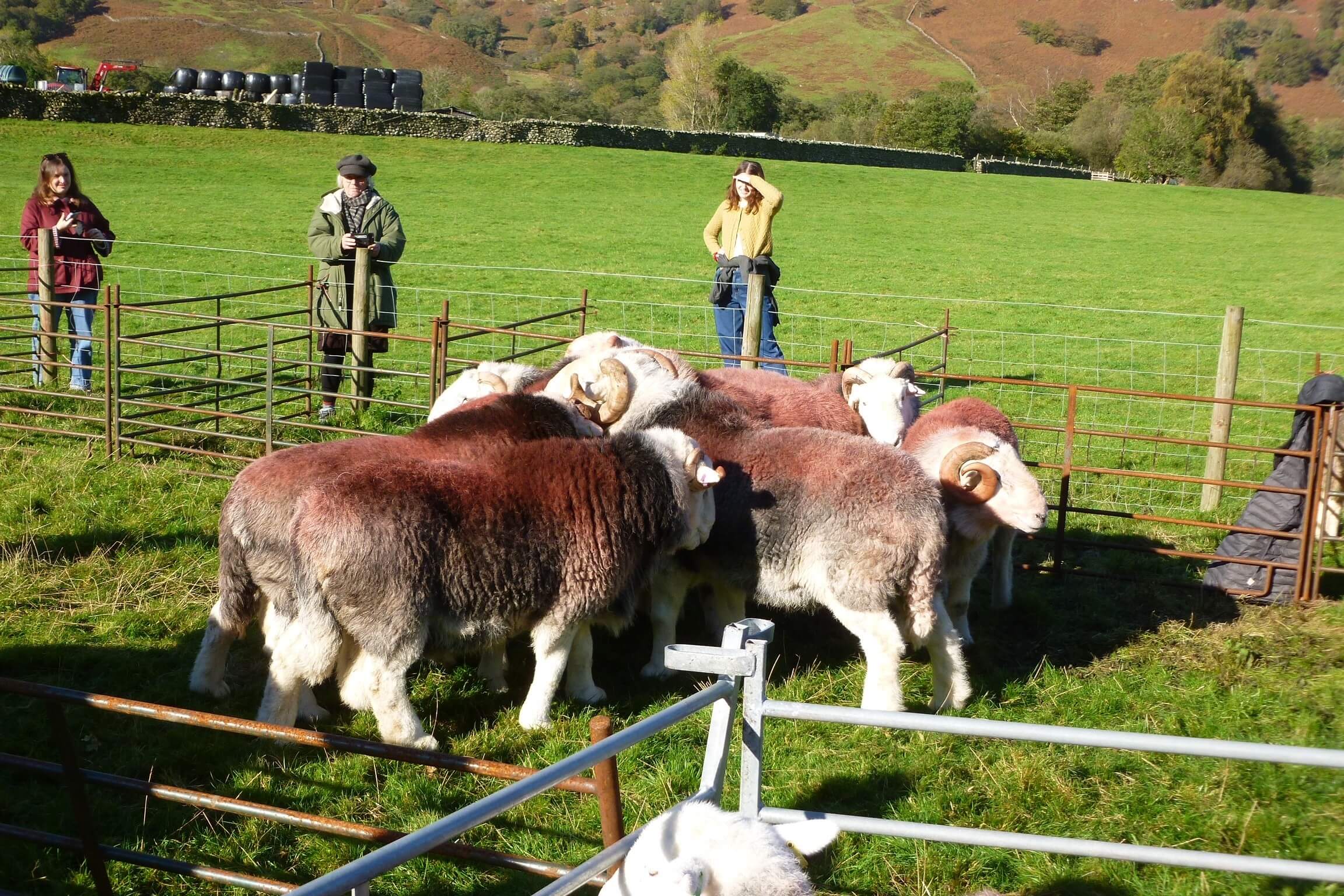
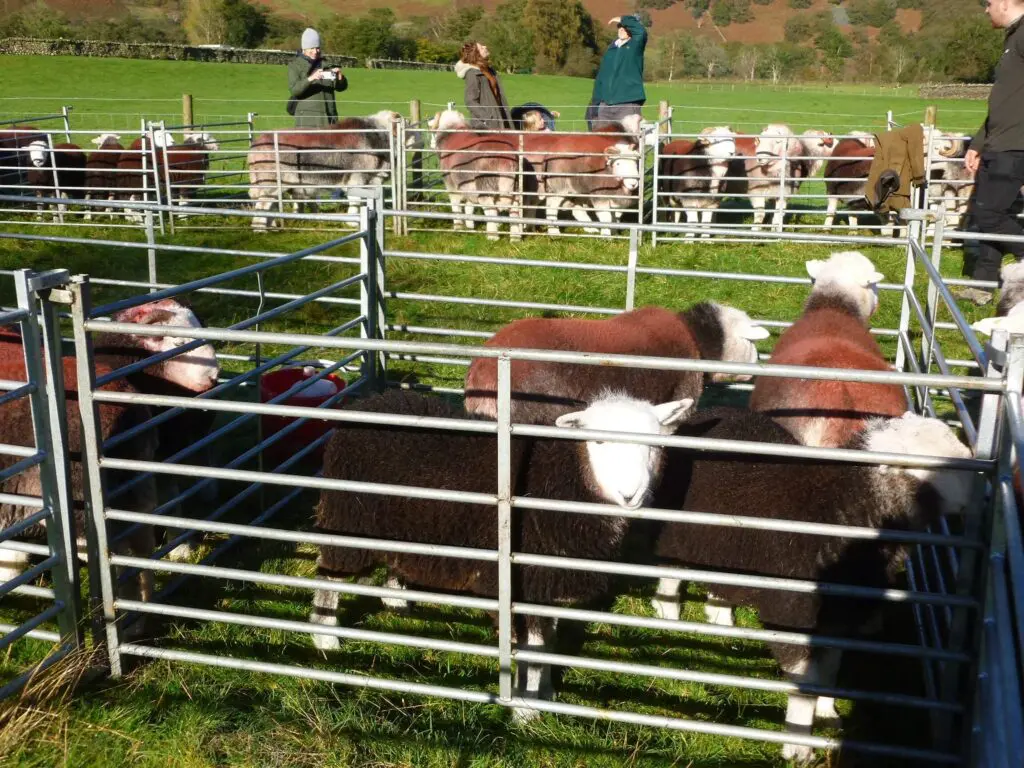
My son and I spent a nice morning a couple of weeks ago at the Borrowdale Shepherds Meet. This is a fantastic gathering where the Herdwick breeders come together to showcase their stock. The sheep looked amazing in their pens as the early morning sunshine hit the valley, highlighting the red raddle or rudd often put on them prior to showing. It used to be made with iron oxide power mixed with oil or grease but these days it’s a less toxic powder, the aim of which is to create a sharp, dramatic contrast against their naturally white heads and legs. This helps define their body shape and build for the judges.
You did not have to know what makes a well bred sheep to appreciate the quality of the sheep on show and the pride of the owners. There were 24 sheep classes being judged and all manner of categories relating to age, groups of sheep, even their mouths! A favourite of ours – best young handlers. The winner of this was a 4ish year old girl who clung onto the Herdwick for dear life!
Farming realities
Behind the celebrations though are harsh realities. Its sheep sale time now and prices are at an all time high which is fantastic for the farmers. But is it? Part of the reason for the high prices is that there are fewer sheep, largely due to agri-environment schemes demanding a reduction in sheep numbers, but also a reflection of many farmers giving up due to uncertain funding and massive worries about the future of farming.
These sheep are part of our Lakeland heritage and not only give us food, but also help with managing land and providing benefits for other species such as the dung beetle, which need sheep poo to exist. We seem to be moving to a more extreme situation whereby schemes are demanding no sheep grazing at all, or such limited grazing that it is in effect marking the end of our common grazing traditions and practices. This is disastrous for our farmers and our cultural heritage. We believe there is a middle ground where all aspects and interests can be winners without severe detriment to others.
Luckily we managed to avoid coming home with a sheep which was my son’s dearest wish.
High Borrowdale storms
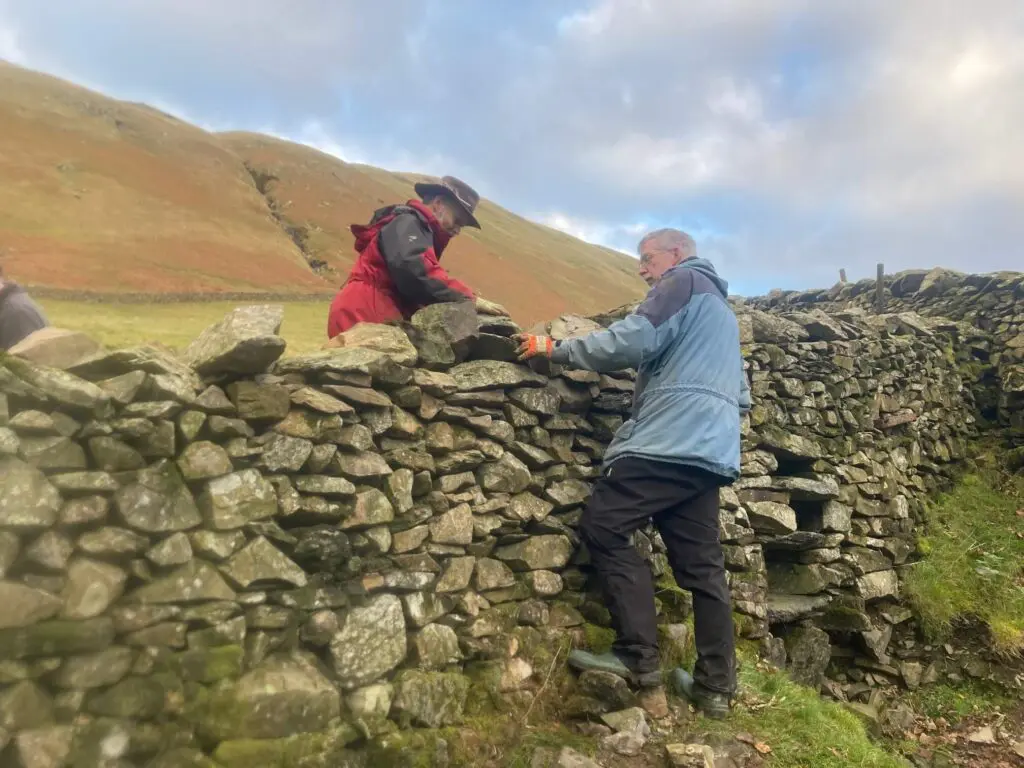
The start of half term marked the start of the named storm season. Lakeland had three storms back to back with some flooding and many of us with no power for days. We have had some storm damage down at High Borrowdale, but thankfully not too much compared to previous events. Our workparty there was full throttle on fixing a deer gate that had been damaged and two wall gaps that the wind and rain had brought down. Other jobs were to clear the gutters on the cow shed, remove some old planters from around some dead ash trees, sadly victims of ash die back, fix a fence and other odd bits of wall. It was a long day, but made all the better for several sightings of our resident barn owls.
Trico trials at Rusland
The following day we were back down to Rusland for the second application of Trico. This is emulsified sheep fat which is meant to repel the deer from the trees both by smell and taste. It is non toxic and comes as a liquid with white powder in it so you can see where you spray, but this has no detrimental impact on the trees.
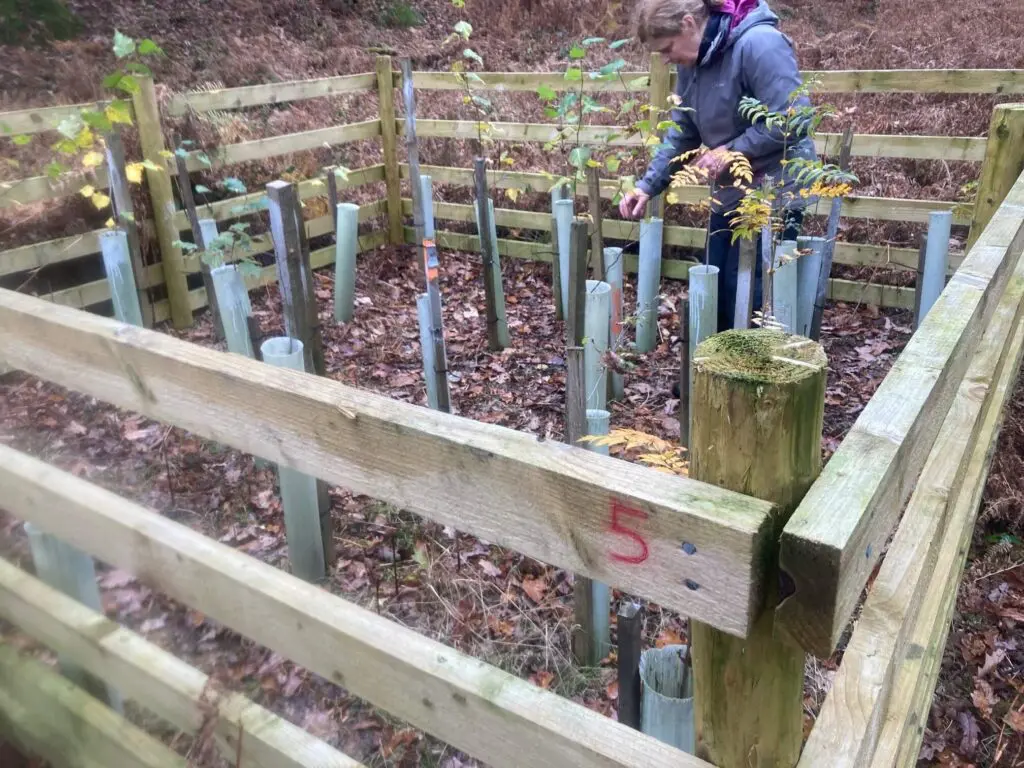
We are doing a trial and in the spring put on the first application on trees in our ten enclosures, plus some growth at the bottom of hazel trees which the deer were continually nibbling. So we were excited to get back and see what impact the first spraying had had over the summer months and how much growth the trees had put on.
One of the ten enclosures had no Trico, so it acted as a control. So we counted live trees, dead trees, how many had grown out of the tubes, and how many showed signs of nibbling. The bracken was really high all summer so there could be an issue of that shading the trees from the deer, but nevertheless our initial findings after the first spray are positive.
Early results
There were very few new tree losses and growth was generally good. For some of the faster growing species, a good foot of growth had been put on, and even for slower growing species such as oak, there was clear growth. Several enclosures also had regeneration of oak without the tree tubes. The hazels not in enclosures, that are usually nibbled, definitely had taller and stronger growth which was really positive.
So whilst we cannot categorically say all the growth was down to Trico stopping deer nibbling, we can definitely say all the signs were positive and so everything got a second spray. We had just enough time to nip over to Woodcock, one of the new woods to look at some walling priorities for the coming months with the volunteers, rather more priorities than we anticipated!
There are still a handful of volunteer workparties you can join this year. Click here to see them.
Share this post
Related posts
Updates from our campaigns, our land, and the people taking action for the Lakes.
Who gets to call the Lake District Home?
We asked people living in and connected to the Lake District National Park to share their experiences and…
Pop up campsite consultation launched
An Article 4 Direction would require camp site operators to submit a planning application where all issues (positive…
New recruits and celebrations
This week, Jan and our volunteers return to Mazonwath to plant and take care of some dry stone…