
Land Manager’s diary
All about seats, plugs, walls and bats…
In a packed blog this week: the Dam Mire wood Eye Seat, bracken rolling at Rusland woods, signpost painting at Little Asby, trialling virtual fence cow collars at Rusland and more walling at Mazonwath.
Please add some items to the Gallery Grid block to display the gallery.
All about seats, plugs, walls and bats…
So we took a break from the land management blogs to have time out for summer holidays, give everyone a rest and so on. But that does not mean that we have not been busy or that things have not been happening, quite the opposite!
The volunteers have had a couple of walling workparties and have been off fixing things: watergates at High Borrowdale, painting the cast iron sign post on Little Asby Common, fixing wall gaps and dodgy gates to stop the ponies escaping on the Helm, and doing a massive run with dumpy bags of tree tubes to go to be recycled. Thanks again to all those who helped out.
More Mazonwath walls
We have been out with the volunteers walling at Mazonwath this week. We had an intake of newbies, people wanting to learn the art of dry stone walling. Steep slope walling is difficult. Avalanches and slope failures occur between 30 – 40 degrees and the same can be true of walls. That means instead of building up the layers of wall or courses as we call them parallel to the ground, you have to build the layers horizontally to stop the stones slipping down the hill. So on any section you are rebuilding, the lowest section of the slope needs to be built up first and it can be mid height before the other end of its course or layer at the top of the slope is even starting. It takes a bit to get your head around it!!
On 18 September we have our open day at Dam Mire Wood and the chance to join us for our bangers and bats walk and hear about all we have done and our future plans. If you book onto any of our walks and talks (general, geology, bats), you get a free sausage and chips. You can find more out about the day and book on here.
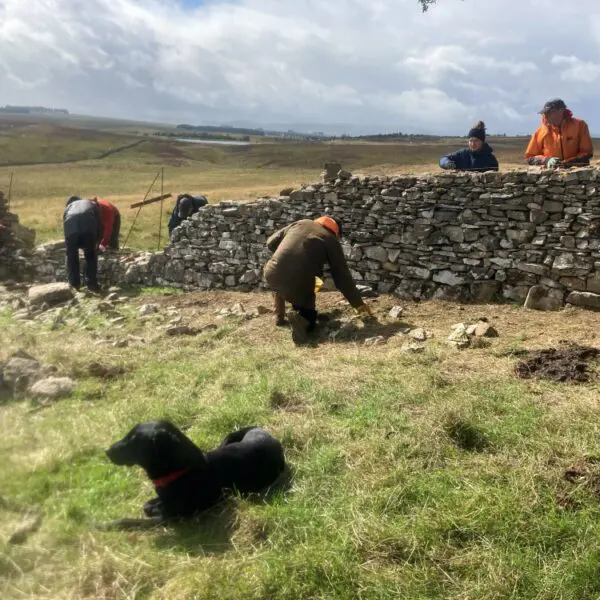
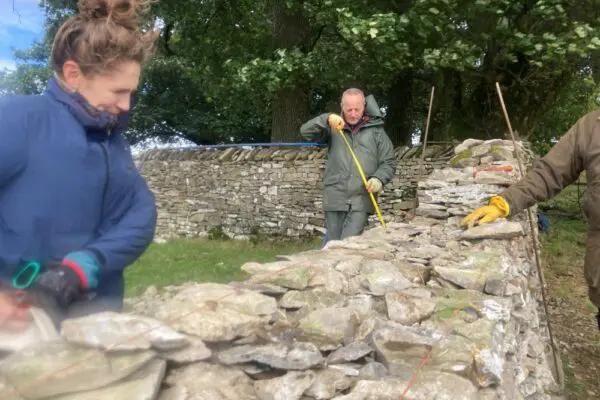
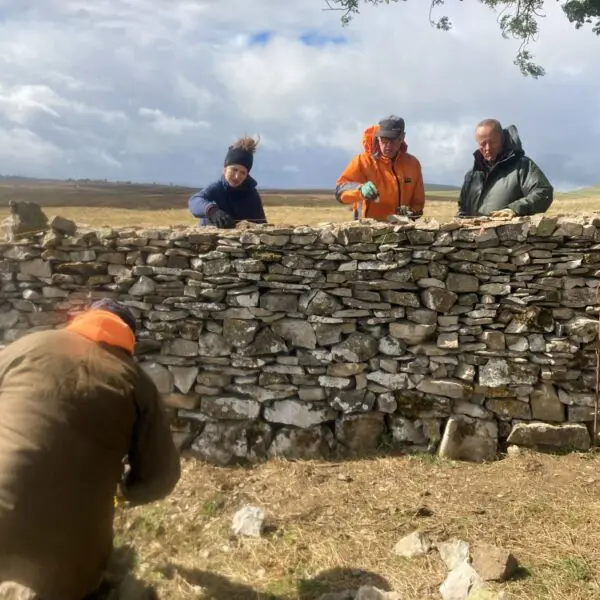
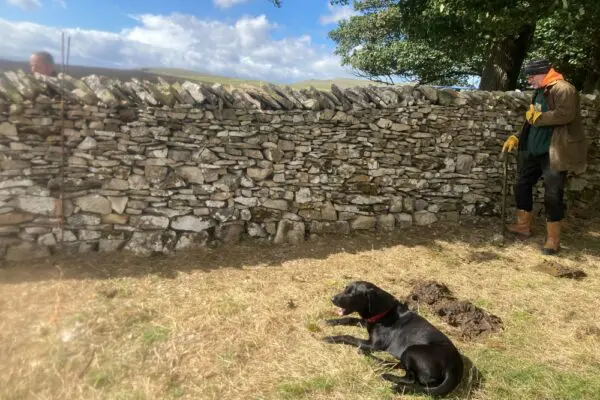
Walling at Mazonwat
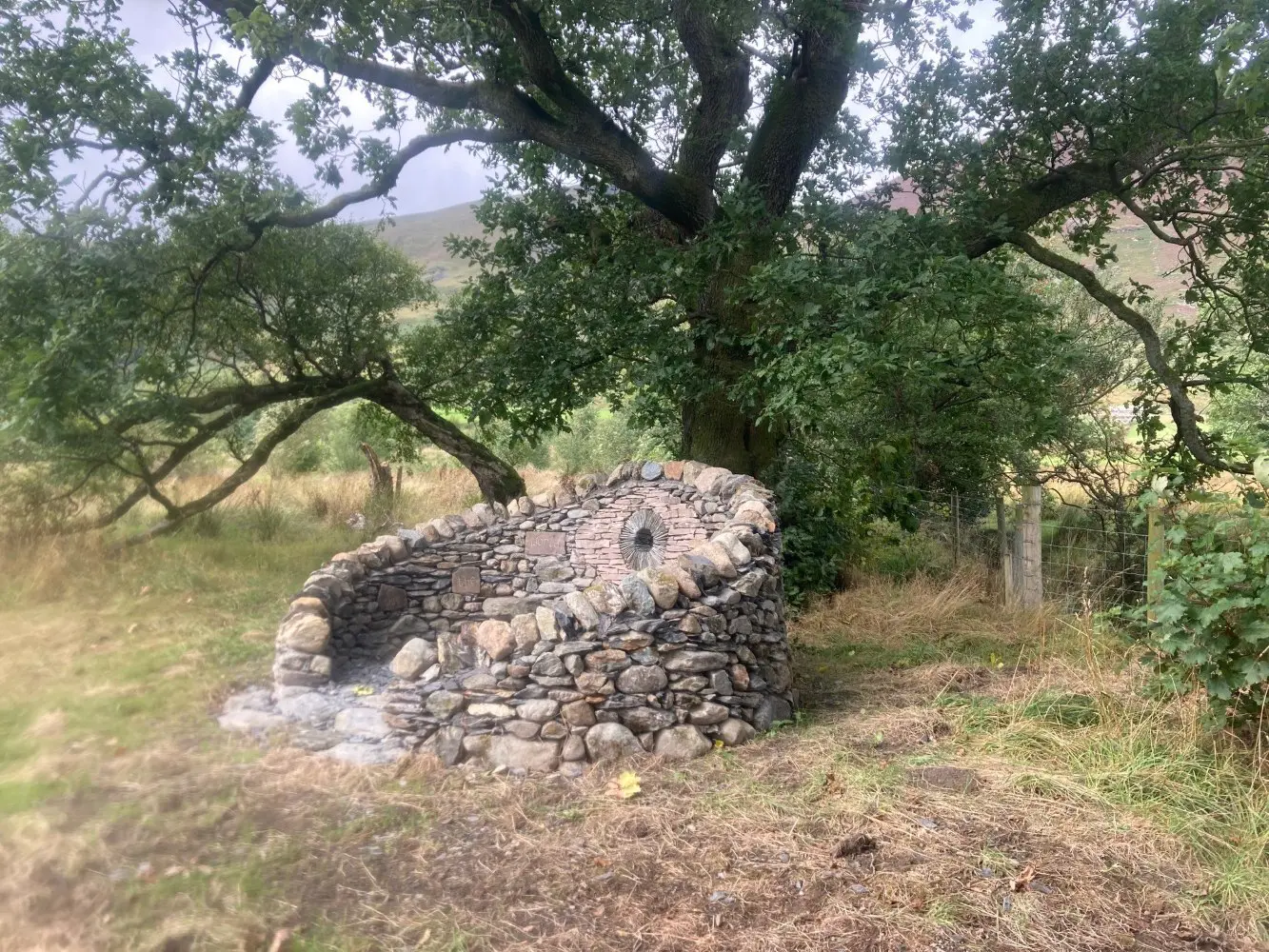
We are particularly delighted that just in time for this, expert dry stone waller Richard Staley and his son Rob have just completed building our ‘eye seat’. To recap, volunteer and Friends member Rachel Pugh has now had two cornea transplants which have secured her sight for the future.
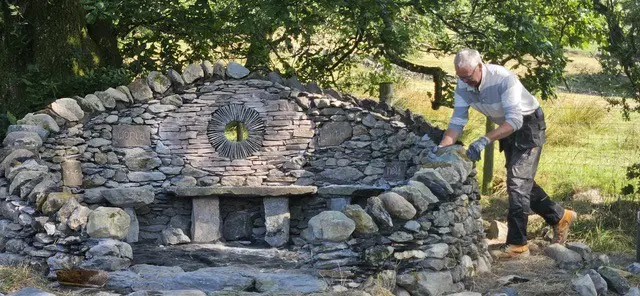
As a thank you to the staff of the Manchester hospital who did the most recent operation she wanted to create something lasting for them that they could visit if they came to Lakeland and enjoy. We came up with the idea of a new seat. Rachel regularly joins us for dry stone walling and so a stone wall seat was obvious.
We have designed it to be almost circular with an eye oriel at the back and some wording. We think it is a fantastic bit of craftsmanship that will inspire and engage people and provide the most wonderful place to sit and enjoy the views, the sounds and the smells. So come along on Friday and join us or visit later at your leisure and see what you think.
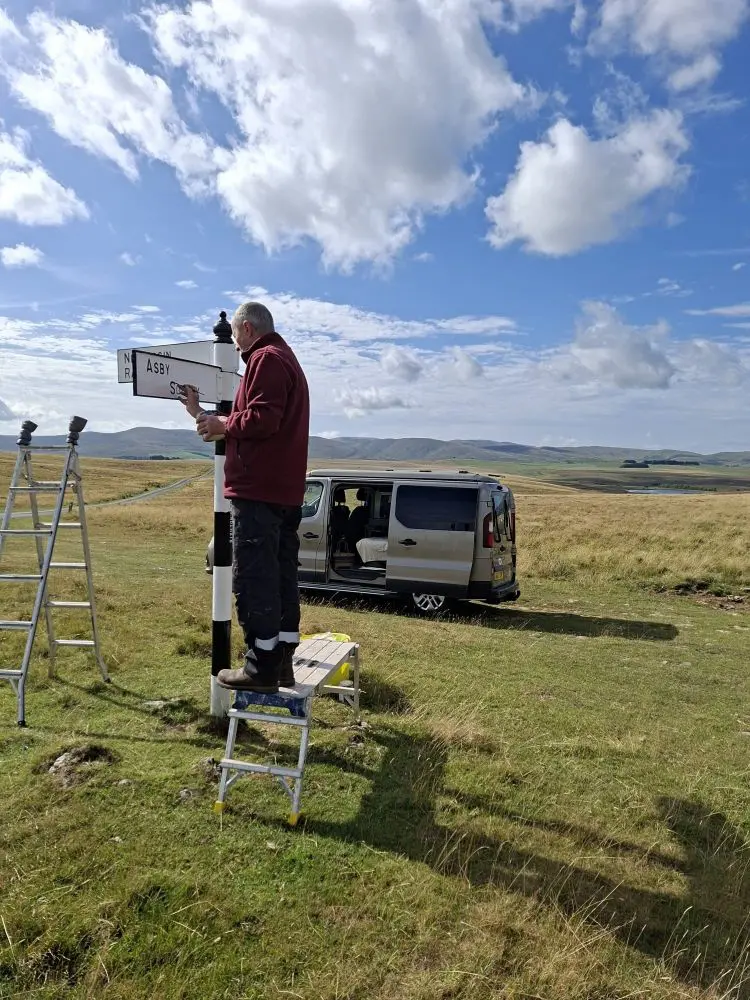
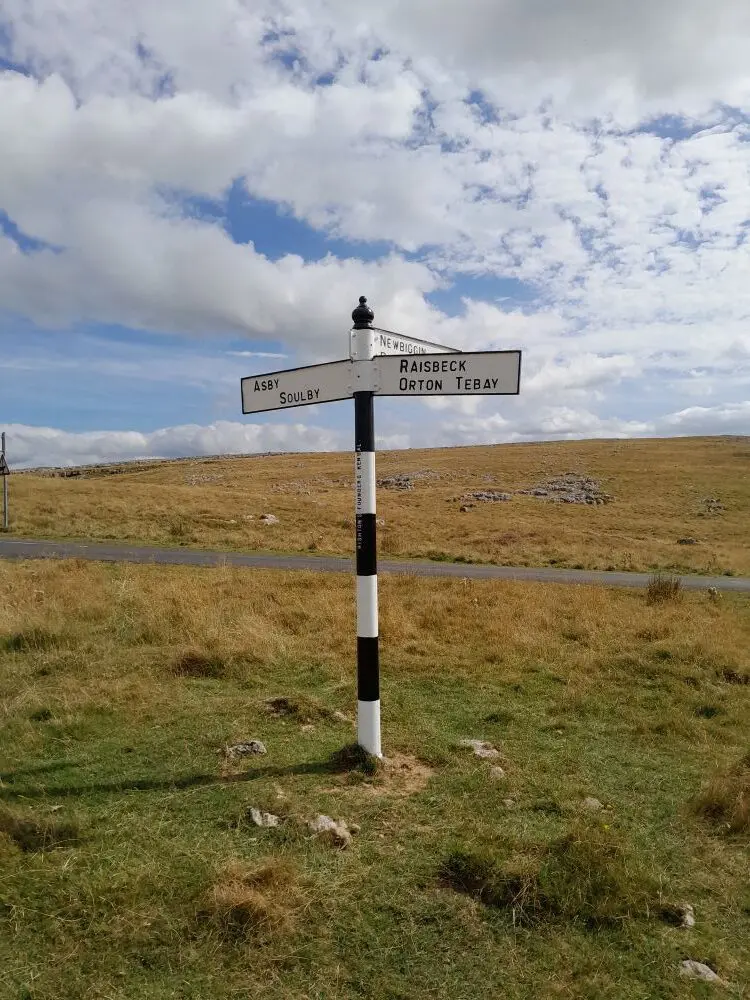
Signpost at Little Asby Common during and after repainting
We have mentioned before that the unsightly overhead lines, like marching soldiers across the skyline at our land at Little Asby Common will soon be going.
Powerlines coming down at Asby
The power network operator SP Electricity North West has confirmed that shortly they will begin work to remove the lines and the landscape of the common can once again be restored to its more wild and open nature. This reflects 20 years of work Friends of the Lake District has been doing to underground power lines which not only enhances the landscape but also gives more resilience to the power network so it’s a win-win all round. Electricity North West has always been really positive about working with us to underground wires, it is just such a shame that the phone and fibre operators are not as willing…
Lots of desk work is ongoing to keep the Rusland rainforest restoration going and there has also been other exciting work on the go. We commissioned a specialised drone pilot to fly all the woods and this has now given us some fantastic footage of things like tree density, canopy height and even species.
The woods are impenetrable for the whole summer due to bracken so the drone footage gives us a fantastic tool to look at things on the ground. We could not even pick out the ten tree enclosures as the bracken was so dense they didn’t show up. Bracken hates being trampled which is why well used footpaths on the fells are often clear but less used areas are not.
Bracken rolling at Rusland
Adam our neighbouring farmer has been in some of the woods with the bracken roller and the drone footage clearly picked up where he had been, a new type of crop circle appearing out of nowhere! He has done one session with the roller and hopes to get back in during autumn for a second and we will be monitoring to see the impacts on the bracken.
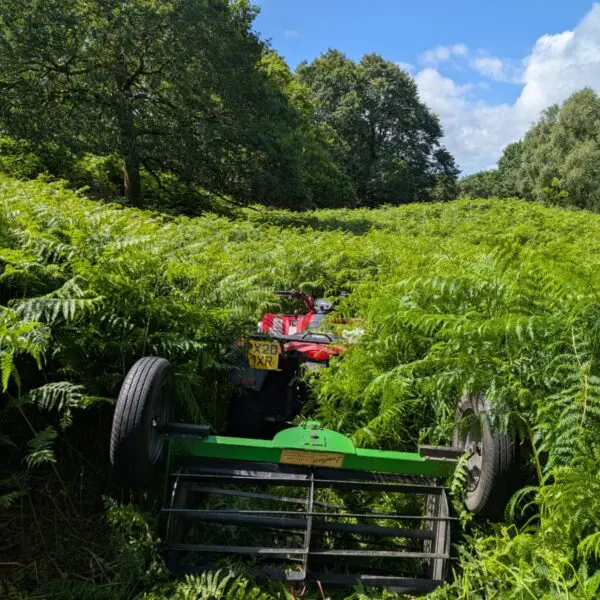
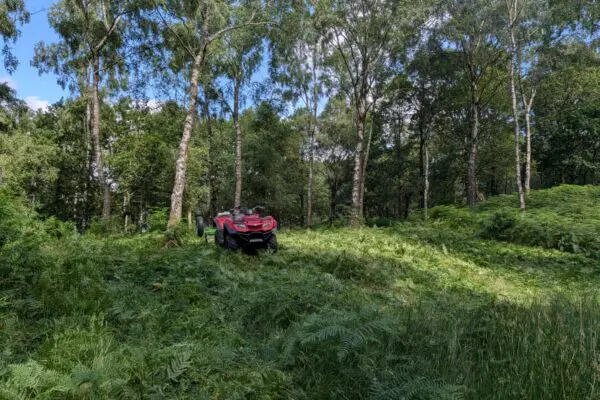
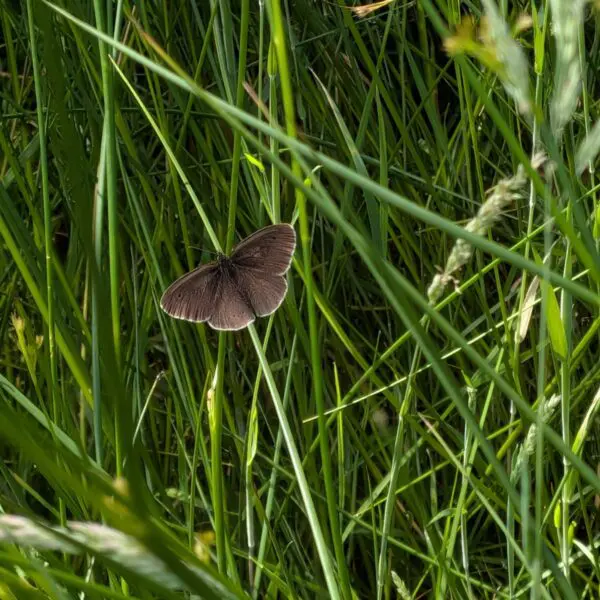
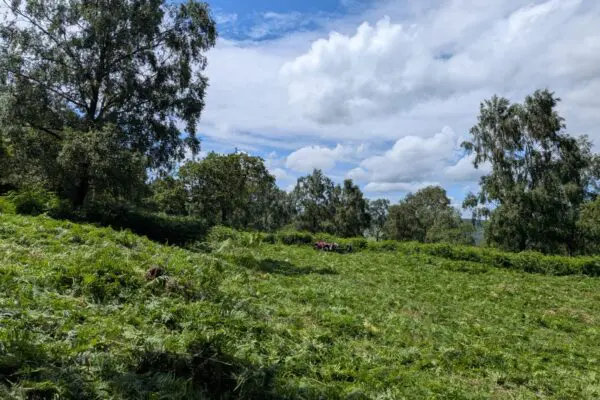
Roller bracken bashing in Rusland woods. Unchecked bracken crowds out native wildflowers, grasses, and rare woodland flora. Reducing the bracken increases butterfly habitat.
The cows try out virtual fence collars!
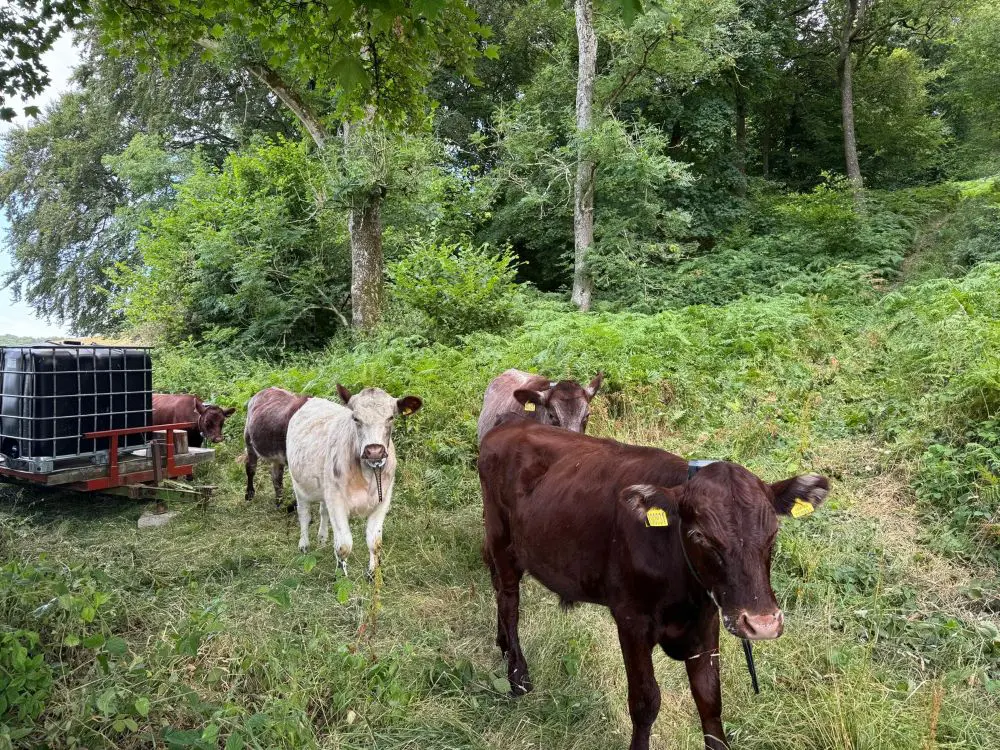
Other really exciting news is that Adam purchased some ‘no fence’ collars, collars that go on cows and alert them when they near a ‘virtual’ fence. After a few days of training, they were good to go. Adam sets the virtual fence line on his phone so as to avoid particularly steep ground or areas with yew trees that can be poisonous to cows and in they go. The technology produces a heat map which shows the areas they go. Not surprisingly that was the wetter areas as it has been so dry (he had to supplement water with a bowser – a mobile water tank) and the flatter areas.
After 10 days of exploring the cows have come out again and it will be a trial and test that is ongoing as to when and where to put them, with monitoring of the impacts on the bracken.
In terms of the desk work, we have been working on a Woodland Management Plan to submit to the Forestry Commission. This sets out what we want to do with the woods for the next 10 years, especially in terms of overall vision, but then actions such as thinning, restocking etc that may need to be done.
Once agreed it will lead to Felling Licences which will give us permission to remove trees, either invasives such as beech, or to thin to allow more light to some trees. We will be working on tender documents for tree and boundary contractors so that this work can be done over the winter. Workparties in Rusland will be re-starting in Oct as hopefully the bracken will have died down, so if you fancy a bit of rainforest restoration, keep an eye on our volunteering pages.
Come hay meadow plug planting
Some of you joined us last year for some plug planting at Mazonwath. We have added in an additional date to the schedule workparty calendar, the morning of 13th October to have another go. We are working with Cumbria Wildlife Trust and the Cumbria Seed Bank project again which aims to provide a reserve for and resource of rare upland flowers. Our hay meadow restoration field is the perfect site to add in some of these special species. If you and your trowel fancy giving us a hand for a couple of hours, you can book here.
There is no escaping that we are now in autumn. The nights are drawing in, the dew is on the grass each morning and the colours are starting to change. If you fancy a bit of citizen science autumn leaf watch, the Forestry England are asking people to help them map the changing autumn colours in their woods. For Cumbria this means Grizedale, Whinlatter and Ennerdale primarily. You can find out more at: www.forestryengland.uk/autumn-leaf-watch
Our next workparty is at Greenbank Wood on 23 Sept when we have a massive clear up job to do after the dangerous veteran trees were dealt with. Join us if you can, book here.
Share this post
Related posts
Updates from our campaigns, our land, and the people taking action for the Lakes.
Drought in Cumbria
Policy Officer Amanda McCleery looks at what should be done to mitigate the risk of drought in Cumbria.
Scotmid Co-op volunteers lend a hand at new site
The Scotmid Co-op team helped rebuild boundary wall on new Friends of the Lake District land
Nature Recovery Fund helps restore Lake District rainforest
Friends of the Lake District has been awarded £14,900 from Westmorland and Furness Council’s Nature Recovery Fund to…