
Land Manager’s diary
Duddon magic
In her latest blog, our land manager explores the important work underway in the Duddon Valley.
Duddon magic
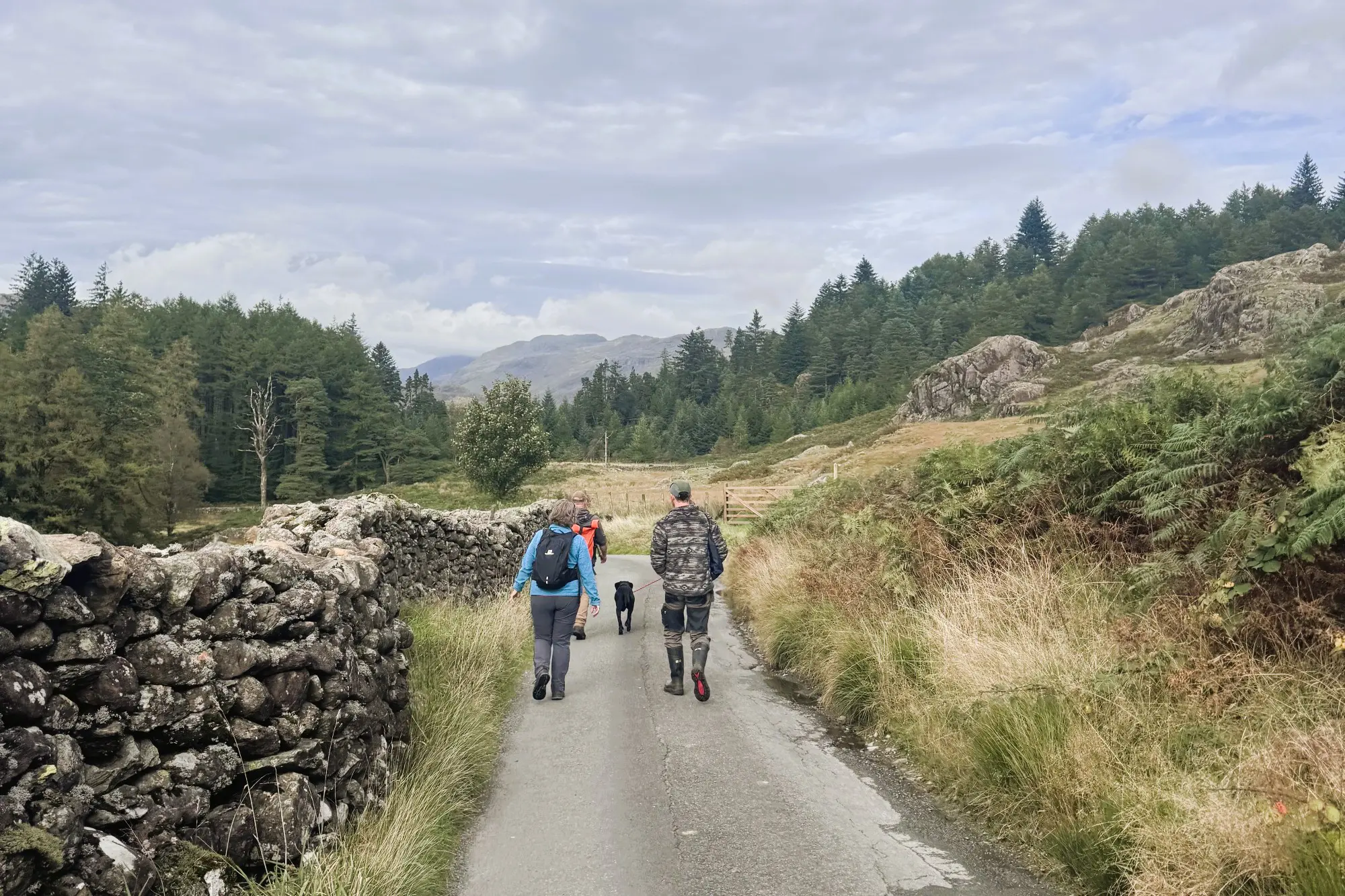
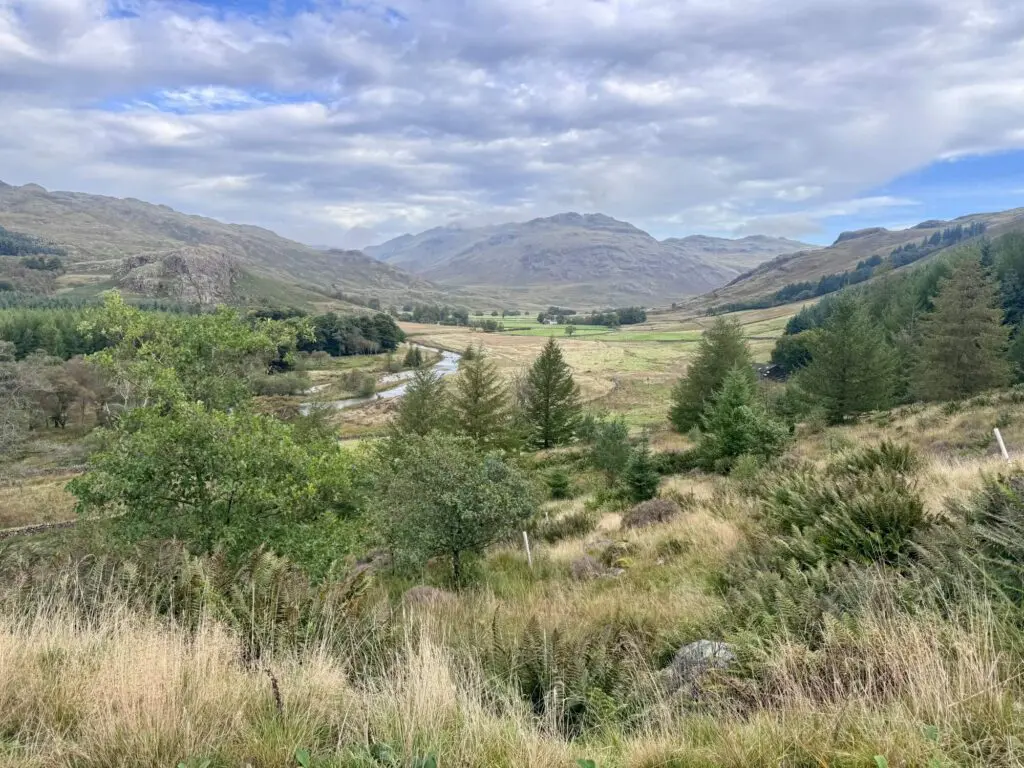
Our policy team headed out to the beautiful Duddon valley at the end of last week. The Duddon valley and Friends of the Lake District go way back since we once owned a farm in this valley (a long tie ago!) and we were involved in a campaign against the planting of coniferous trees in the area. We paid to have some of the conifers removed from Hardknott Forest several decades ago, and have since funded smaller scale Sitka spruce tree removal. We went back to see the work being done by Leeds University and the Hardknott Forest team to gradually restore the area to native woodland and be a haven for wildlife.
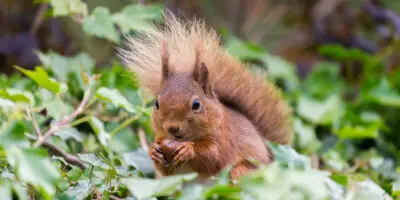
During our visit, we learnt about recent felling of larch due to phytophera disease. The timber is being kept on site and turned into such things as fence posts, fencing planks, and gate stoops, so saving money buying these materials in when needed but also reducing the need for huge timber lorries to remove the wood. We heard about the wildlife coming back into the valley, from red squirrels to a sizeable number of pine martens. Peanut butter remains the favourite treat to tempt wildlife to a snack located just in front of a wildlife camera which keeps track of what is out there.
Landscape Recovery
In the afternoon we moved down to Troutal Farm to meet farmer Paddy who also heads up the Upper Duddon Landscape Recovery Scheme. This is one of Defra’s flagship schemes, offering farmers up to 20 years of funding but operates at a landscape scale, so covering a big area. This is only one of three such schemes currently operating. Defra is struggling to process around 50 applications for new schemes, including ones affecting three of our land holdings – the Resilient Glenderamackin, and Penrith to Kendal Arc schemes. It was good to understand how the scheme was working now it is in its second year, the benefits and pitfalls, and get a feeling for the scale of the project operating from Hardknott Pass right down the upper Duddon.
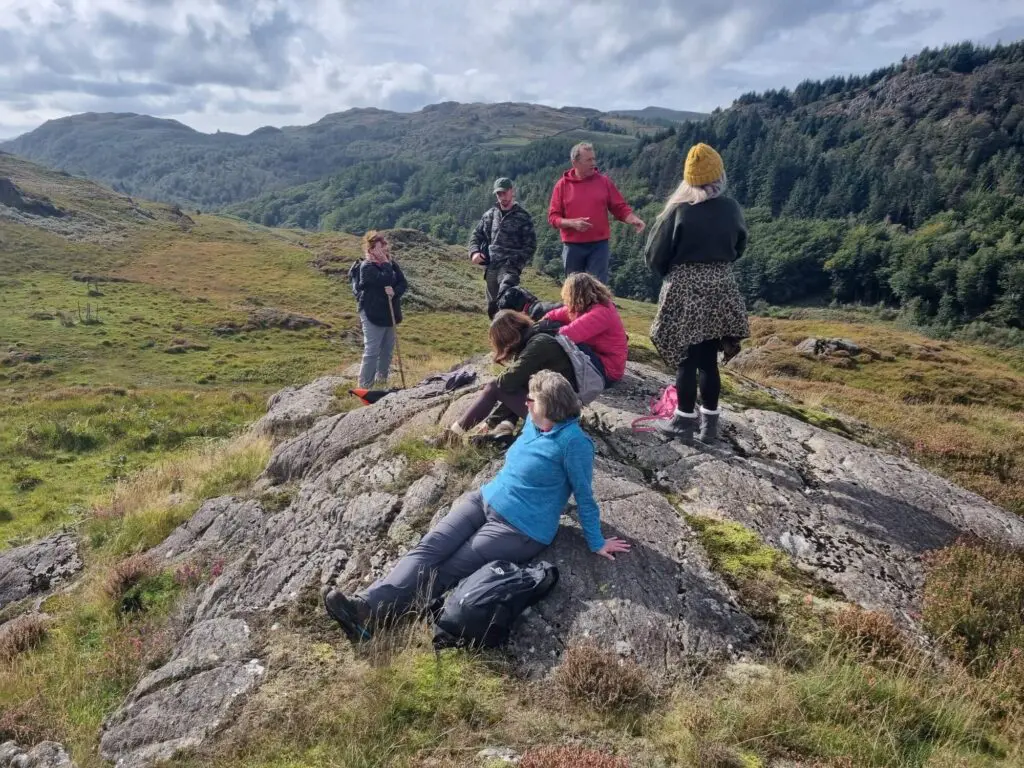
Our team also had a catch up with the National Trust North and West Cumbria team. We think we are doing well managing 650 ha of land with one member of staff but that is blown out of the water when you hear they have 33,000ha of land, including 48 farms to manage, albeit it with more staff. We learnt how under their new vision and strategy they are refocusing work with the main priority being to restore nature within a cultural landscape of the World Heritage Site. Work will concentrate on peatlands, rivers, lakes and wetlands, grasslands, common land and mountains and to meet all their aspirations it could cost up to £100 million.
Landscape restoration is costly and there are only a few bodies out there funding this work, which in turn lead to discussions about potential tourism taxes and the role of the Cumbrian Mayor who may be able to apply such a tax. The discussion also turned to the huge issues of fly camping and litter which have plagued the area at the moment. There were lots of other hot topics discussed, such as why Natural England in Cumbria will not allow wood pasture to be grazed by sheep but elsewhere in the country this is allowed; possible future Landscape Recovery schemes (like the Duddon one above) covering Borrowdale/Thirlmere, and Eskdale, and a new rural skills hub in Nether Wasdale. We could have talked all day as there is so much going on and so much shared interest between us.
Volunteer with us
If that is too much like hard work, we still have spaces for plug planting on the morning of 13 October over at Mazonwath : https://www.friendsofthelakedistrict.org.uk/event/mazonwath-wildflower-planting/
Share this post
Related posts
Updates from our campaigns, our land, and the people taking action for the Lakes.
Bugs, bats and bees
Building bug hotels, bat watching and seed collecting at Dam Mire Open Day. Government funding for Sustainable farming…
Woods and squirrels
It’s been another busy week on and off the land as work continues to help our woods in…
All about seats, plugs, walls and bats…
In a packed blog this week: the Dam Mire wood Eye Seat, bracken rolling at Rusland woods, signpost…