
News
Still treating the Lake District with contempt: litter survey reveals depth of public anger
Our survey of littering, fly-camping and anti-social behaviour across the Lake District highlights a catalogue of damage to the national park, despite efforts to address the problem.
Still treating the Lake District with contempt: new survey reveals depth of anger at littering and fly-camping
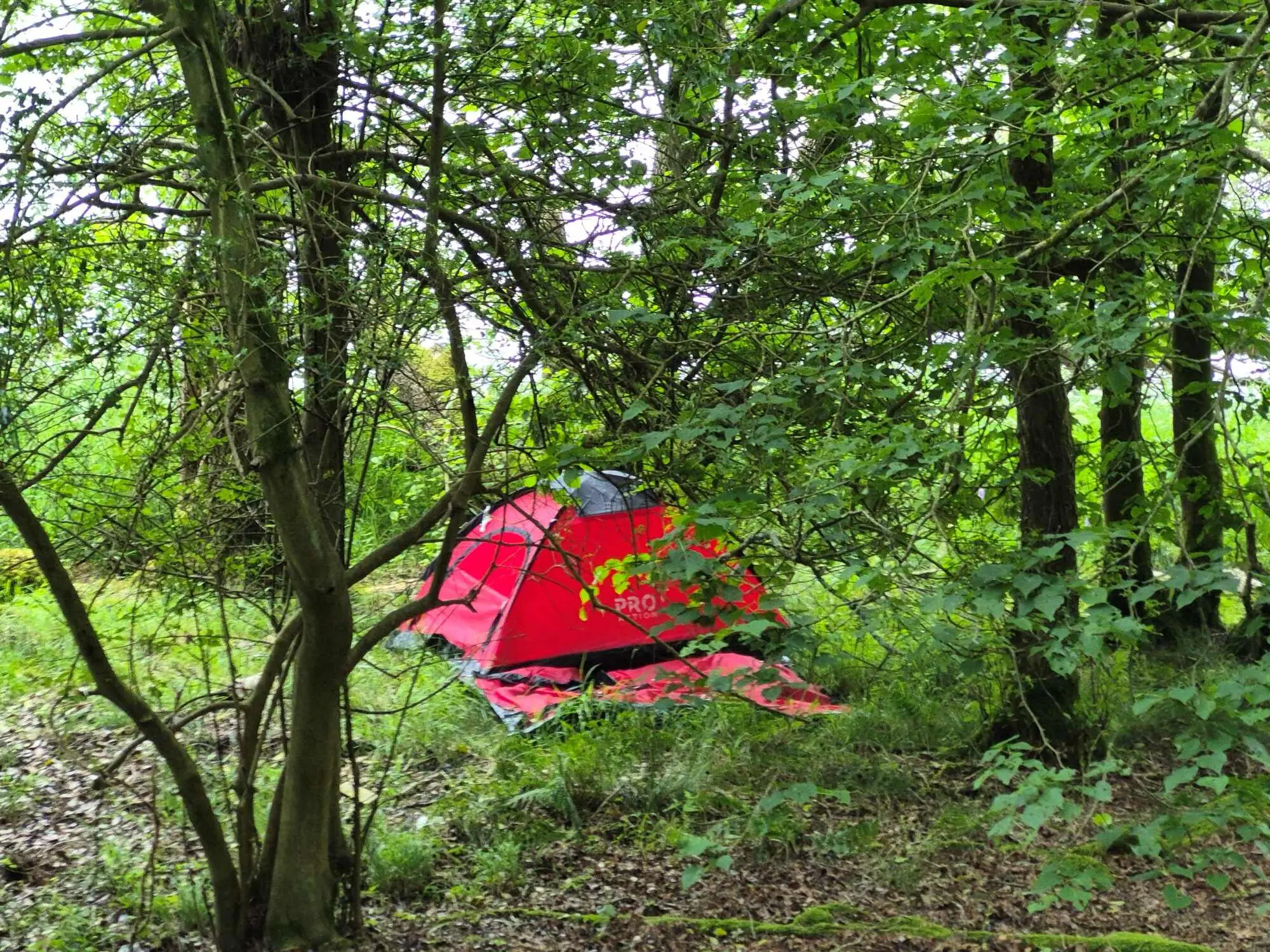
The results of our survey into littering, fly-camping and other anti-social behaviour across the Lake District has highlighted a catalogue of continuing damage being caused to the national park, despite more coordinated efforts to address the problem.
A total of 1,124 people responded to our online survey run over the summer months of this year. It mirrors a survey we ran last year.
Most (75%) of the respondents are Cumbrian residents. 96% of respondents had experienced littering and 84% some form of illegal or inconsiderate parking, with a further 74% encountered wildfires or barbecues and 73% fly-camping (unauthorized camping in protected areas, often leaving much damage, rubbish and even abandoned tents behind). These latter figures are down slightly on last year, while the numbers for littering and for receiving an aggressive response when challenging those at fault – 34% – remain the same as in 2025.1
For Jeremy Smith, our head of campaigns and engagement: “the number of people camping wherever they like and leaving everything behind is turning parts of the Lake District into a no-go area for those wanting to enjoy the Lake District for its natural beauty and tranquillity. The prevalence of wildfires and barbecues in a hot, dry summer is particularly irresponsible. There has been a change in how seriously these issues are taken but without this yet translating into substantive change on the ground”.
“These days I just have to walk away to protect my sanity. I hate living here in the summer months.”
Most (68%) respondents judge that the situation is getting worse, with 23% considering that it is about the same as last year. These figures are only slightly improved from 2025. The most affected areas continue to be Ullswater, Derwentwater, Buttermere and in and around Keswick. More and more respondents refer to avoiding particular areas at particular times – sometimes for the whole summer – because they anticipate encountering anti-social behaviour or abuse.
“I walk and run in the Lake District every weekend and sometimes during the week. I always see people cooking on disposable barbeques and I always see discarded rubbish and tents. I see fly-camping every single time I go out. I see this up on the fells and I see this in the low fells and I see this on the lake shores”.
“I honestly don’t believe it would make a difference to report. I just assume that nothing would be done.”
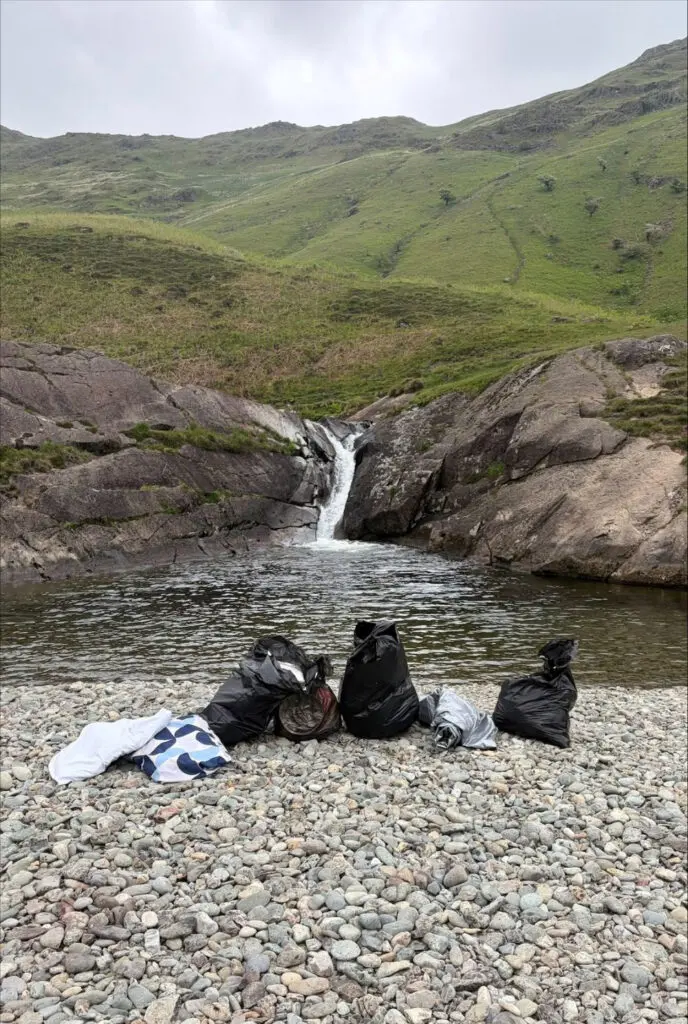
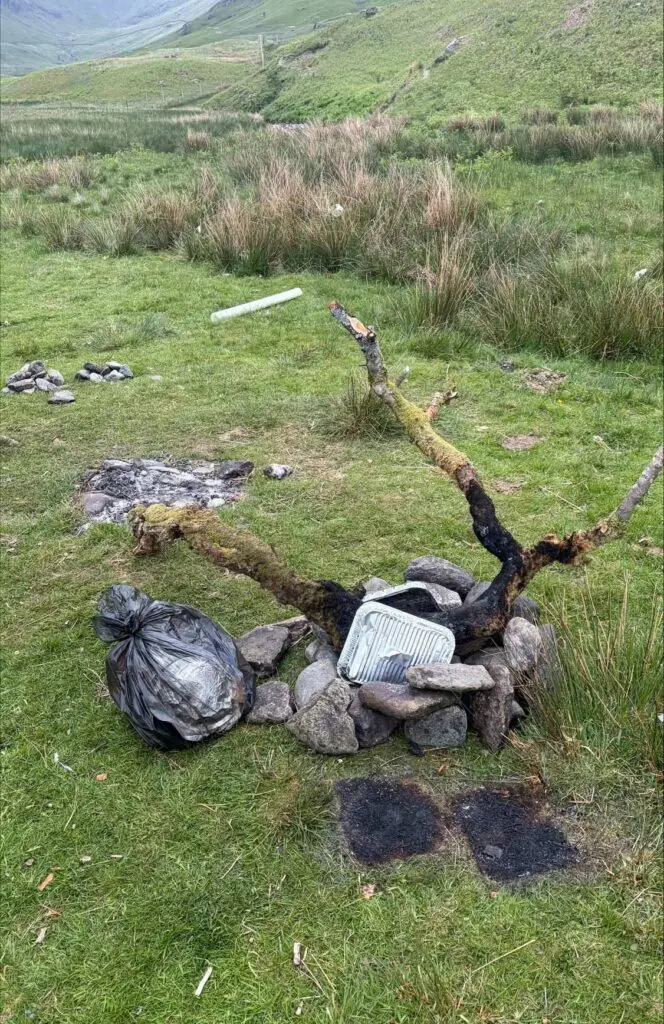
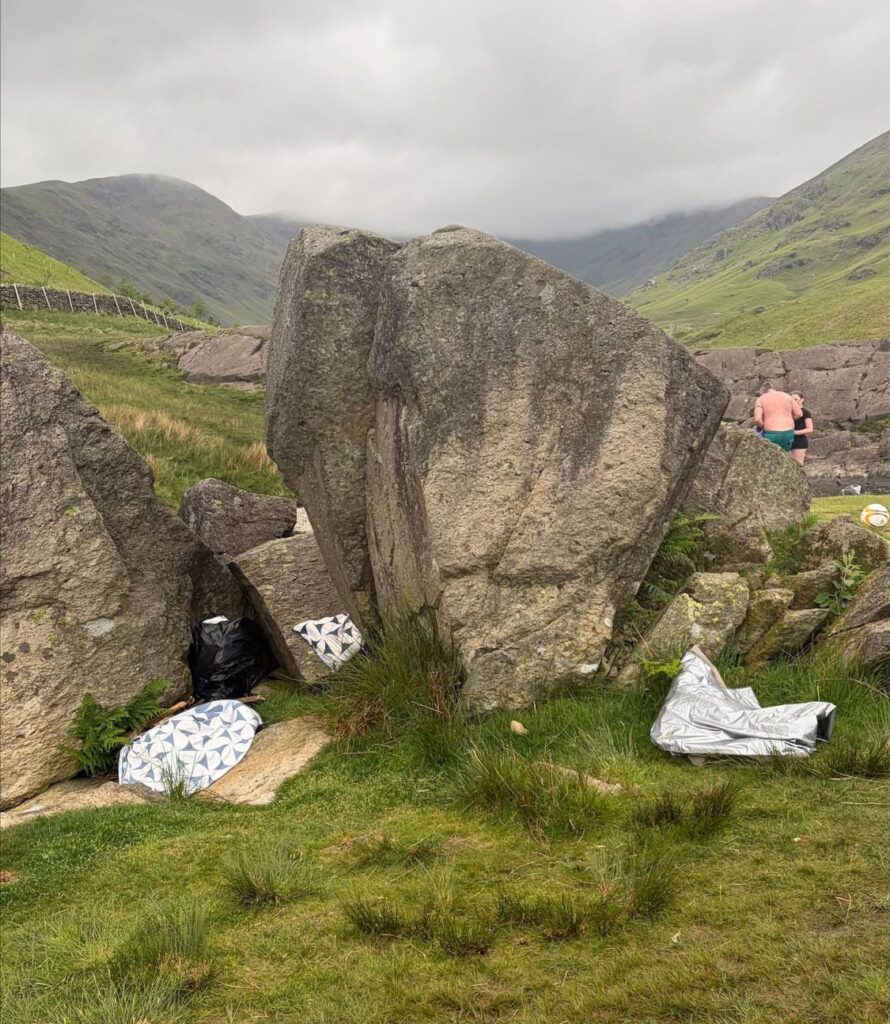
Rubbish including bedding, sleeping bags, air beds and disposable BBQs left at Buckstone's Jump tarn, Rydal in May
There’s no point in reporting it
A majority of respondents (60%) did not report what they came across, a similar result to last year. In some cases, this reflected uncertainty as to who to report to, but the overriding sentiment is cynicism – an assumption that there is little value making a report that they do not believe will be acted upon. The comment that “there’s no point [reporting]… nothing will get done about it, the Lake District sold its soul years ago” finds an echo in another that “observing the continuance of this antisocial behaviour and seeing no real improvement does not encourage reporting to any authority”.
Among those who did seek to draw attention to an incident, there are some positive examples of action taken, but there are still too many people describing how they were bounced between different agencies. The fact that Westmorland and Furness Council’s contact point for reporting breaches of Public Space Protection Orders (PSPOs) is not manned in the evenings or on weekends is a recurring bone of contention.
“[I got] Zero [response]. Not even an email except from those saying there is nothing they can do [so] contact someone else”.
“Talking to [those responsible] makes no sense, they have to feel it in their pockets”.
The tone of comments on steps to take has noticeably hardened, with numerous respondents demanding tougher fines and more rigorous enforcement. “Fines should actually have a financial impact on the offenders, as there is no deterrent… There needs to be consequences and people need to know it will be dealt with seriously”.
There is increasing scepticism that these issues can be ‘solved’ by education: for one respondent, “the approach of educating rather than enforcing bolsters the sense of entitlement [of those responsible]”; for another, it is “simply irresponsible wishful thinking” to believe that people can be educated out of anti-social forms of behaviour.
Respondents propose a range of suggestions for practical measures to help bring the situation under control, including more signage and changes to the working hours of those responsible for patrolling and responding to incidents.
Do Public Space Protection Orders work?
People were broadly supportive of Public Space Protection Orders (PSPOs), which enable local authorities to tackle anti-social behaviour in public spaces. However, many felt that without clear monitoring and enforcement, the measures would struggle to maintain public confidence.
Continued calls for “a more visible and coordinated approach to tackling anti-social behaviour by visitors to Cumbria” may be a little unfair in that there has been a more robust response this year from the Strategic Visitor Management Group,2 with targeted patrolling of hotspots on busy days and publicising actions taken. This is an issue not only of damage to the landscape but also of perceptions: the challenge is as much about making people believe in the steps being taken as it is about ensuring improvements in practice.
“There needs to be confidence that reports will result in action. That means sufficient resources for local authorities, police, National Park staff and other relevant agencies to respond to persistent problems, enforce existing laws and bylaws and take action against serious or repeated offending”.
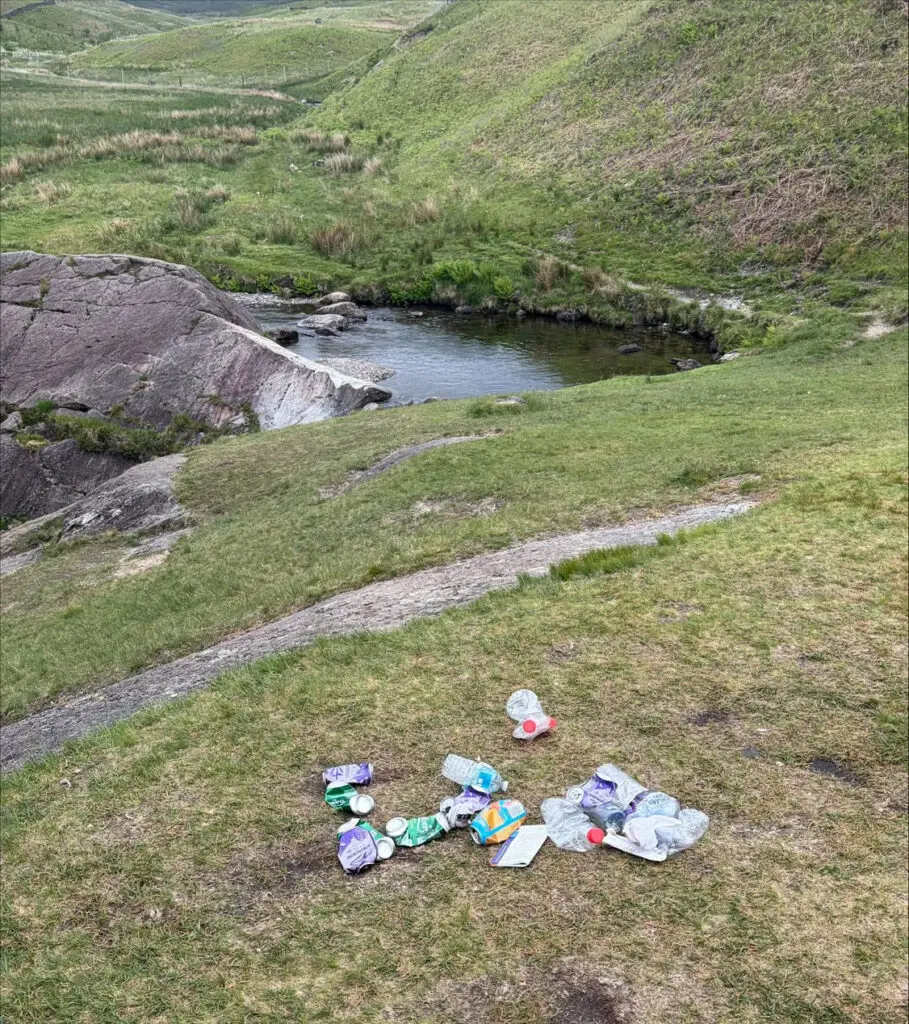
Cans, plastic bottles and other litter at the Lake District beauty spot
A visitor tax for the Lake District?
“The tourism industry has created an uncontrollable beast”.
Littering and fly-camping are increasingly cited as evidence that a visitor tax should be introduced not only to pay for more rangers to respond directly but also under a logic that people are more likely to value what they have to pay for.
“People should be required to pay a visitor tax for accessing the Lake District. It would reduce antisocial behaviour if non-Cumbrians couldn’t access these areas for free any longer, plus the extra fees could be used to employ more rangers to frequent the areas in the later evenings and weekends”.
Further calls are made to “control the volume of Airbnbs and place increased taxes on them to fund increased patrols and the clean-up required to deal with the volume of visitors they enable” – something which chimes with Friends of the Lake District’s campaign for Fairer Housing, Stronger Communities – and for limits on the number of cars entering crowded and environmentally sensitive areas, as well as for the Lake District to be promoted less.
Jeremy Smith concluded: “The calls from survey respondents for tougher penalties and stronger controls in the Lake District underline just how strongly people feel about littering, fly-camping and other forms of anti-social behaviour. They reflect growing concerns about how the Lake District is used, respected and cared for. We need to redouble efforts to address these issues, but we should also see this as a chance to have a broader conversation about the future of tourism in Cumbria and how it can work better for communities, visitors and the landscape alike.”
Notes:
1 = Since 2018, Friends of the Lake District has coordinated the annual Great Cumbrian Litter Pick, bringing communities together to remove rubbish from towns, villages, roadsides and lake shores across Cumbria. This event shows the power of local action, but it also highlights the need to prevent litter being dropped in the first place. To meet this need, Friends of the Lake District first surveyed levels of littering, fly-camping and other forms of anti-social behaviour in 2025, using the evidence gathered as the basis for sustained advocacy. This year’s survey repeats many of the same questions so the change over time can be observed.
2 = The Strategic Visitor Management Group (SVMG) comprises the Lake District National Park Authority, Cumberland Council, Westmorland & Furness Council, Cumbria Police, Cumbria Fire & Rescue, Cumbria Tourism, National Highways, the National Trust, United Utilities and Enterprising Cumbria. A sub-group of the SVMG – whose membership includes representatives of many of the groups which are on the SVMG itself, as well as Friends of the Lake District – has been formed to coordinate messaging around safe and responsible behaviour in the Lake District.
Alongside the survey, we’ve launched a fundraising campaign to support our work tackling litter and anti-social behaviour in the Lake District. You can donate here: www.friendsofthelakedistrict.org.uk/lakes-litter-appeal.
Share this post


Support our
Lake District Litter
appeal today
Related posts
Updates from our campaigns, our land, and the people taking action for the Lakes.

Pop up campsite consultation launched
An Article 4 Direction would require camp site operators to submit a planning application where all issues (positive…
Friends of the Lake District project and staff shortlisted for national conservation awards
We’ve been shortlisted for three CPRE Centenary awards.

Photo Competition winners capture the magic of the Lake District in Calendars and Cards
We are delighted to launch our new range of Christmas cards and 2027 calendars, featuring stunning images by…