
News
Fixing the Fells
A hike with Fix the Fells ranger Patrick Gaffney.
A hike with Fix the Fells ranger Patrick Gaffney
You can learn a lot of new words if you spend time with a Fix the Fells ranger: pigeonholes (nothing to do with birds, apparently), humps and hollows, bench paths…
These are some of the words and phrases that Patrick Gaffney explains as we walk up Whiteless Pike, near Buttermere, on a blustery, occasionally bright day, at the end of May. We’ve come here to see the work that Patrick and his fellow rangers from Fix the Fells’ North team have done in helping to combat erosion on this part of the landscape.
26-year-old Patrick, the ranger that Friends of the Lake District is now sponsoring, has worked for Fix the Fells for around eight months. In return for supporting the role, he’ll be supplying content for our social media platforms and taking part in activities such as our annual Fell Care Day.
Keeping to the path
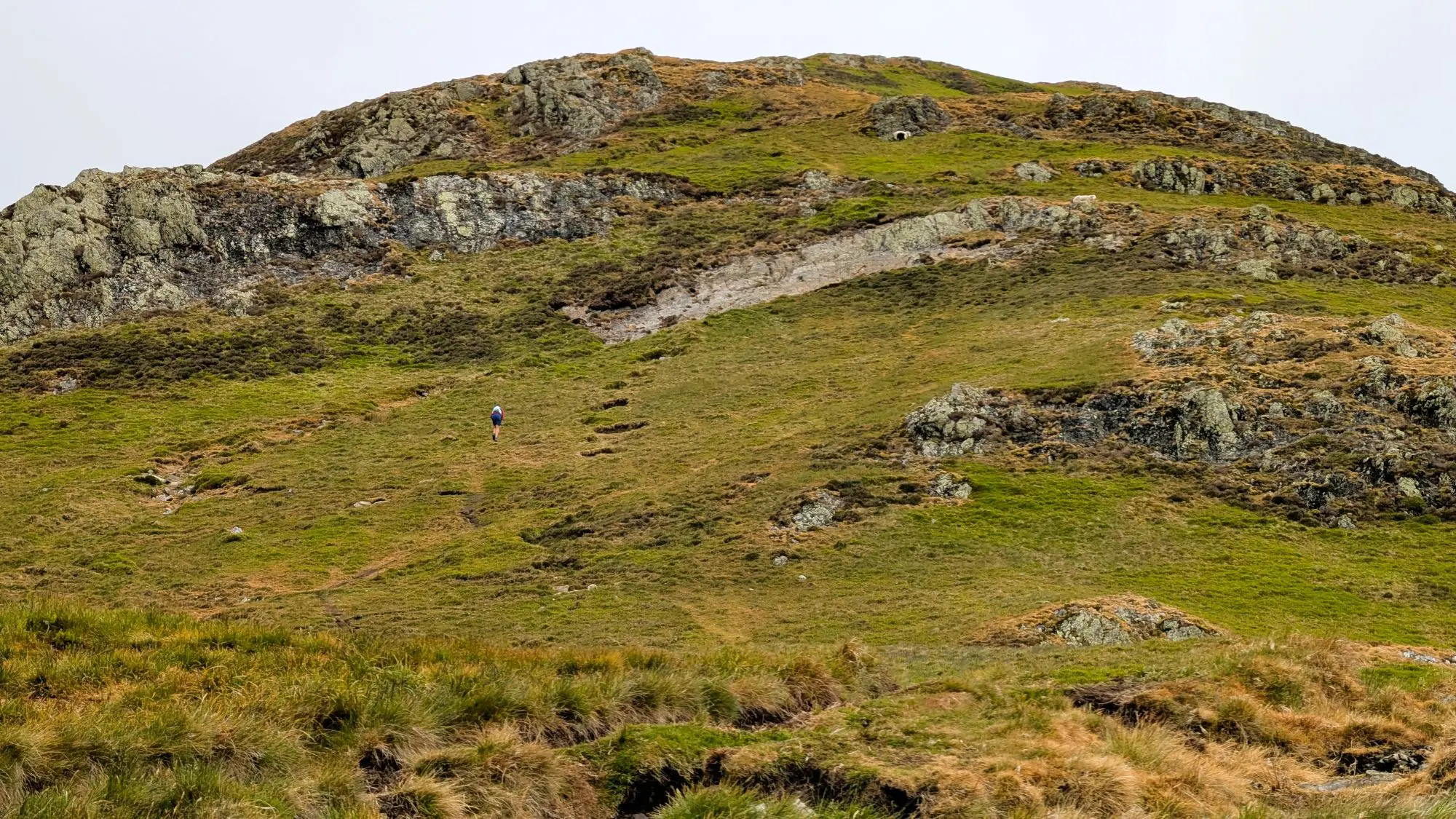
As we walk up Whiteless Pike, we stick to the bench path: a gravel trail that zigzags up the side of the fell. Bench paths are harder to see from the valley floor than a path that goes straight up the side the fell, and they’re less prone to serious erosion from the weather. As Patrick points out the cornerstones, put in where the path bends to stop people ‘shortcutting’ and making the bend wider, a fell runner dashes past and heads up the side of the fell, ignoring the designated path. It’s clear the runner is not alone in using this shortcut, the side of the fell is marked with a series of pigeonholes – marks made by people digging in to go up and down the side of the fell.
The runner’s timing couldn’t have been more perfect as it helps to illustrate the work that’s yet to be done. “We’ll be building humps and hollows where the shortcutting is happening to dissuade walkers and fell runners from going that way,” explains Patrick. These humps and hollows turn out to be rounded hillocks and troughs, that hide the trail of pigeonholes. It’s about subtle manipulations of the landscape to encourage behaviour, explains Patrick. People are less likely to stray from the path if they think they’re the first ones to do so, and if they have to walk over bumpy terrains or through thick vegetation.
How to “fix a fell”
Patrick takes a lot of pride in his work. It’s more than just (though it certainly is) hard graft – it’s about working out what needs to be done and the best way to achieve those goals, and making sure the area is left in a better condition than when the work started. “The idea is to keep things looking as natural as possible,” says Patrick, “so once we’re done people don’t even know that anything has been changed.”
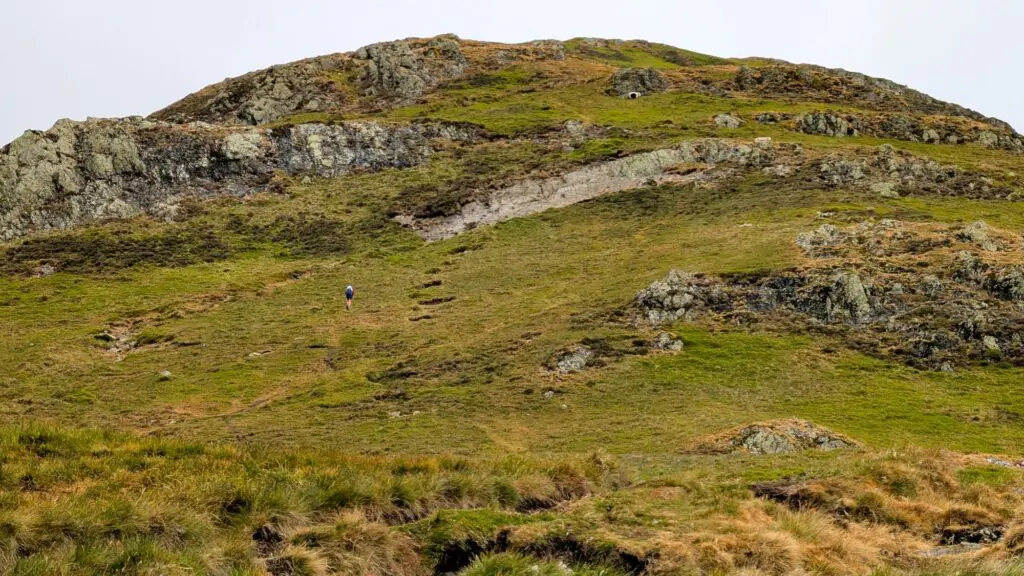
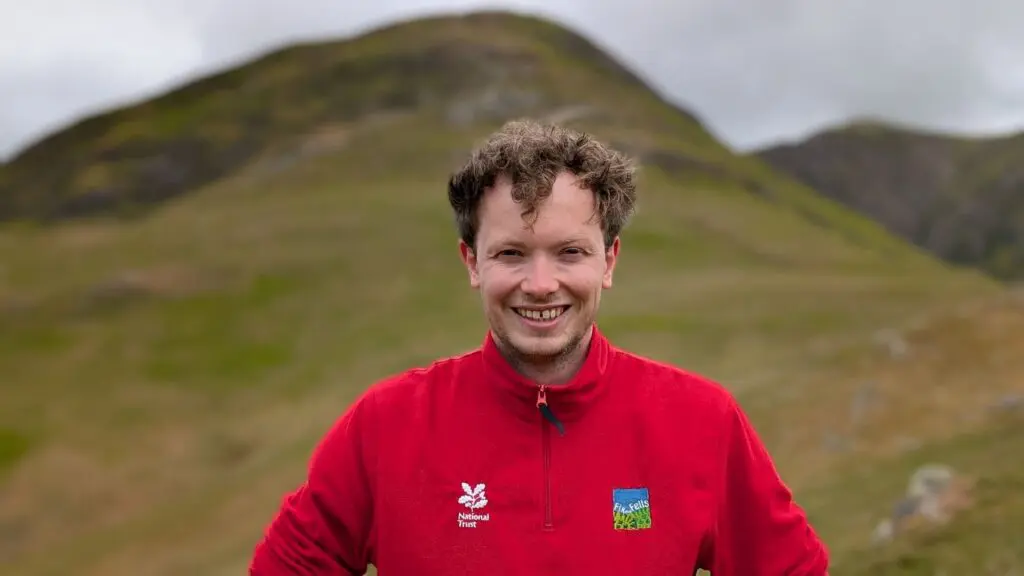
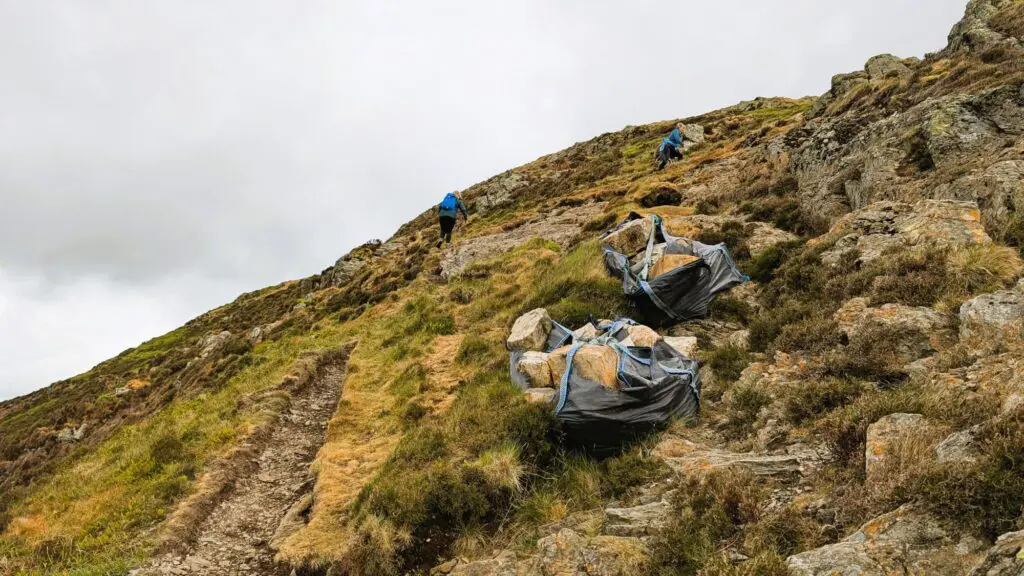
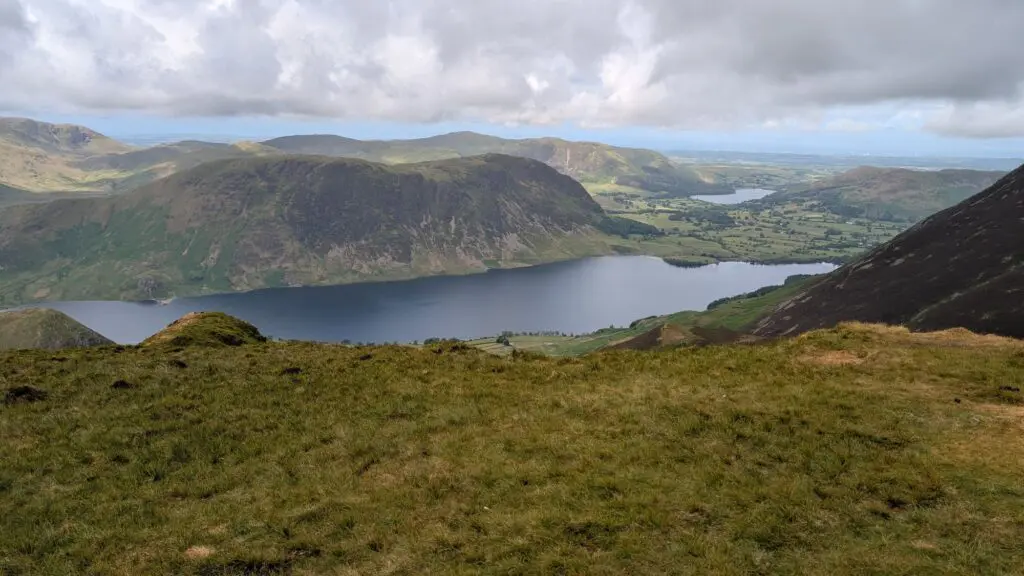
Photos: A fell runner takes a short cut up the hill/Fix the Fells ranger Patrick/Stones ready for use/Not a bad view from the office.
We stop walking for a moment, for me to catch my breath and for Patrick to examine a large stone which he’s considering using for pitching. He turns it over, looks at the different sides and considers which one would be the best to be under foot, and which would be best placed against the side of the hill. “It’s about having an eye for detail,” he explains.
The stones that the rangers use in their work are either ones that have been placed here in the past, used on previous paths, for example, or brought in by helicopter at the start of the season and left near the work area. As we pass one such pile, Patrick points out that some of the stones have been moved downhill by members of the public, so they’re well out of reach and will either have to be carried back up by the rangers, or left where they are.
Being a ranger
This is one of the occasional irritations of the job: that and people stealing tools that have been left on site to save the team having to take them down and bring them back up again, day after day. Recently someone stole the handle from a one such tool. “They probably decided to use it as a walking stick,” Patrick muses.
Being a Fix the Fells ranger is a physically and mentally demanding job. Patrick talks of early morning, fast-paced hikes up the fells, often carrying tools along with steel toe-capped boots (which he hates walking in). “I’m getting fitter as the season goes on,” he says. “The work doesn’t get any easier, but your stamina increases so you notice it less.” Having said that, office days are some of his least favourite days. The teams don’t go out on the fells if there’s an Amber or Red weather warning, or if any thunderstorms are forecast, and he gets frustrated being sat at a desk and not out getting done what he knows needs sorting.
Despite all the hard graft, it’s a job Patrick loves, and when we reach the top of Whiteless Pike, it’s easy to see why. The clouds clear and the wind dies. It’s suddenly warm and calm, and we gaze out from the fell top towards Crummock Water, Loweswater, and beyond that, the coast.
“Seeing the end result of our work is one of the biggest joys,” Patrick says. “When you look at the before and after photos it’s incredibly rewarding. And being outside, working in nature. There are times that I just stop and look up, especially on a beautiful day, and I realise how lucky I am to be out here doing this. Everyone walks past and says: ‘you’ve got a great office!’ And you know what? I really do.”
This article was first published in Conserving Lakeland issue 98 (summer 2025).
Share this post
Related posts
Updates from our campaigns, our land, and the people taking action for the Lakes.
New recruits and celebrations
This week, Jan and our volunteers return to Mazonwath to plant and take care of some dry stone…

Local plans: help shape future development in Cumbria
Our planning officer explains what local plans are and how you can have your say
Research and conservation news
Our land manager rounds up some more news from across the conservation world – the real cost of…