
Land Manager’s Diary
Bluebells and chocolate chips
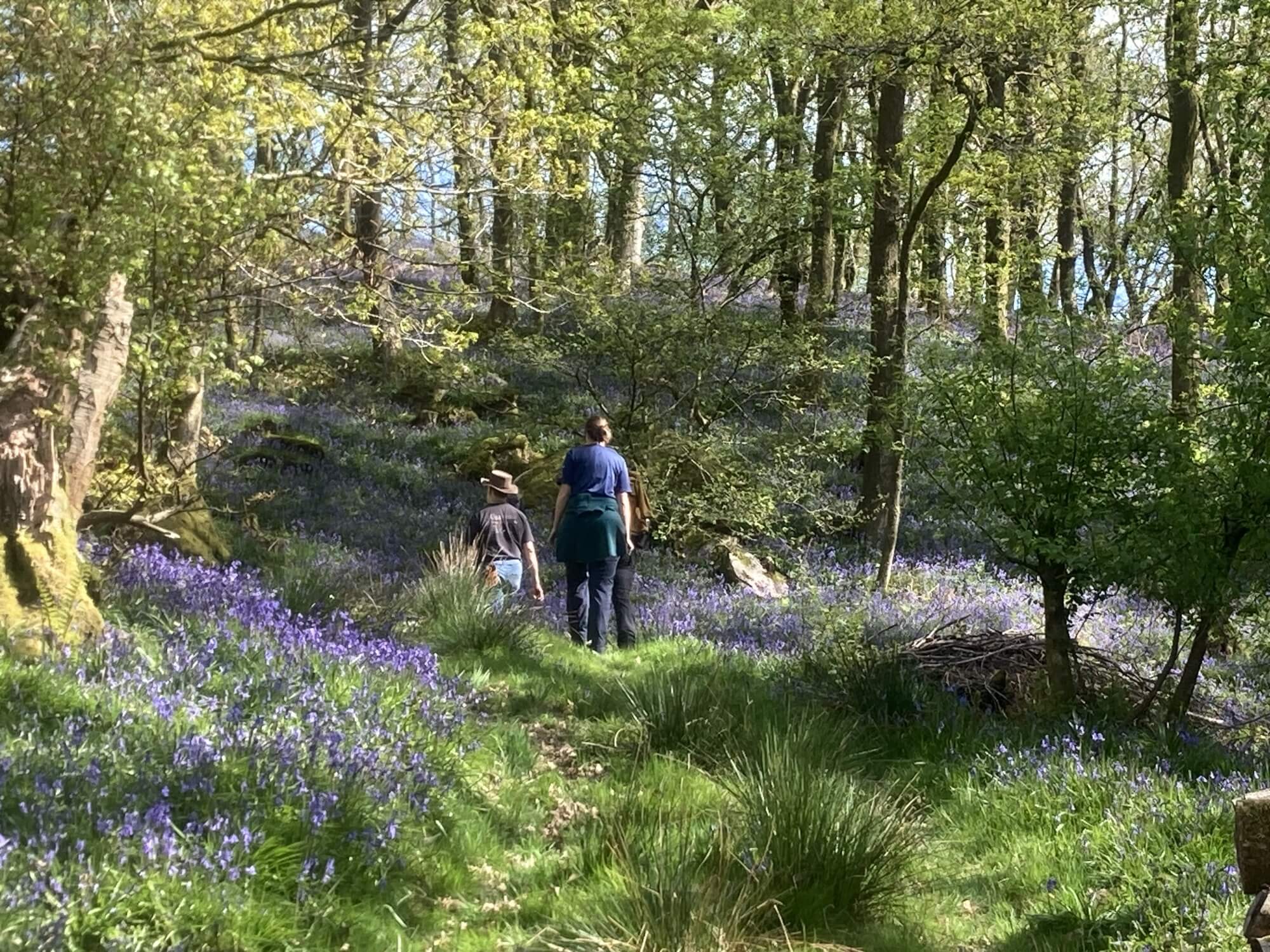
Spring has come to Cumbria, the bluebells are out and the woods are looking, sounding and smelling amazing. Our land manager Jan tells us more…
Bluebells and chocolate chips
At home, nature has proven its reliability again – the swallows come back to our valley every year on 23 April but strangely it takes them two weeks to move across from one side of the valley to the other. The cuckoos always appear the same week but not always the same date – but they too could be heard on 23 April during the walk to the school bus. Spring really is here, whoop!
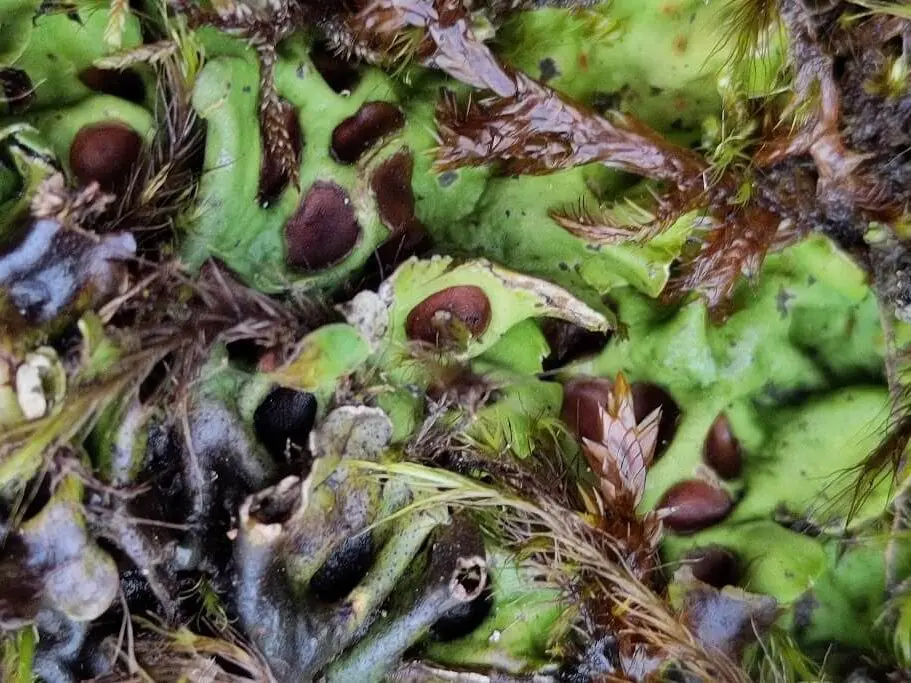
We love a bit of citizen science and learning more about all the special things we have on our land. The chalk board at Dam Mire Wood allows people to record sightings of all the things they see or hear. Not surprisingly, bird activity is high at the moment and we are grateful to those people who have taken time to write down their recordings. This month’s sightings include: robin, song thrush, chiffchaff, chaffinch, blackbird, great tit, bluetit, rook, crow, wagtail, nuthatch, red squirrel, wren, and meadow pipit. What a fantastic list for such a small site! Over at Little Asby Common, the Cumbria Bryophyte and Lichen group popped in for a visit. They are going to send in their sightings but as a taster sent us a copy of this beautiful lichen – it is Solorina Saccate, possibly chocolate chip lichen or space alien lichen. Given our volunteers love of cake, I’ll go with the chocolate chip lichen.
Innovation in farming
There are some great online learning and sharing platforms around now. One I tune into that is fairly new is Innovative Farmers – groups of farmers and landowners all over the country who do farmer-led trials on all manner of subjects, such as cows grazing bracken, pest management, and the like. I have been following the field lab trial on grazing animals to reduce bracken as our woods in particular really suffer with bracken in summer and are impenetrable.
Many of us have had the misfortune to have been bitten by ticks, they seem to be increasing, especially in the woods, and if like me you then get Lyme’s Disease you can feel pretty awful for a while. The bracken trial discussion has been focusing on the merits of grazing bracken by pigs, goats and cows and that led onto the discussion about ticks. They flagged an interesting article about it that some of you may want to read : https://rootsofnature.co.uk/why-your-tick-treatments-might-be-making-the-problem-worse/. Apparently, hens are good at eating ticks, so perhaps it is hens as well as cows we need in our woods!
Mike’s Wood
This week began with a trip to our lovely Mike’s Wood near Staveley, named after our former Chief Exec Mike Houston who developed and looked after the wood after he retired. Mike is the same age as Friends, 92 this year, and still has a wander around the woods. The wood was stunning on our visit, a mixture of blossom, the bluebells just starting to come out and the vibrant green of the new growth of the trees coming into bloom. The birds gave us a fantastic song accompaniment. We had a bumper gang which meant that we had three different walling repairs on go, carrying on from the Hole in the Wall gang repairs that have been going on since New Year.


Walling in Mike’s Wood, the bluebells are out and one of our new woods: Birch Parrock.
Several of the issues were caused by trees growing near the wall, gradually weakening the wall as the branches sway. But we couldn’t bear to chop them down so they live another day to bring us another wall gap! Non-wallers helped us clear the path which gets overgrown by brambles and scrub. The wood, like so many others, is suffering badly from ash die back. However, it was astonishing to see massive amounts of ash regeneration. How it will fare we can only wait and see. In the news recently, there is renewed hope for Britain’s ash after scientists developed a fast-track method of breeding disease-resistant trees. The Forestry Journal reports that researchers at the John Innes Centre have reduced the germination time of ash seeds from years to days, which could transform efforts to restore woodlands ravaged by ash dieback. They have adapted an embryo extraction technique whereby the plant embryo is removed from the seed’s tough outer casing and placed on an “agar nutrient jelly.” Ash trees can take two – three years to germinate in the wild, and this has been reduced to about a week and after about ten months in a glasshouse, seedlings are ready to go outside. This new method can produce new plants from those that are shown to be resistant to ash die back so perhaps we won’t lose the majestic ash from our landscapes.
Rusland rainforests
Our Big Give Earth Raise appeal, whereby every £1 donated is matched to be £2 has been going on all week. It was absolutely amazing that we reached our target of £20,000 two days before the deadline. It is very humbling that so many people have been so generous with their donations and we thank each and every one of you. This will make a huge difference to the work we can do in Rusland. Last Friday we completed on the transfer of another 26.5ha of rainforest woodland. David Archibald, whose family have been in the valley for generations, gifted us the two original woods several years ago. Sadly he died three years ago but it was his ongoing wish that he give us the rest of his woodlands. The transfer has taken a long time to complete, but we are extremely thankful to his daughters Camilla and Katrina for their ongoing patience in seeing the transfer through. The additional funding now means we can kick start the restoration work and bring a lot of it forward to really make more of an impact.
As part of developing our plans, we were in Rusland on Wednesday, meeting up with local woodland agent Ed Mills and our fantastic local volunteer Marion Brown. What a feast for the senses – the bluebells were out looking stunning and the perfume is just so amazing, the birds were singing, especially the wood warblers, and the ransoms (wild garlic) was good enough to put on a pizza! As ever when out in these woods we had too much to talk about in too little time. We were planning the priorities for the next couple of years but there are so many options it becomes hard to know what to choose. Do we make one wood completely deer proof or are we better putting smaller enclosures in several? Do we thin to remove the beech all in one go or in stages? Do we replant understorey trees after thinning, in enclosures or wait and see what regeneration comes through? And the story goes on, but we are keen to crack on and get going, so a lot to think about and do.
Tomorrow, Thursday, is our chance to say thank you again to all our wonderful volunteers as we are having our annual volunteers thank you event at Staveley. The key speakers are Marion Brown and Plantlife’s local Rainforest Officer Georgia Stephens who will be giving us a talk about yes, rainforests. More on that next week.
That is most of the spring cleans done for the woodlands, so it’s back to Mazonwath for a bit of walling next week, followed by High Borrowdale the week after. Join us if you can : https://www.friendsofthelakedistrict.org.uk/events/
Photos: Dry stone wallers at Mike’s Wood and Mazonwath, a view across Sunbiggin and a natterjack toadlet on the beach at Roanhead
Share this post
Related posts
Updates from our campaigns, our land, and the people taking action for the Lakes.
Woods and squirrels
It’s been another busy week on and off the land as work continues to help our woods in…
All about seats, plugs, walls and bats…
In a packed blog this week: the Dam Mire wood Eye Seat, bracken rolling at Rusland woods, signpost…

Drought in Cumbria
Policy Officer Amanda McCleery looks at what should be done to mitigate the risk of drought in Cumbria.