
News
Walk in a rainforest
Exploring Friends of the Lake District’s Rusland Woods with the people helping to bring Cumbria’s rainforests back to life.
A Walk in a Rainforest
It’s August, and Marion Brown and Georgia Stephens pick their way through an area of woodland where the bracken has been beaten back by a local farmer. “Oh look!” says Georgia, dropping to her knees and pointing to a tiny oak tree sapling that’s poking out of the earth. “That’s wonderful!”
We’re up at the top of Resp Haw Woods, one of two woods that Friends of the Lake District looks after in this area – the other being Bull Coppice, which joins to Resp Haw on the lower slopes. These woods are part of a much larger area of ancient woodland that stretches out across the Rusland Valley, an area that’s currently part of a fascinating project being led by the Woodland Trust in partnership with Plantlife and other organisations.
Plantlife work
Georgia Stephens, Plantlife’s temperate rainforest advisor in North West England, explains where the UK’s rainforests are and what condition they’re in: “You can find them down the west coast of the UK. That’s where you get this lovely climatic zone which has relatively high rainfall and fairly stable temperatures throughout the year. These climatic conditions can support the growth of specialist species of lichens, mosses, liverworts, and ferns, that simply cannot survive anywhere else. This shows how special, but also how fragile these ecosystems are.
“Less than 1% of the UK is now covered in rainforest, but that climatic zone tells us that, at one point, temperate rainforest could have covered up to 20% of the UK – so we’ve lost a huge amount. The precious remnants face a range of threats such as invasive species, inappropriate levels of grazing or browsing, tree disease, air pollution, and climate change. What we’re really trying to do now is protect what we’ve got left, and focus on how we can make these habitats more resilient.”
Some species of lichens, mosses, and liverworts found in Cumbrian woodlands haven’t been recorded anywhere else in England.
“We need to celebrate that we have these rare species,” says Georgia. “We don’t want a landscape where we’re just seeing the same five species all the time. We need diversity. These lichens and mosses are massively underrated in terms of carbon storage, and they can act as natural flood defences, slowing the flow of water from the fells. They’re a critical part of a healthy rainforest ecosystem.”
And, of course, there are the trees within the rainforest itself that make them special: mainly broadleaf trees like oak, ash, birch, rowan, small-leafed lime, and hazel, but with the odd Scots pine thrown in. A single oak tree can host over 2,300 wildlife species.
Inspiration in the woods
These woods inspired Marion Brown, who lives locally, to get involved in helping revitalise them. Through an earlier Plantlife project, she developed a fresh understanding about the vulnerability of this amazing woodland habitat on her doorstep. “I didn’t realise that the woods weren’t as healthy as you might think. They look fine from the valley floor but, up close, you realise there are no small trees for the next generation. We’ve got beautiful ageing ancient woodland here with no succession.”
Marion volunteers as part of the Plantlife project and helps coordinate landowners and other volunteers. They focus mainly on ensuring more light and air reach the ground to help new tree growth and make a better habitat for a range of species to thrive. Volunteers clear large patches of holly where it’s inhibiting new tree growth, pull up non-native beech whips, and trample down dense patches of bracken. Volunteers also help out by completing the Plantlife Rapid Rainforest Assessments to evaluate the condition of the woodlands. The long-term aim is to map the entire woodland in Rusland Valley to evidence how species-rich and important it is.
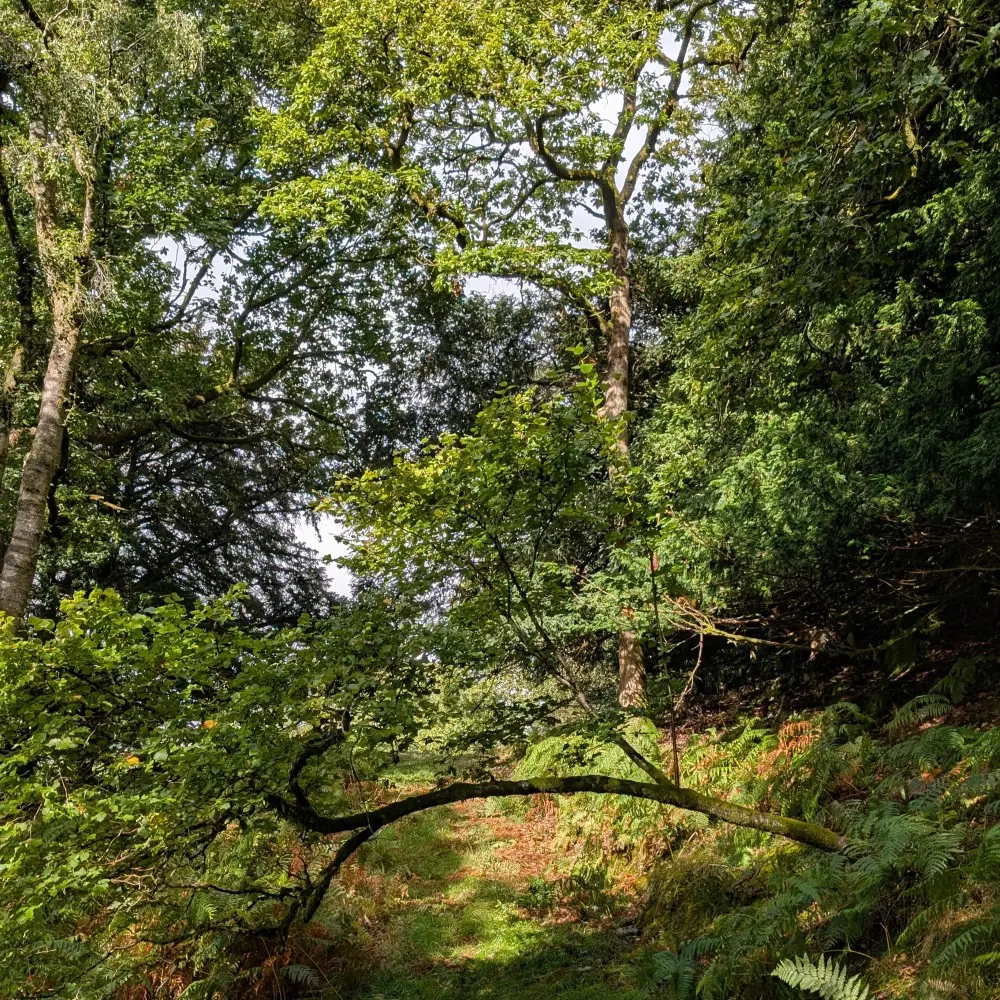
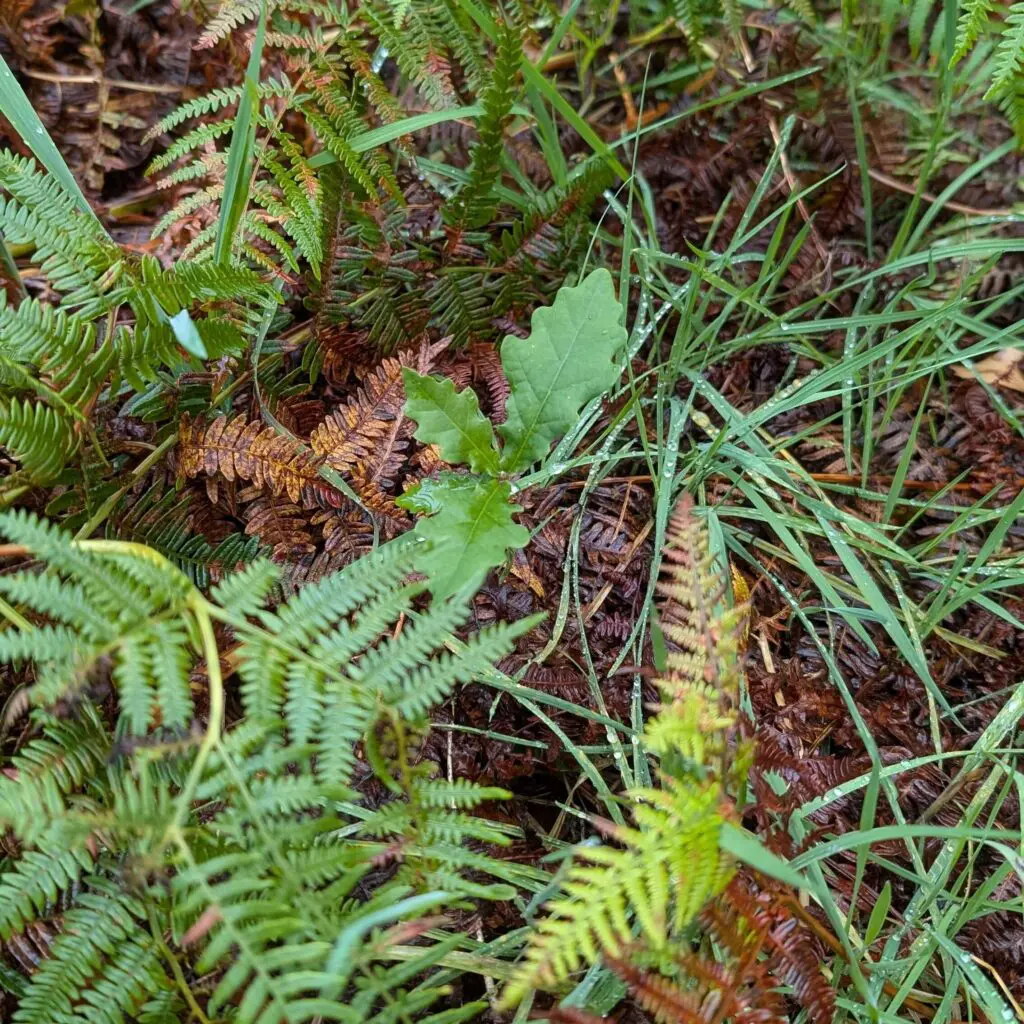
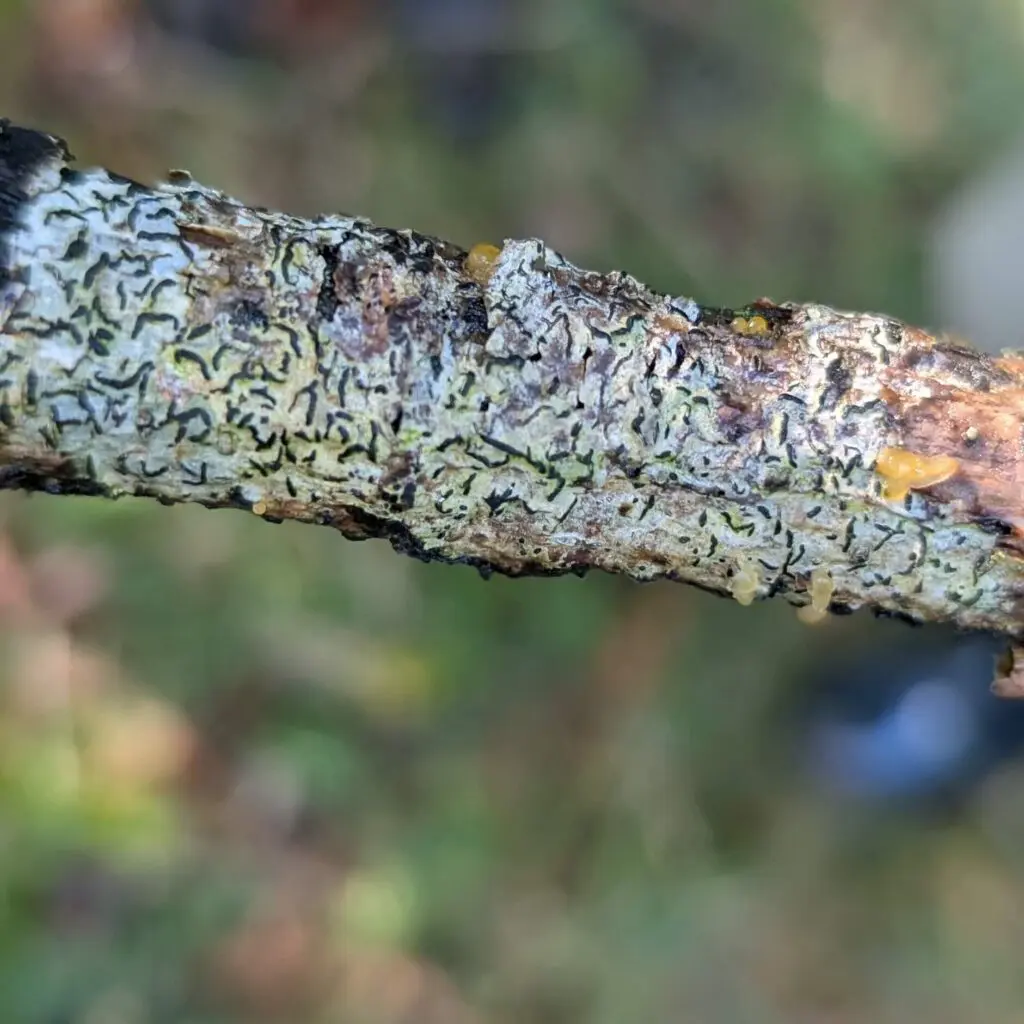
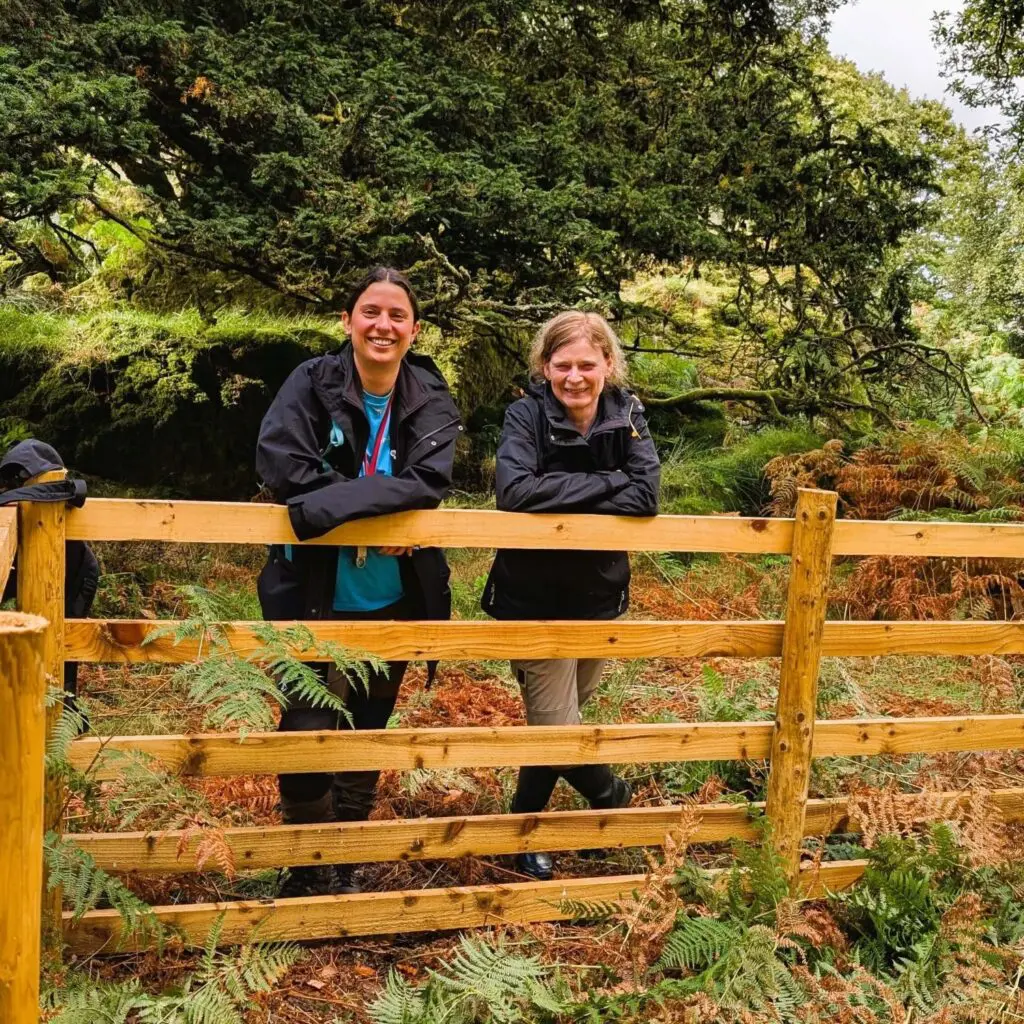
Above: Resp Haw woods, an oak tree sapling, script lichen on a branch, and Georgia Stephens and Marion Brown
The young trees that do manage to grow also have to contend with deer nibbling away at them – something which Marion and Georgia hope will be countered by several small ‘exclosures’ that have been built within the woods.
These exclosures are fenced-off areas where a mixed variety of new trees are planted in clusters. “This,” explains Georgia, “leads to a mosaic habitat where you get feathered edges, some open spaces, and denser areas of different species of trees.”
The exclosures are a good alternative to fencing off entire areas of woodland, which would, Marion explains, just push the deer problem onto neighbouring woodlands. Deer don’t like jumping into small spaces, so the new trees can hopefully grow unnibbled.
A healthy rainforest
Ultimately, the aim of this project is to start the process of restoring these woodlands to a habitat that can support the growth of new trees and be home to an ever-growing range of species that make up a healthy rainforest. This particular phase of work started in 2024 and is due to wrap up in early 2026, but the hope is that further funding can be secured for this internationally important habitat. Lessons learnt during the project are already informing the work that our land manager, Jan Darrall, oversees when caring for Resp Haw and Bull Coppice via volunteer workparties.
As we walk into one part of Resp Haw, Georgia points out how this particular section of woodland is in fairly good shape: “Moss-covered trees and branches, and some nice rock outcrops that provide a range of surfaces, and lots of deadwood around.”
It’s here that we also find ‘the perfect boulder’ – an irregular-shaped rock that’s covered in moss.
“When we did some identification training up here, we looked at this boulder,” says Marion. “We thought it might be home to two or three different species, but when Georgia got us to look closely, there were at least ten different species on it. It’s a whole world of its own.” And then Marion whips out her hand lens (an essential piece of equipment) for a closer look.
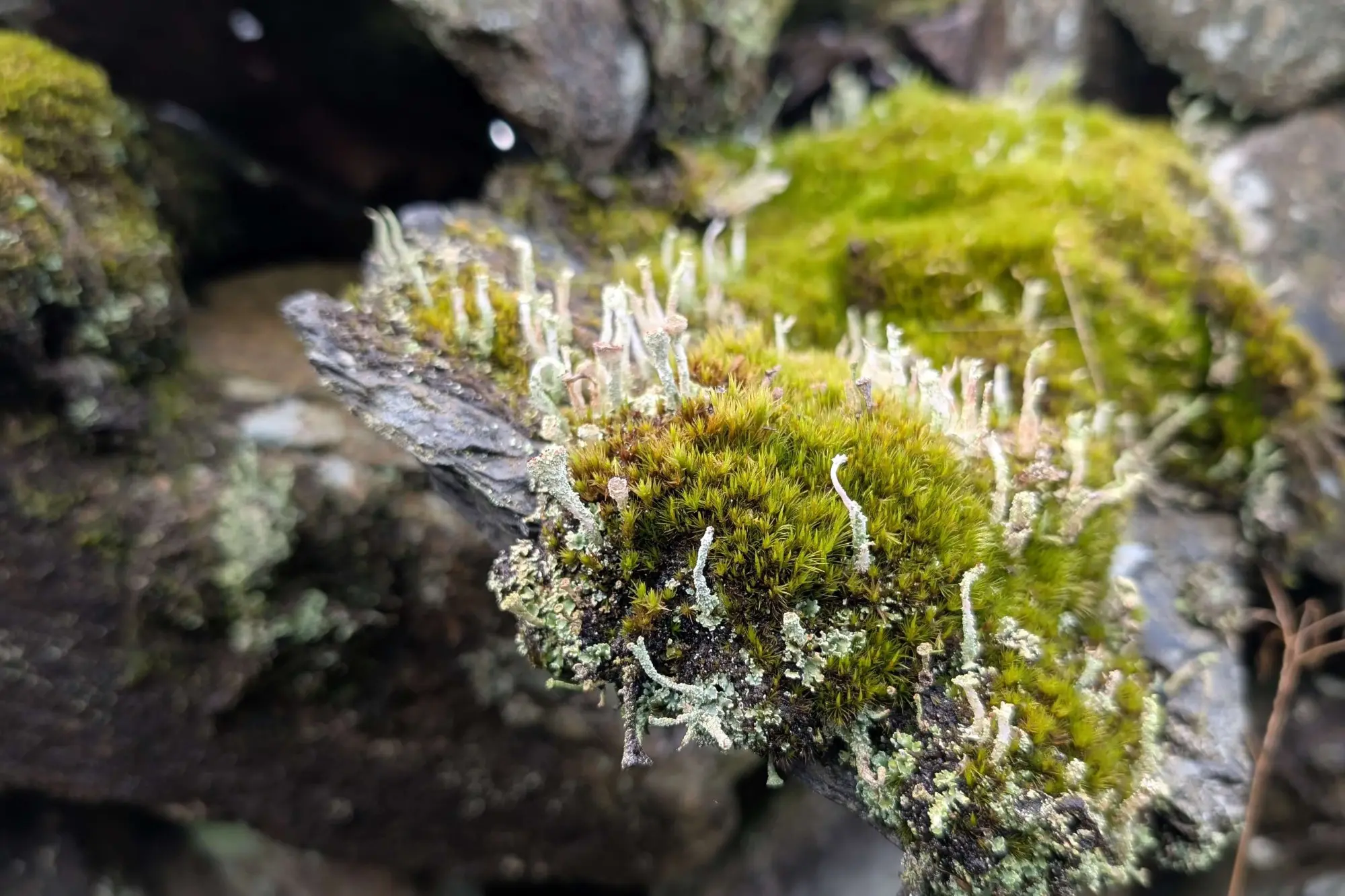
Exploring the surface of the boulder through the lens takes one into a magical, alien-like world of detail, filled with toothy leaves and feathered finger-like stems, layer upon layer of texture, colour, and shape. “Once you start exploring this world,” says Marion, “you can’t stop.”
The #Species Survival Fund Rainforest Restoration Project was led by the Woodland Trust in partnership with Plantlife and other organisations. This project is funded by the Government’s Species Survival Fund. The fund was developed by Defra and its Arm’s-Length Bodies. It is being delivered by The National Lottery Heritage Fund in partnership with Natural England and the Environment Agency. For more information about the project visit: www.plantlife.org.uk.
This feature was first published in Conserving Lakeland magazine issue 99 in October 2025.
Share this post
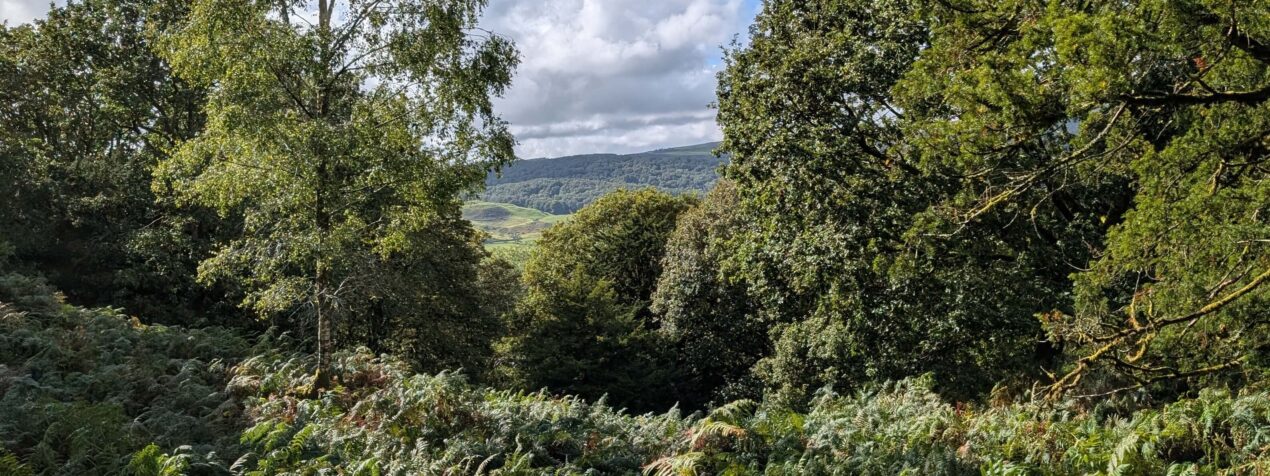

Find out more about our Lake District rainforest appeal
Related posts
Updates from our campaigns, our land, and the people taking action for the Lakes.
Friends of the Lake District welcomes decision to introduce a tourist tax
We welcome the news that Mayors in England will be empowered to introduce a tax on overnight stays…
Still treating the Lake District with contempt: litter survey reveals depth of anger
Our survey of litter, fly-camping and anti-social behaviour across the Lake District highlights a catalogue of damage to…
Community invited to discover Dam Mire Wood
Come along to our Community Day at Dam Mire Wood in Threlkeld on Friday 18 September 2026, from…