
Land Manager’s Diary
The daisy, the tree and the corner…
Jan writes in praise of the humble daisy while work continues at Dam Mire, and there’s a tricky corner to contend with at Mazonwath.
The daisy, the tree and the corner…
Whoop! The days are getting longer, the birds are singing and there is definite anticipation of spring, despite the non-stop rain and winds. One of the early signs are the small flowers appearing, celandines and even the odd daisy.
We work with many organisations and learn an awful lot from them. For the last two years we have been working with Plantlife on the Temperate Rainforest restoration as part of the Species Survival Fund. Plantlife are only a small charity but some of the work they do is amazing. Like us, they are a membership organisation and members receive lots of really interesting updates about their work, but also about plants and animals and things to look out for.
In praise of the daisy
The other week they did a really interesting article as part of National Daisy Day. Whilst daisies can be found in most temperate regions of the world, they are only native to temperate Europe and have been around for thousands of years. They were grown in gardens in ancient Egypt and used to treat a number of health concerns from coughs to pain. Roman soldiers collected daisies to heal wounds, so much so that it was often called ‘woundwort’ or ‘bruisewort’. Today they are still a popular ingredient in skincare thanks to their anti-inflammatory properties.
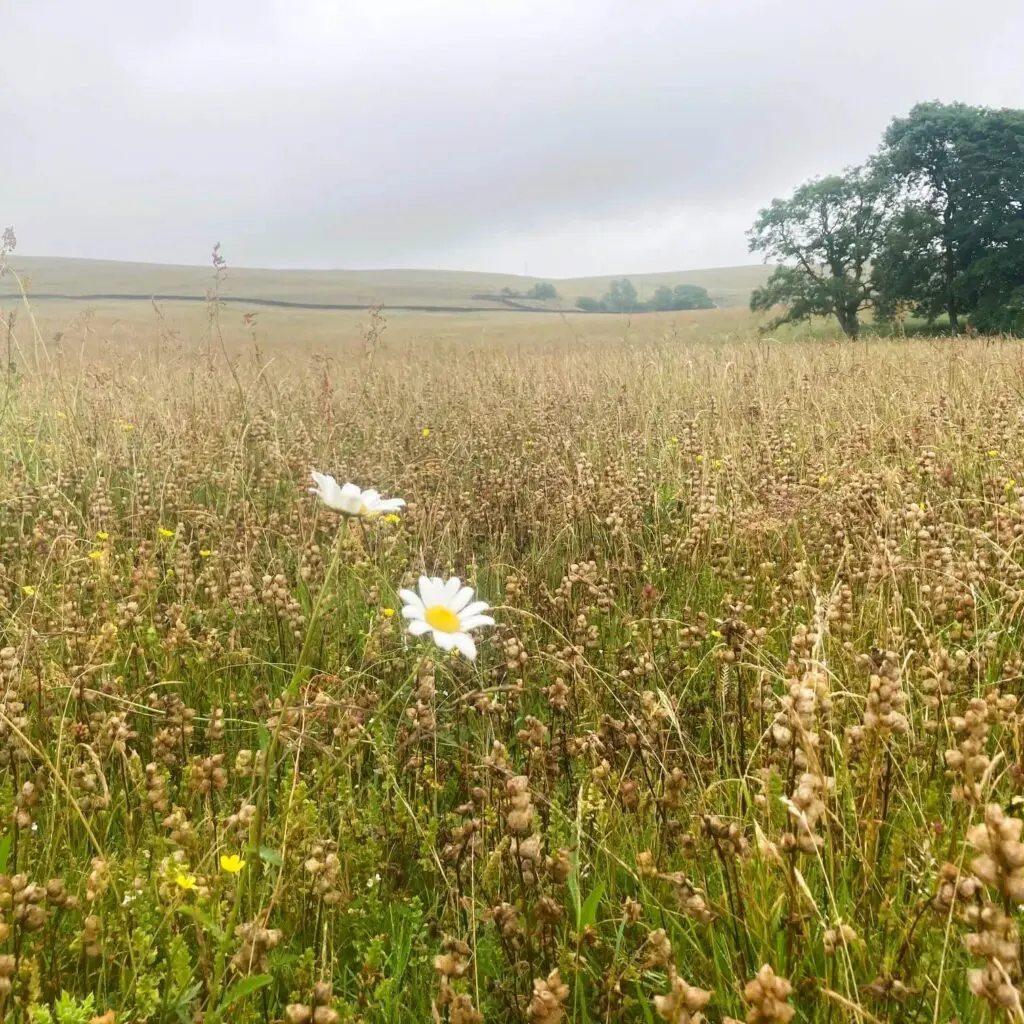
Everyone knows a daisy but did you know that each flower is actually a network of flowers – each of the petals and each bit of the yellow middle are actually individual flowers. Some people are not that keen on them in their lawns, but the common daisy is brilliant for a range of wildlife, providing pollen to bees, hoverflies, butterflies, beetles and moths. They also provide food to larvae, snails, caterpillars and rabbits and dried daisy heads are favourites of birds such as finches. Given their long bloom time they can be really important at a time when not much else is in flower. So next time you see the humble daisy in your lawn or out in the fields, celebrate its longevity and its myriad of benefits.
Meanwhile at Dam Mire…
We have a lot of contractors working for us at the moment. Tree surgeon Joe has been over at Dam Mire and reduced a huge sycamore down in height. It had a split trunk with big branches likely to fall off onto the nearby footpath. We were advised to reduce its size so that the safety risk was reduced and it may resprout or be valuable standing deadwood. Also at Dam Mire, Dan is starting work on the new bridge next week which is massively exciting so we will update everyone in the next few weeks.
Dry stone walling continues at Mazonwath
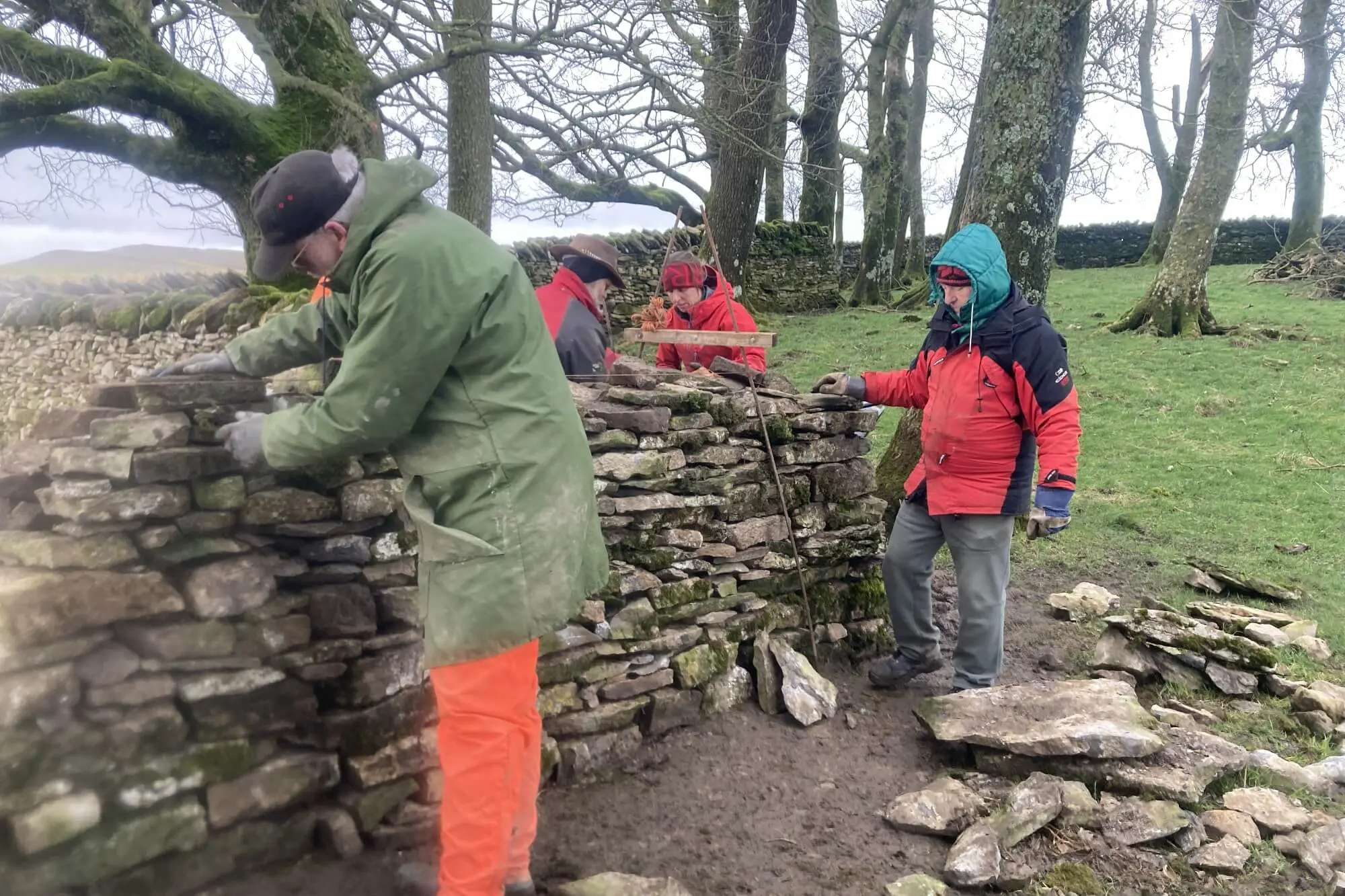
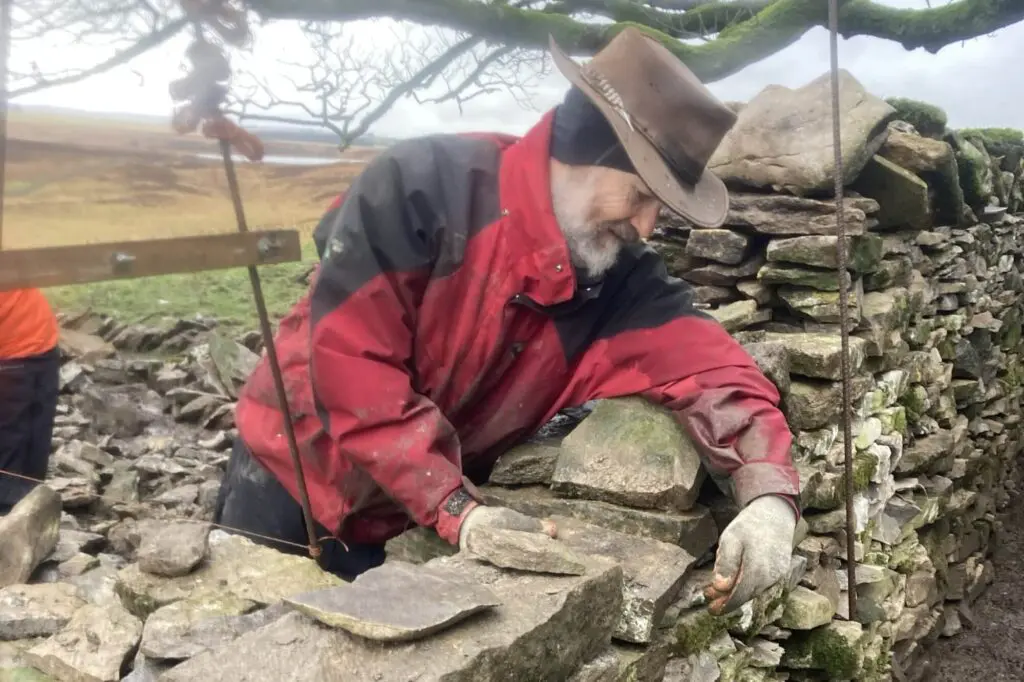
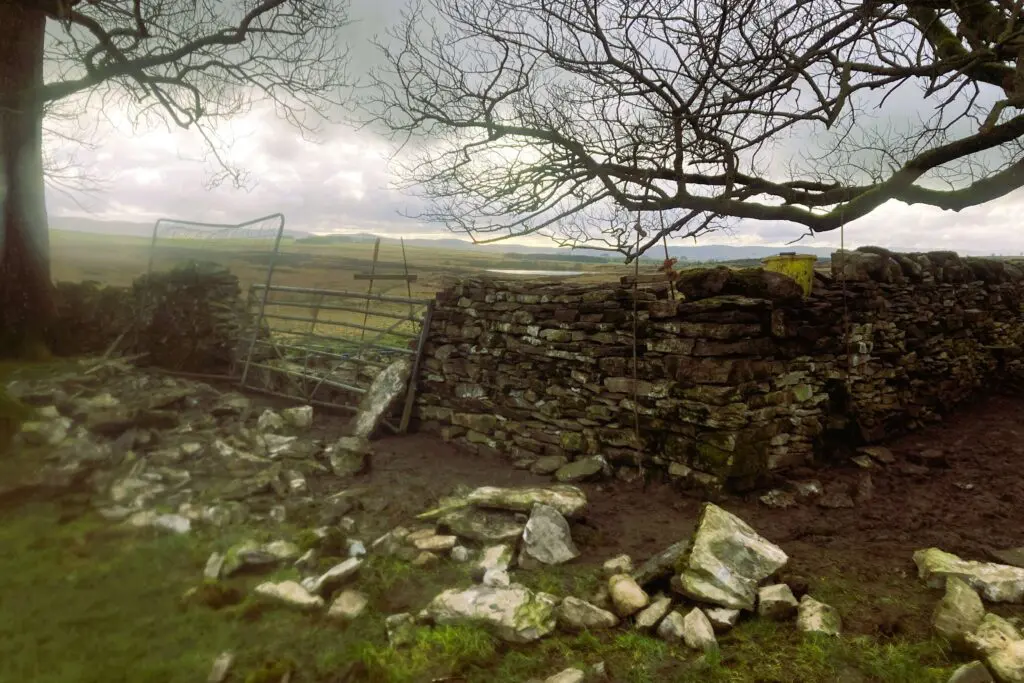
We were out with the volunteers this week at Mazonwath for some more dry stone walling. It was quite challenging, not only with the cold and wind, but with a large corner to build and some footings in big holes. It is easy to think that walling is just about putting stones on a wall, but it is actually quite a mentally stimulating and challenging task – any feature in a wall takes a bit of thinking about be it hog holes (holes in the bottom to let sheep through), water smoots (holes in the bottom to let water through), a cheek end (the end of a wall, often at each side of a gate), step stiles or a corner.
Dry stone walling at Mazonwath
Corners are particularly challenging as you in effect have two corners to build – the outside of the wall and the inside. The stones have to be placed in an alternating form to avoid a running joint (a long crack or line down the wall where all the stones have been placed on top of each other at the same point) as they are areas of weakness that could cause wall collapse. It was great to hear Andy and Sarah discussing all the issues as they built the corner, finding the perfect stones and interlocking them all. Great job done!
Share this post
Related posts
Updates from our campaigns, our land, and the people taking action for the Lakes.
Nature Recovery Fund helps restore Lake District rainforest
Friends of the Lake District has been awarded £14,900 from Westmorland and Furness Council’s Nature Recovery Fund to…
Wildlife bonanza – slow worms, toads and bats
This week, Jan has been meeting up with theLittle Asby commoners, exploring the hay meadows of High Borrowdale…
Fossils, flowers, forests and fly-campers
This week, Jan pays a visit to Gowbarrow to look at some ancient woodland before returning to Mazonwath…