
News
Temporary campsites Q&A
Our planning officer Leanne Parr answers some questions about the current issue of temporary campsites inside the Lake District National Park.
Temporary campsites Q&A
What is currently allowed when it comes to temporary campsites?
Since July 2023, temporary campsites (up to 50 pitches including campervans and associated moveable structures) can operate for up to 60 days a year under national permitted development rights. The 60 days don’t have to be used in one continuous period, so they can be spread out over several weekends, for example.
There is no limit to how many people, tents, campervans or cars can stay on the site over that period and only a small number of sites are excluded (including Sites of Special Scientific Interest).
The only thing operators need to do is notify the local planning authority in advance in writing and provide details of toilets and wastewater disposal facilities (unless they are in a Flood Risk 2 or 3 zone where prior approval is necessary).
Up until 2023 all sites operating over 28 days would have needed planning permission.
Does Friends of the Lake District want to ban temporary campsites?
Absolutely not. We understand the benefits that temporary campsites bring. However, our evidence shows that some temporary campsites are creating problems for the environment and local communities. What we’re supporting is what’s called an “Article 4 Direction”. This would mean that the Lake District National Park Authority (LDNPA) would require a planning application for all campsites. This would be a means of assessing impacts and mitigating problems. It also gives local residents the opportunity to comment on campsites on their doorstep.
Is planning permission required for temporary campsites elsewhere in the country?
Yes. Normally, with national changes like this that relax planning rules are made, there is an exemption for protected landscapes, such as National Parks and Word Heritage Sites to ensure they remain protected. Indeed, other National Parks have introduced Article 4 Directions to ensure this remains the case in relation to campsites.
The New Forest National Park Authority (New Forest NPA) removed permitted development rights for temporary campsites across the Park unless the site is operational for less than 28 days and the land was first used as a temporary campsite before 1 March 2020.
This means that for most temporary sites a planning application is required, and a full planning application fee is charged.
In Cornwall, temporary campsites in National Landscapes (regardless of their size or operational period) require planning permission (subject to a full planning fee).
Pembrokeshire National Park has introduced an Article 4 Direction meaning that additional rules apply to the ones already in place in the rest of Wales. This includes a requirement for full permission for all tented sites over 28 days.
What impact has the need for planning permission for temporary campsites had in the New Forest National Park?
Since changing the rules around temporary campsites, the New Forest NPA has assessed several planning applications and the vast majority of these have been permitted. Communities recognise that the planning application route enables appropriate planning conditions to be used and this has been helpful.
David Illsley, Head of Planning & Place at the New Forest NPA states that:
“The New Forest National Park Authority introduced a Park-wide Article 4 Directions relating to temporary campsites in 2022 in response to concerns raised regarding the impacts of temporary campsites on local communities and on the wider landscape and sensitive habitats of the New Forest. During the consultation on the proposed Article 4 Direction, the majority of responses supported the introduction of the Direction, recognising its role in helping to safeguard the amenity of local communities; protect the landscape character of the National Park; and conserve internationally designated habitats within the New Forest.
It is important to emphasise that an Article 4 Direction does not preclude development, but means a planning application will be required. We recognise the positive role campsites play in enabling people to visit and enjoy the New Forest National Park, as well as supporting landowners. Our experiences of having applied the Article 4 Direction in the New Forest National Park for the last 4 years is that it allows our planning team to assess each proposal on its individual merits, taking account of planning policies, environmental impacts and local circumstances, as well as the views of consultees. The vast majority of planning applications for temporary campsites triggered by our Article 4 Direction have been permitted, with the use of appropriate planning conditions to manage impacts.”
How would applications for temporary campsites be judged if an Article 4 Direction was put in place?
Applications would be assessed against the same policies and frameworks as permanent campsites. This creates a level playing field.
Could the LDNPA revert to the previous position of allowing pop up campsites for up to 28 days?
Yes, that could be an option. However impacts will still occur albeit over a shorter period. The Article 4 Direction that has been drafted by LDNPA means an application will be required regardless of the length of time that the site operates.
Won’t requiring planning permission add extra costs to the landowner, some of whom may be farmers who are struggling financially?
Operators can generate significant incomes from a temporary campsite, and it is likely that the application fee will be small by comparison. For example, assuming full occupancy (50 pitches over 60 days) at a rate of £30 per night would generate an income of £90,000. Operational costs are likely to be low, with most sites being unstaffed and having limited facilities on site (many just have portaloos).
The LDNPA may also have the option of waiving the application fee should they wish to do so. Or offer some kind of free pre-application advice to gain an informal opinion on whether an application is likely to be supported. This will help avoid abortive work and unnecessary costs.
The current permitted development rights may also be harming some farmers as non-farming businesses buy up agricultural fields to operate as campsites. This can artificially increase the price of agricultural land.
Won’t the requirement for planning permission increase fly camping?
There is no evidence that the relaxation of planning rules in 2023 (when there was an increase from 28 days to 60 day for temporary campsites) resulted in a reduction in fly camping. Unfortunately, it is likely that people who currently fly camp, and take the risk of being caught and paying a £100 fine, will continue to do so.
Will requiring planning permission have a negative effect on the local economy?
We are not asking for a ban on pop up campsites. We just want measures in place to ensure that they are well located and well managed.
Even if the requirement for permission resulted in a reduction in the number of temporary sites, it is likely that visitors wanting to camp in the National Park will continue to do so and there will continue to be a range of accommodation options available to them.
Aren’t pop up campsites a cheap form of accommodation compared to others? Doesn’t this help make the National Park more accessible?
We have contacted Pitchup.com to ask for evidence to demonstrate that temporary campsites are cheaper than permanent campsites, but no information has been provided. There are several reviews on the same website from users of temporary campsites that state that the site was expensive, particularly when taking into account the limited facilities available on site.
Temporary campsites do contribute to the supply of holiday accommodation, but they should only be allowed where they are well located and well managed.
Won’t the requirement for planning permission lead to more delays for the operator?
Operators generally notify the local planning authority well in advance of the proposed operational dates. Should the requirement for planning permission come in, Local Planning Authorities will be required to undertake a 21-day consultation period and are able to determine the planning application after that. Delays will only arise where the application raises significant concerns and further information is needed. This can be avoided to some extent by seeking pre-application advice as soon as possible.
Won’t this action push temporary campsites into areas on the edge of the National Park?
There is a risk that operators may look at sites outside the National Park. However, there will always be demand from people wanting to stay within the Lake District National Park itself.
Campsites have always been a feature of the National Park, what is the problem with pop ups and the landscape?
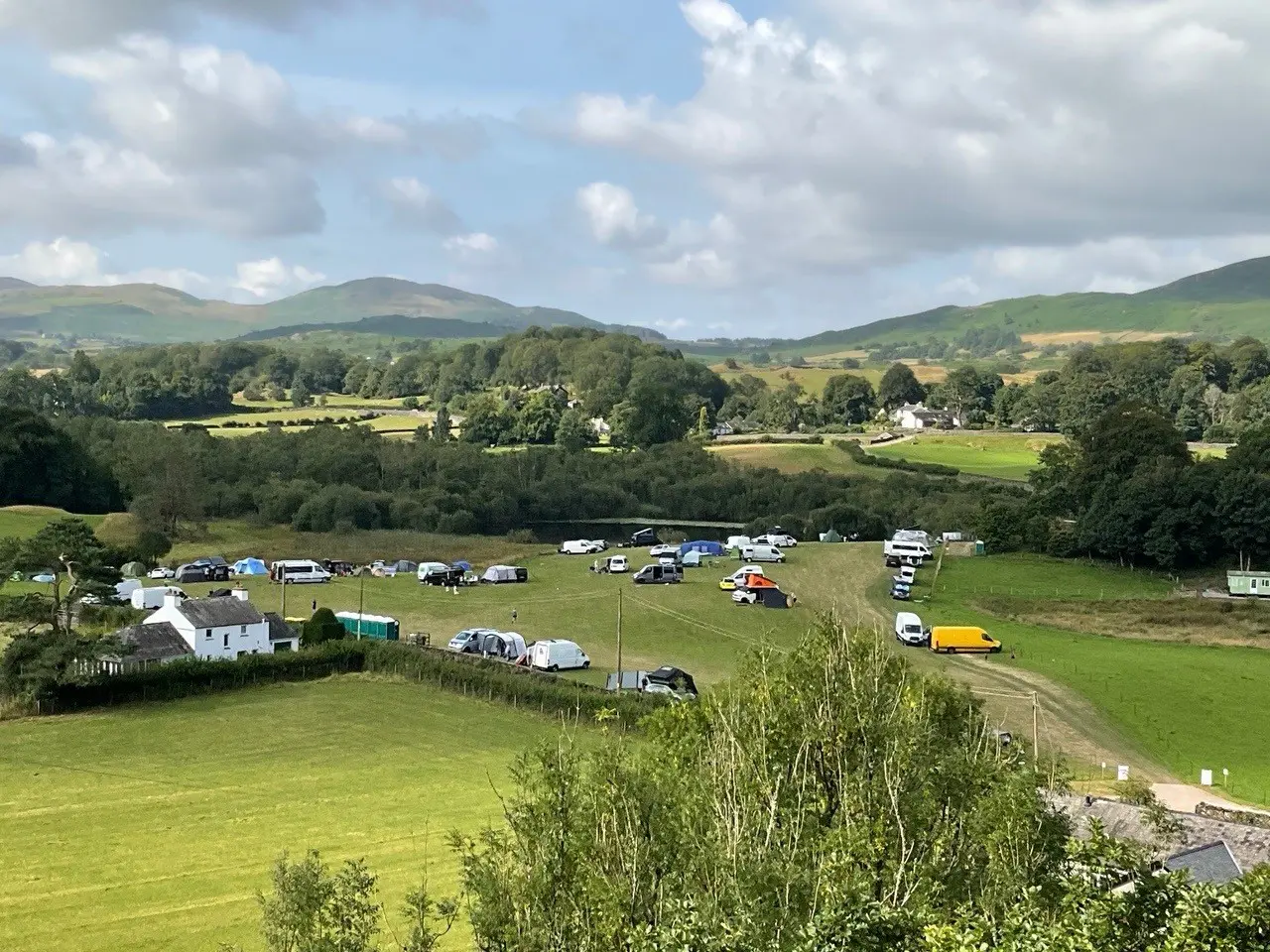
The current permitted development rights allow up to 50 pitches (of any size) for tents and/or camper vans. Tents are often accompanied by additional vehicles, and the current rules also allow for “any moveable structure reasonably necessary for the purposes of the permitted use”. This could include toilets and washing facilities, external lighting, signage etc.
The visual and landscape impacts of this can be significant, particularly where there are several sites in close proximity to each other and where the landscape is more sensitive to change. For example, valley bottoms which can be viewed from a range of public viewpoints.
The visual and landscape impacts of such uses were recognised by an independent Inspector dismissing an appeal for a change of use from agriculture to a campsite in the Newlands Valley in 2023. The inspector highlighted the impact on the character and appearance of the area with particular regard to the site being within the Lake District National Park and The English Lake District World Heritage Site.
There is a risk that an increase in the number of inappropriately located campsites will erode the very landscapes that visitors come to see and residents value.
What can concerned residents do?
The LDNPA is seeking views on an Article 4 Direction, which would bring in the requirement for pop up campsites to have planning permission. The deadline for comments is 16 November 2026. We encourage residents and other interested parties to respond to the consultation. Further information can be found here: https://lakedistrict.gov.uk/planning/planning-permission/article-4-directions/article-4-direction-consultation-temporary-recreational-campsites/
Share this post
Related posts
Updates from our campaigns, our land, and the people taking action for the Lakes.
“The right campsite in the right place.”
Why many local residents and Friends of the Lake District support plans for a rule change for pop-up…

Who gets to call the Lake District Home?
We asked people living in and connected to the Lake District National Park to share their experiences and…

Kirby lecture details and panel announced
Our 2026 Kirby Lecture explores what a Cumbrian mayor could mean for the county’s future