
Land Manager’s Diary
Diggers, planting and exposure climbing…
Work begins on the new bridge at Dam Mire Wood, and volunteers go climbing up the crag to cut back gorse at the Helm to expose the geology.
Diggers, planting and exposure climbing…
Well some sunshine at last, what a relief but the poor ground is so wet and muddy it will be a bit before it dries out. It’s been a full on week. Work has started on the new bridge at Dam Mire Wood at Threkeld. Contractor Dan and colleagues are now on site and have begun making the abutments for the new bridge across Kiln How beck. The first job was to get the levels right for the bridge abutments and dig out the foundations for the pads the bridge will sit on.
Once they are in the hard work begins of getting a steel beam across the beck. With no access for the digger this is a tricky one but luckily Mike our neighbour who kindly gifted us the first piece of land has yet again been incredibly generous and is letting us take the digger through his garden. Through our first piece of Dam Mire Wood and once a bit of fence has been removed, we’ll be able to get the digger to the opposite side of the beck and building can begin. All very exciting.
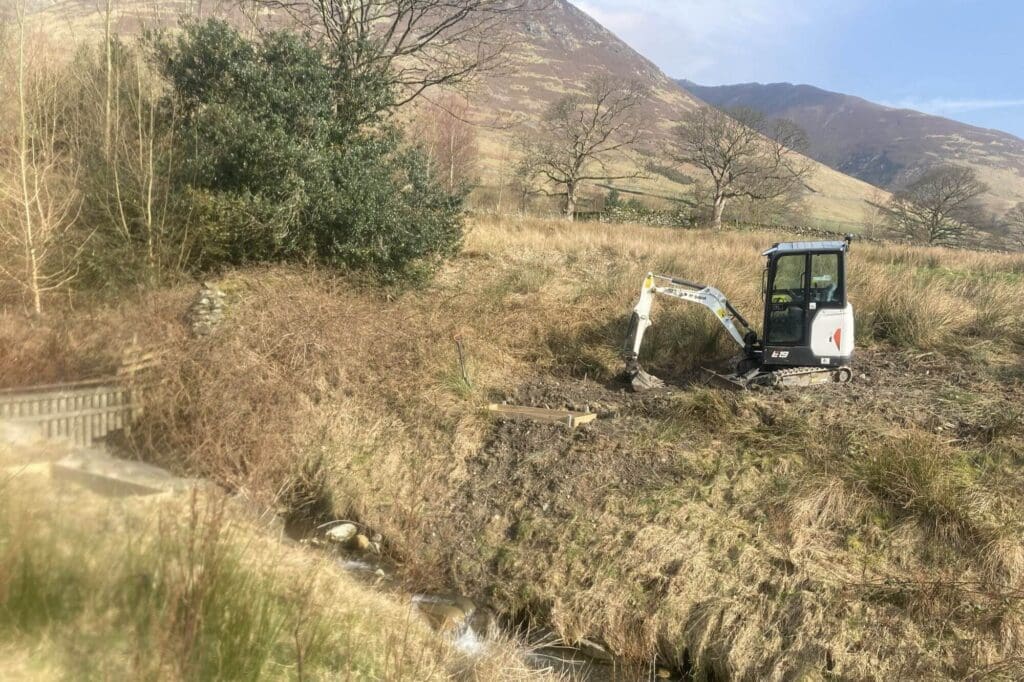
Once the bridge is in they will also remove the whole fence between the two sites so for the first time, people will be able to access the whole land in one go. We are incredibly grateful to all those of you who generously gifted us money last year to help with this work which in turn will enable us to do more for nature and wildlife as it will mean we have a means of access to get a digger in and put in some ponds and scrapes in future.
Hedge planting day
We had a grand staff day out hedge planting on Tuesday. Jack who has been on and off with Friends for over two decades is retiring and we decided to celebrate by doing some hedge planting as part of our Hedges and Edges project. We all headed up to a small farm near Kirkoswald and got stuck in.
It was great to be joined by ex staff and trustees to do some work on the ground and the sun shone making it even better. Seeing so many old staff brought it home just how many fantastic staff we have had and do have and what a great range of projects we have run in the past – overhead wires which still continues, Farming Landscapes, the Our Green Space project, Westmorland Dales Landscape Partnership, Work the View. Yet again it brings home that often an indicator of success of the work of Friends is not what you see but what you don’t, either wires removed, harming developments being refused, or just working with people to share knowledge such as farm walks or how to manage green spaces properly. Awesome and quite humbling to be reminded of that.
World Wildlife Day
Tuesday was also World Wildlife Day and this year the theme was ‘Medicinal and Aromatic Plants: Conserving Health, Heritage and Livelihoods’. This was making the point that plants and fungi underpin the health of our landscapes and our world and Plantlife kindly listed some of the ways that plants are vital to our life:
- 60,000 plant species are estimated to be used globally for medicinal purposes
- 25% of all pharmaceuticals come from plants
- 1 in 5 people rely on wild plants, algae and fungi for their food and income
- Medicinal and aromatic plants are humanities oldest healthcare system
- Conserving medicinal and aromatic plants helps preserve traditional knowledge
Work on the Helm
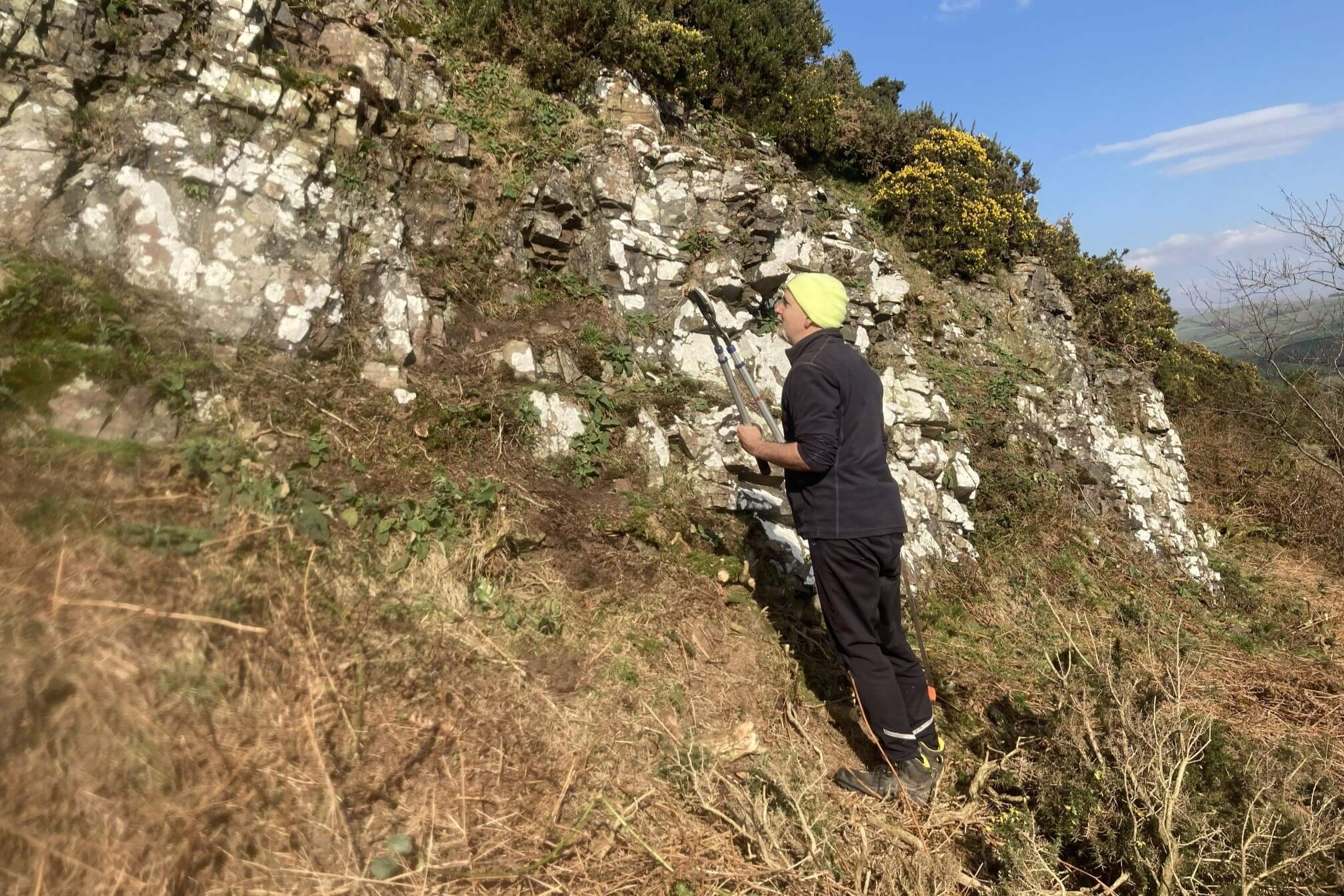
On Wednesday we were back on the Helm with our trusty volunteers. We had a few holly trees left over from the hedging work to plant and then we headed for a rock exposure that is important in geological terms and clearly shows the unusual geology of the Helm – well it does if we could have seen the rocks. The Helm is a steep sided, fault-bounded hill of Silurian ‘Helm Member’ rock, the youngest of the Windermere Group rocks, formed 420 million years old, in a sea that was shallowing as continents began to collide. Evidence of this impending collision can be seen as folding, cross bedding and ripple marks, in the reddish rock exposures. This exposure was covered in gorse and when Cumbria Geoconservation re-surveyed the local geological site they asked us if we would remove some of the scrub so that people could see the rocks but also so that damage by roots etc was avoided.
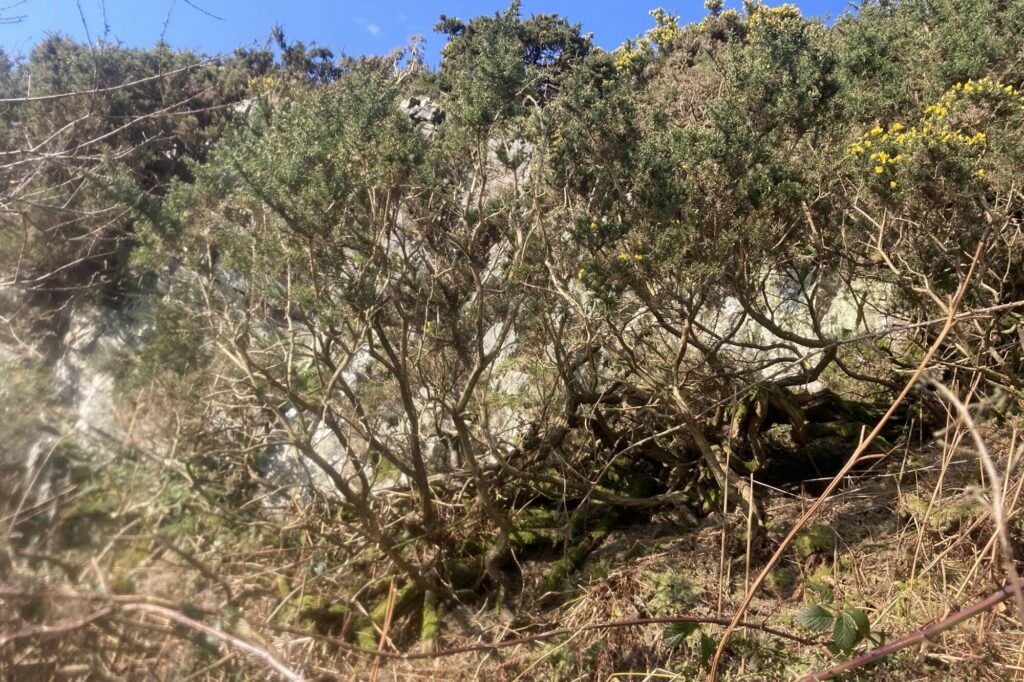
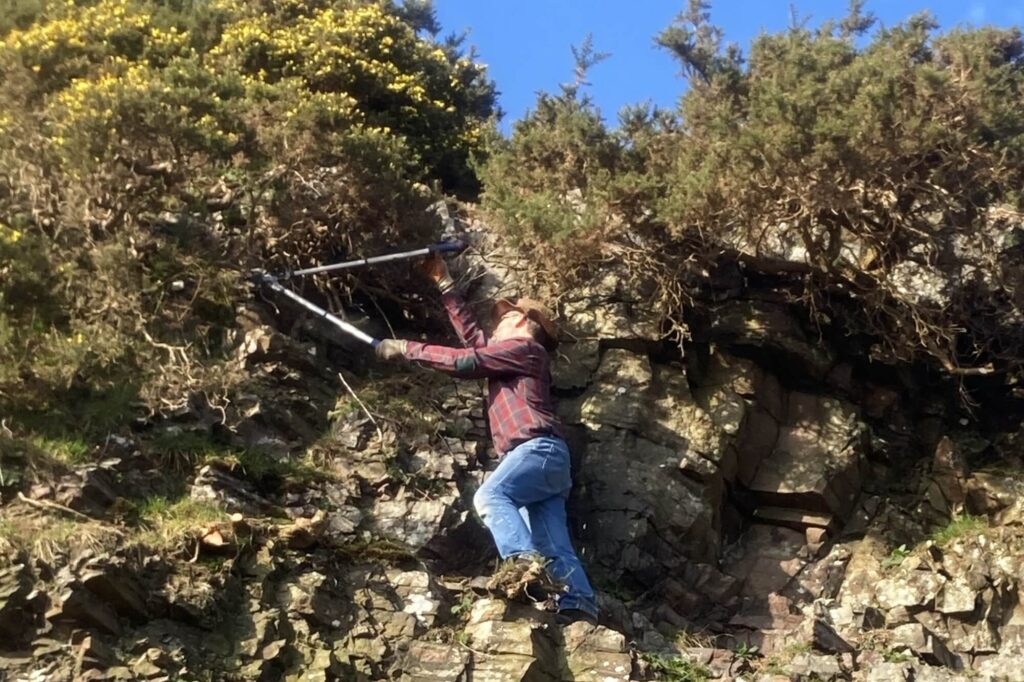
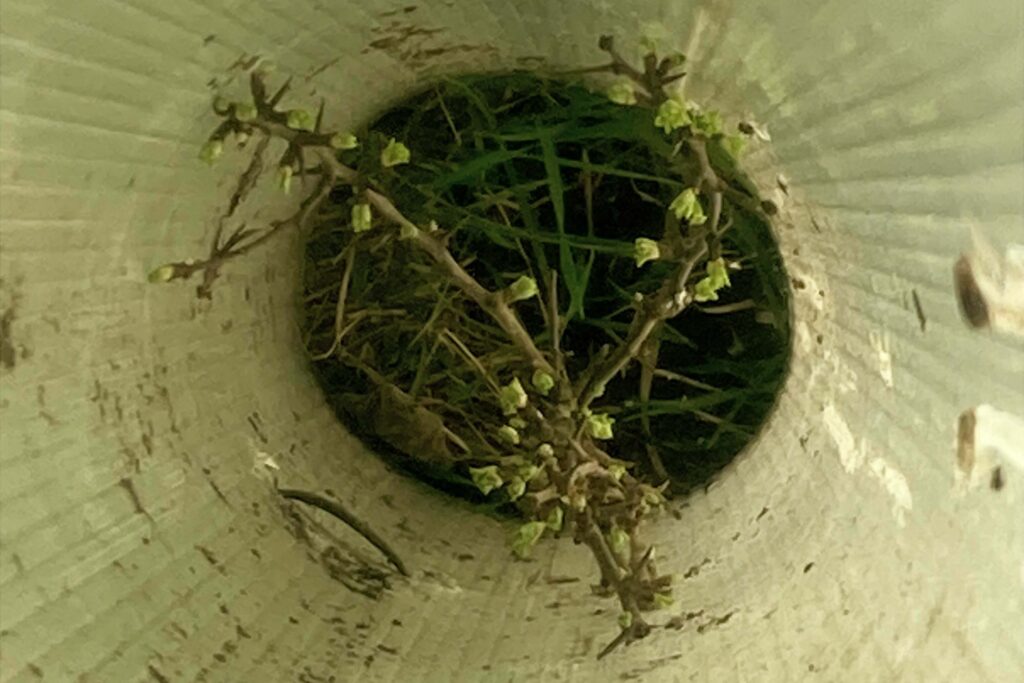
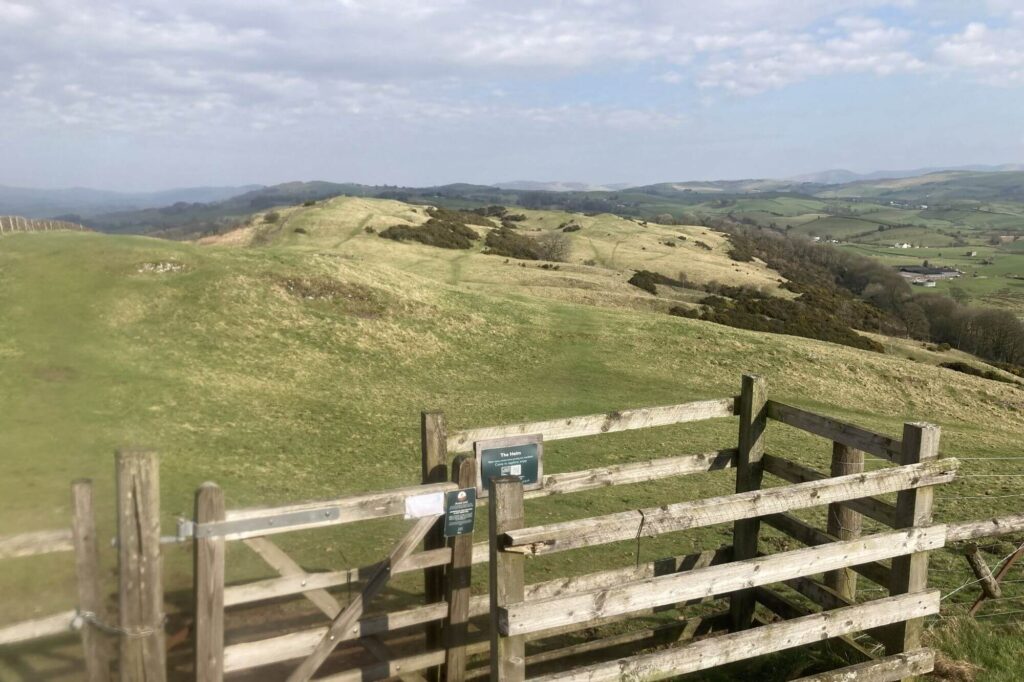
Clockwise from top left: Gorse before and cutting it back, hawthorn growing in tree tubes and the view from the top of the Helm.
Safety reasons meant we could not climb up the exposure or up to the top but we did what we could clearing by paths and along the bottom. The sun shone and the only sounds were those of the buzzards screeching, the lambs baaing, and the saw of the saws and chop chop of the loppers. By the end of the task the fault lines in the rocks could clearly be seen. A memorable day which we’ll continue to be reminded of over the next few days as we continue to pull thorns out of fingers, arms and legs, grrrrr.
In the news this week there are new powers for the Forestry Commission to enable it to develop renewable energy projects on the public forest estate with the energy being created being sold to the national grid. As the UK’s largest landowner, this is a positive move and not before time.
Share this post
Related posts
Updates from our campaigns, our land, and the people taking action for the Lakes.