
News
Multiple capital reports
A Multiple Capitals Account (MCA) is a mechanism designed to value all the benefits a landscape provides for society. It supplies significantly more information about the value of land to the economy, society and cultural heritage as well as to nature and climate change than a Natural Capital Account can.
Multiple capital reports
A Multiple Capitals Account (MCA) is a mechanism designed to value all the benefits a landscape provides for society. It supplies significantly more information about the value of land to the economy, society and cultural heritage as well as to nature and climate change than a Natural Capital Account can.
Friends of the Lake District worked with Prof. Lois Mansfield in 2023 to assess the Multiple Capital value of Little Asby Common in the Westmorland Dales. In 2024 we worked with her again to assess Hows Wood in Eskdale.
Litte Asby Common
Little Asby Common, located in the heart of the Westmorland Dales, east of Orton, is a 464ha upland common. It is a Special Area of Conservation (SAC) and a Site of Special Scientific Interest (SSSI) with a range of habitats including heather moorland, limestone grassland and limestone pavement. It boasts 200 archaeological sites, including long houses and co-axial field systems, evidencing human activity for the last 12,000 years.
We purchased the common in 2003, managing the site which is also used by seven active commoners, grazing cattle and sheep in a Higher Level Scheme agri-environment agreement. Current funding in the environmental and land management sector for protected landscapes has an emphasis on habitat and natural capital. We believed that the future funding of our protected landscapes should be based on the wider benefits that they offer.
In 2023, we published groundbreaking research incorporating a major public consultation to establish the common’s ‘true’ value, working with Prof. Lois Mansfield, and supported financially by Natural England. The report calculates every benefit of Little Asby, incorporating natural, human, social, cultural and financial elements, giving it a total net present value of £28.1m.
View the executive summary of the Little Asby Common report below.
Hows Wood
The work at Little Asby Common generated substantial debate and discussion amongst landscape management stakeholders at the regional and national level. Additionally, the work had identified some weaknesses in the methodology. In response to this, we decided to re-run and further test the methodology on a contrasting piece of land, as well as to further develop it and explore options for addressing the identified weaknesses. We worked with Prof. Lois Mansfield again, this time at Hows Wood in Eskdale.
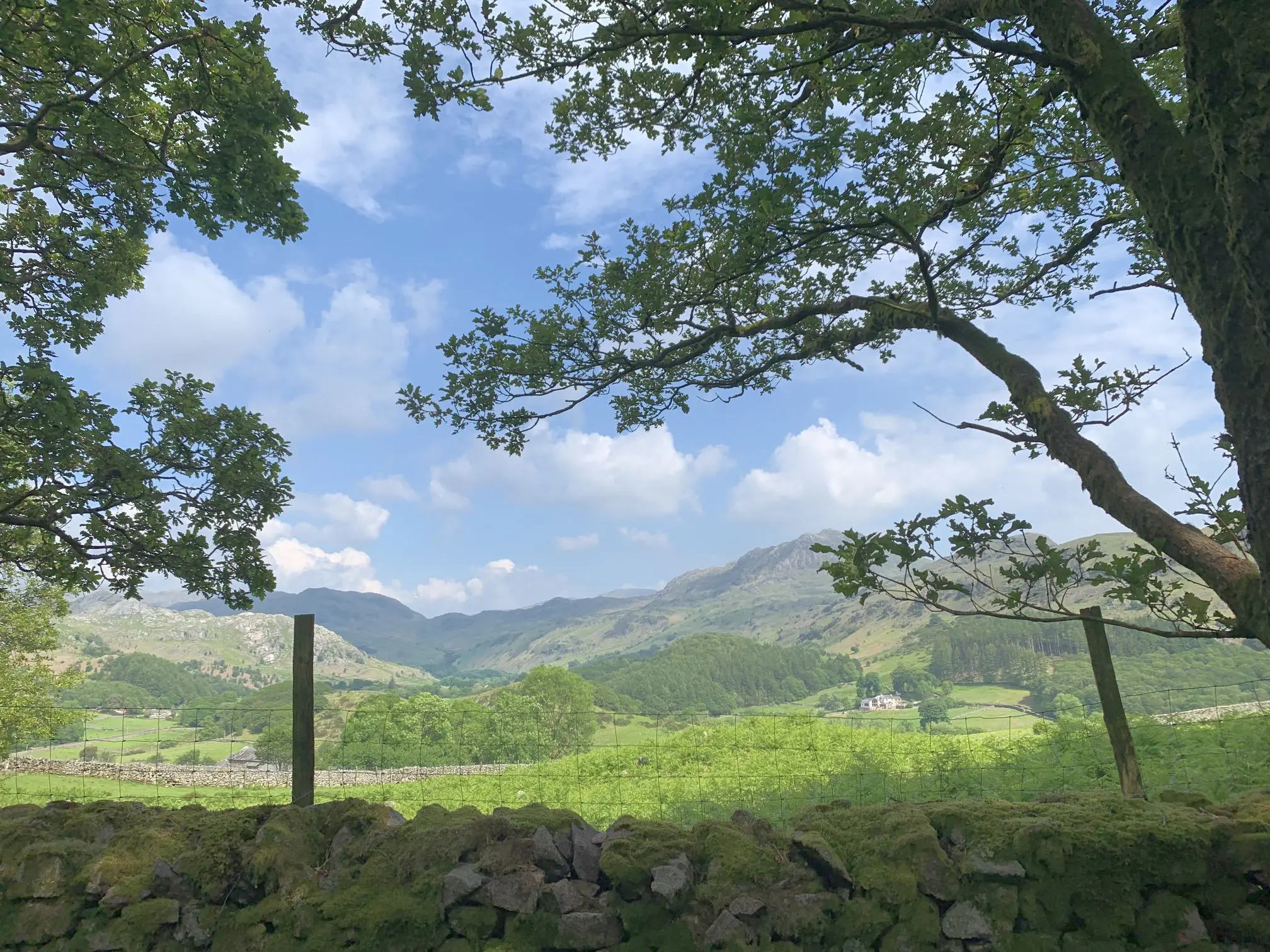
Hows Wood lies in the upper Eskdale valley. The 8ha wood is partly semi-natural ancient woodland and partly ancient, replanted woodland. Historically, the wood was managed as coppice serving the local bobbin mills and bark for tanning. The remains of a bark peelers hut can be seen on the site along with an old Bren gun carrier from the war. In 1967 the Forestry Commission acquired the wood and re-afforested the area with Japanese Larch, Sitka Spruce and Lodgepole Pine. We bought the wood in 1987 and set about clearing the conifers over 25 years to allow the restoration of the semi-natural woodland. We also restored the boundaries (drystone walls and fences), improved public access, inserted bridges, and installed a viewing platform at the northern edge. We continue to manage the woodland for low level recreational access and they regularly undertake surveys of the biodiversity at the site, which has increased significantly under our ownership.
The results value Hows Wood at 2.28m. It is inevitable that the overall figure is lower for Hows Wood due to its size in relation to Little Asby Common, interestingly though, Hows Wood generates significantly more capitals than Little Asby Common per hectare (£465k vs. £60k).
Download the full Hows Wood report here.
Webinar
In October 2025 we ran a webinar about multiple capital assessments.
Focusing on our own Hows Wood in Eskdale, an 8ha native woodland, we have listened to the feedback you gave us when we produced the first ever MCA of Little Asby Common in 2023. We have made changes to the model and run it on a completely different type of land, once again focusing on all the capitals the common delivers – natural, cultural, social, human and financial and the assessment. The work, done by Prof Lois Mansfield gives us a total value for the woodland of £2.28 million a year or £58 million over a 50 year period.
The MCA is the perfect tool to tell you the total value of what your land delivers, what it’s total worth is, not just its natural capital. Our webinar focuses on the background to the research and Prof Lois Mansfield discusses the methodology, how we have amended this following the Little Asby study, and issues that such work brings with it. This is a chance to learn more about this innovative methodology, but also discuss the real issues that people doing capitals assessments face.
Share this post
Related posts
Updates from our campaigns, our land, and the people taking action for the Lakes.
Friends of the Lake District welcomes decision to introduce a tourist tax
We welcome the news that Mayors in England will be empowered to introduce a tax on overnight stays…
Still treating the Lake District with contempt: litter survey reveals depth of anger
Our survey of litter, fly-camping and anti-social behaviour across the Lake District highlights a catalogue of damage to…
Community invited to discover Dam Mire Wood
Come along to our Community Day at Dam Mire Wood in Threlkeld on Friday 18 September 2026, from…