
News
Survey shows the scale of fly-camping and littering in the Lake District
A major survey organised by Friends of the Lake District has revealed an epidemic of litter, fly-camping and thoughtless parking that blocks access and clogs roads across the National Park.
A major survey organised by the landscape charity Friends of the Lake District has revealed an epidemic of litter, fly-camping and thoughtless parking that blocks access and clogs roads across the Lake District.
A total of 785 people responded to the online survey which ran over the summer months. The majority of those who responded (82%) are permanent residents of Cumbria. 97% of respondents said they had encountered litter, 80% reported wild-fires or barbecues and 77% fly-camping. 34% experienced an aggressive reaction when challenging those responsible – and it is likely that many others choose not to do so out of fear for their safety.
For Jeremy Smith, head of campaigns and engagement at Friends of the Lake District, “these findings paint a very worrying picture. There is a visual impact from piles of rubbish around our lake shores and there are risks to the health of wildlife as well as people. Most troubling of all, this situation is making local residents afraid to walk their favourite walks and unable to enjoy the countryside around where they live”.
“A massive increase in fly-camping and littering”
A sizeable majority – 65% – of respondents judge that the situation is worse this year than last. The principal affected areas are Ullswater and Derwentwater, with high levels of anti-social behaviour also being reported in Buttermere, Borrowdale and Ennerdale, suggesting that these sorts of tourism impacts are no longer confined to longstanding hotspots around Windermere.
“A walk round Buttermere was ruined by human waste, litter and dog poo. We didn’t let the kids leave the path to play hide-and-seek due to the waste round the trees.”
“A total lack of interest”
Many (58%) survey respondents did not report what they came across. Of those who did, many received at best a mix of “sympathy and resignation” and at worst “a total lack of interest”. Some of those contacted, such as the National Trust, lack the authority to move people on. Those that do have the authority appear to set high thresholds for getting involved: a wild fire on the brink of escalating or a fly-camper who has become aggressive. There is a strong perception of the buck being passed between different agencies. In this context, many local people choose to pick up after fly-campers – in effect, to solve the problem themselves because they either don’t know who best to report to or receive an unsatisfactory reaction when doing so.
“We litter pick every morning on our five-mile dog walk and can pick up to 40 poo bags in one trip and constantly clear up after parties on the shoreline. On one occasion, we picked up over 100 bottles and cans in four bin bags.”
“I litter pick daily from around my house where drivers throw their litter out onto the road and verges and walkers leave litter on the footpaths. I usually pick up a full kitchen bin size bag’s worth of rubbish. I regularly find human excrement, used sanitary products and even condoms”.


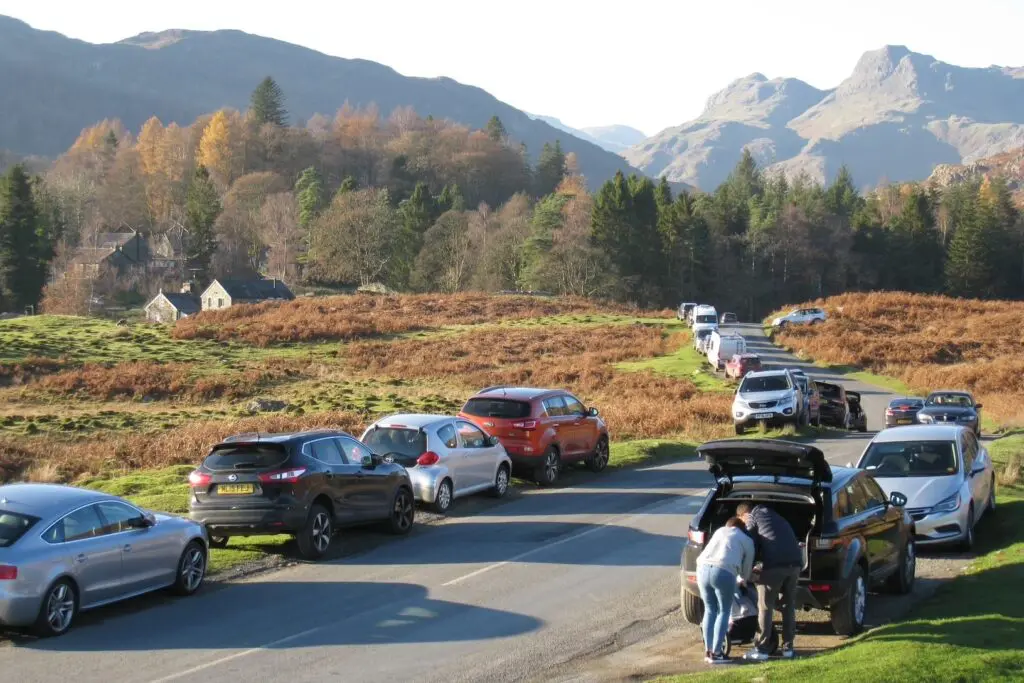
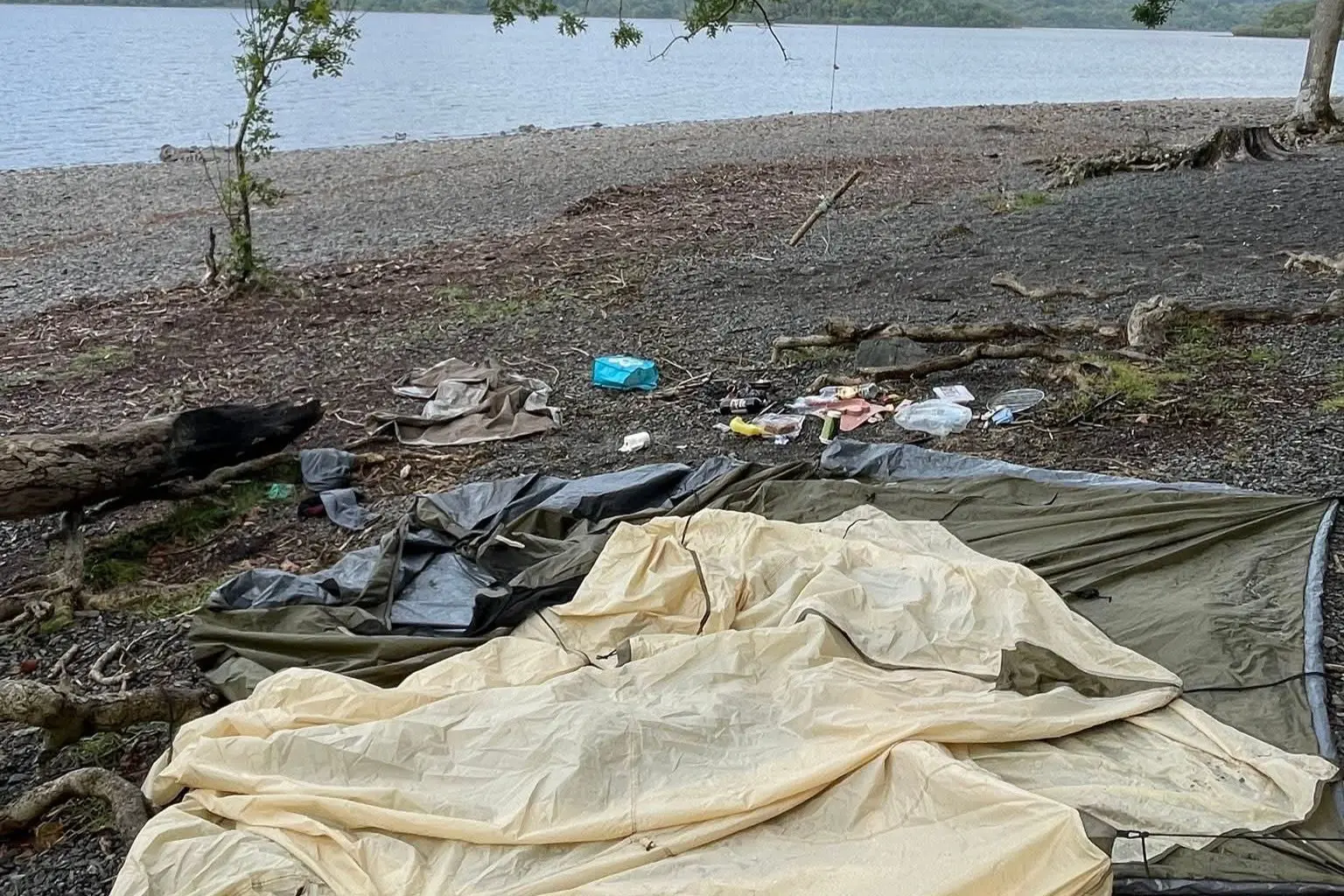
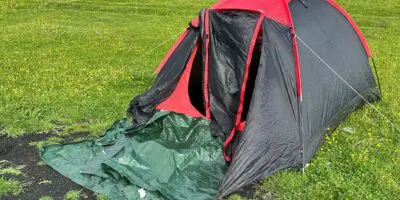
Litter left at Derwentwater, fly camping and a fire pit in Martindale and illegal parking on Elterwater Common. Credits: Ann-Marie Garforth/Keswick Binfluencers/Malcolm Lamb
Sometimes some form of action is taken, but without adequate follow-up. At Wastwater, posters were put up with numbers to call if people started barbecues on the beaches but those using this facility report that “they [the Police] were totally disinterested”. In another case, “signs were eventually put up but there’s no monitoring and nothing done to replace the signs that get removed by visitors”. This lack of concerted action makes the problem worse: signage and hotlines have no effect if there is no consequence if signs are ignored (or removed) and calls to hotlines are not acted upon. Those responsible are encouraged either to think that they’re not doing anything wrong or to rely on a lack of sanctions.
“I’m surprised how blatant some of it is. People are turning up knowing they’re not going to get challenged.”
“There’s a worrying, selfish attitude – ‘out of sight, out of mind’, ‘someone else will clear it up’ or basically just not caring.”
“They need to know and to stop it”
From the survey, there is a strong signal that those with a stake in these issues – particularly Cumberland Council Westmorland & Furness Council, the Lake District National Park Authority and the Police – need to take more seriously the impact on residents’ sense of security, well-being and their enjoyment of the natural spaces around where they live.
When asked what steps they think should be taken, survey respondents overwhelmingly favour a combination of more patrols and tougher penalties – a ‘catch and punish’ mentality that reveals the strength of feeling of local residents and the sense that many are at the end of their tether.
“It would be nice to feel that encouraging people to recognise the value of appreciating and preserving the, now all too rare, qualities of this peaceful and largely unspoiled area [would work], but realistically the only real deterrent for the worst offenders will be something tangible i.e. prosecution and fines. This is a disappointing comment on our society, but it is something that must be done to prevent the few spoiling it for the many”.
For Jeremy Smith, “what we need is a reset in public understanding of what is acceptable. Providing clarity as to what is permitted is part of the solution, but there also needs to be more tactical patrolling backed up by proper enforcement. A few fines for breaches of Public Space Protection Orders (PSPOs) would go a long way if widely publicised. The point is deterrence not punishment – and signalling to residents that they’re no longer being ignored.”
There are some signs that the National Park and the two Councils are becoming more responsive. The Police, Fire and Crime Commissioner, David Allen, has played a convening role. Westmorland & Furness Council is exploring the extension of PSPOs into other tourist hotspots. With some legitimacy, the National Park and David Allen himself have cited limited resources as a challenge to the authorities’ ability to take appropriate action. Many survey respondents draw from this the conclusion that a visitor tax would help fund a more proportionate response: as one puts it, “we really need more folk on the ground which will only happen once a tourist tax is imposed and we have the resources to have feet on the ground to manage this problem.”
Jeremy Smith concluded: “this summer has been awful. We welcome the fact that littering and fly-camping are being taken more seriously, but if words don’t translate into action, the sense of disconnect between residents and the authorities will intensify. These issues cannot be allowed to fall off the agenda as the main summer season ends. The Police, Councils and the National Park need a more proactive approach to prevent this situation escalating out of control again next year.”
Share this post
Related posts
Updates from our campaigns, our land, and the people taking action for the Lakes.
Community invited to discover Dam Mire Wood

25 years of Fix the Fells
Fix the Fells is marking 25 years of work to protect the Lake District’s spectacular mountain paths and…
Last call for our litter and fly-camping survey
As stories about illegal fly-camping, litter and wildfires continue to appear in the press and on social media,…